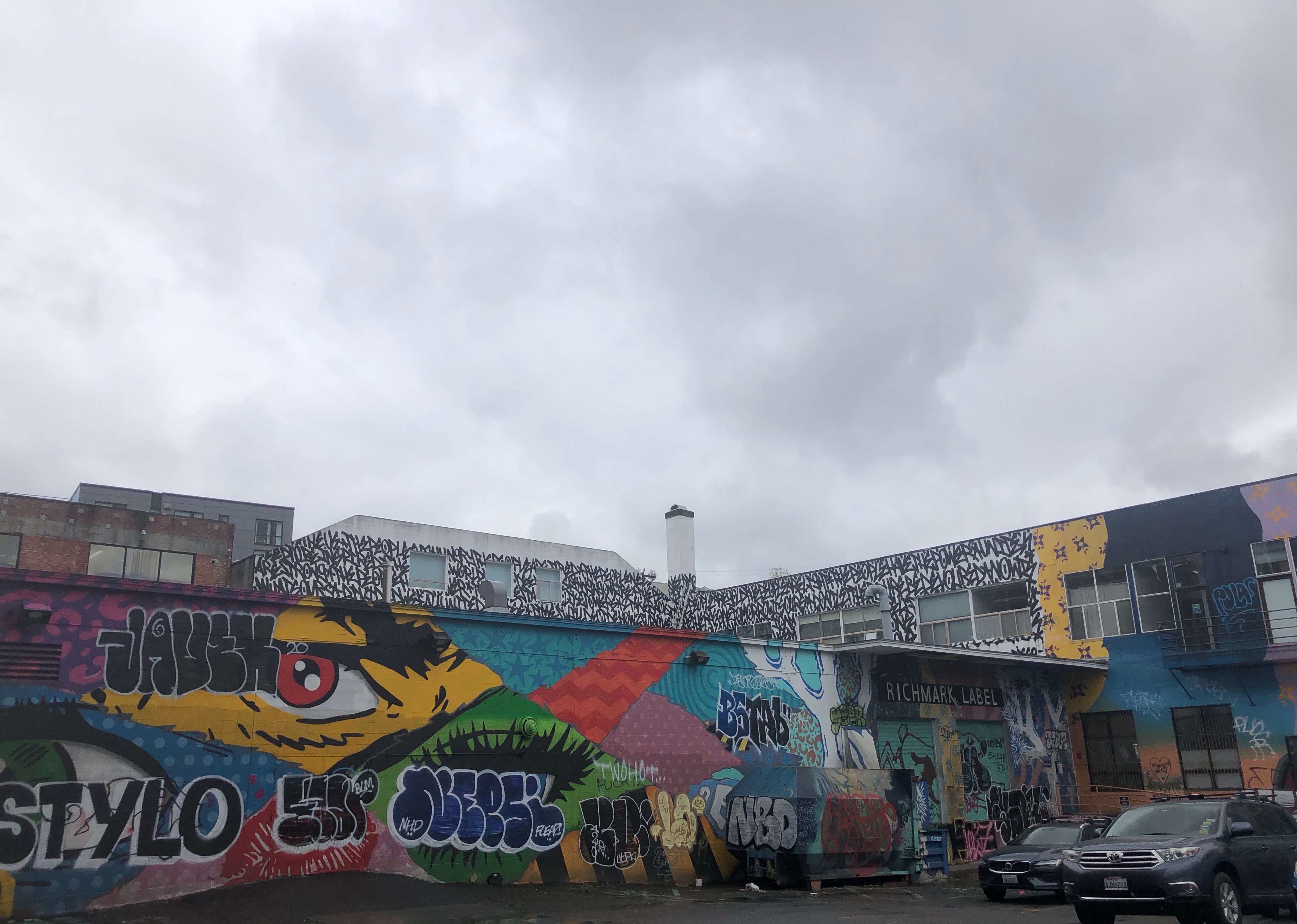
Modern Art Skepticism & Kids In Bad Neighborhoods-Don’t You Want To Be Cool?-Links to Tom Wolfe, Robert Hughes & Isaiah Berlin

From our rather reasonable AI overlords: ‘Common skepticism is a healthy critical attitude towards dubious claims, while philosophical skepticism challenges foundational knowledge and the justification for belief itself, demanding proof for everything, a stance few people adopt in daily life.’

I knew a philosophic skeptic, he was smarter than me & fun, but, man…what an asshole.

Commoners have good reasons to be skeptical when it comes to modern art:

Bananas duct-taped to walls seems like bullshit.

Titled Comedian, the humoristic piece can be considered a challenge to the sometimes-absurdist nature of the art market and the art collecting world. “To me, Comedian was not a joke; it was a sincere commentary and a reflection on what we value,” said the artist in an interview at the time. “At art fairs, speed and business reign, so I saw it like this: if I had to be at a fair, I could sell a banana like others sell their paintings. I could play within the system, but with my rules.”’

Who can forget the transcendent darkness of this photo (the shock-concept and the celebrity overshadowing the skill/visual impact).

He immersed a crucifix he bought in an antique shop in his own urine.

Fellow commoners, we have as a counterpoint, rather beautiful, innovative classics like Falling Water, by Frank Lloyd Wright. A pain in the ass to maintain, but still a place for the genuine:

As I see the world: We have beliefs, and we’ve usually locked them away beyond critique. So has most everyone else. Some beliefs have more truth in them than others.

We use shared beliefs to form and maintain relationships. We use them to get stuff and give other people stuff. We rely on shared beliefs to organize events/clubs, workplaces, and hierarchies of judgment and knowledge, without killing each other. Shared beliefs regulate and help us navigate our emotions, as well as our personal, interpersonal and social behavior. We outsource much of our thinking to shared beliefs, while forgetting they’re even there. We’re often proudest of passing our beliefs on if we think they’re true, lasting and important.

The rub is the relationship these beliefs have with truth, and knowledge. A modern rationalist might say something like: ‘We have access to enough scientific and economic knowledge to run the government, and effectively plan your life. (M)an is something holy, and we’ve only just begun perfecting (M)an. Go ahead be creative and vote for the $1 billion arts package or else.

A typical Catholic might say something like: ‘Let’s check in with Canon Law. The Pope is closest to God, then the Cardinals, then the Archbishops etc.’ We’re only redeemed through Christ. So….that’s what art should be doing. Capiche?

What if a radical questioning of belief becomes the norm, around which people are…still believing?

What, then, do people actually believe?

What do artists, often radically questioning belief while making stuff, actually believe?

Those increasingly ridiculous artist statements? Some curious mix of irony, doom and nihilism all the way down? Modern mysticism?

A digression: Let’s say a kid in bad neighborhood, at a vulnerable age, joins a gang. He gets protection, savage discipline and access to stuff. The gang serves dark masters of the soul of course (in our case: How to rob specific makes/models of cars and sell them for parts, leaving a trail of harm, making the kid violent and dangerous).

Let’s also say the same kid in a bad neighborhood, on weekends, hangs with his uncle. His uncle fixes cars. Our kid learns to honor something within himself, other people, and the world. Like his time with the gang, life unfolds as a series of challenges, struggles and possibilities. Yet, his lifespan probability opens from twenty-two to sixty-four. Much better of parts of the kid’s nature come forwards. People drive their cars away, grumbling over the price and the delays…but, still.

Clearly, one path is better for the kid, the neighborhood and the rest of us?

Surely?

Now, what if, at school, that same kid is particularly talented, smart and sensitive? What if he is guided by someone towards personal self-expression, and even the eventual self-doubt, poverty and emotional rollercoaster of a typical artist’s life?

Shouldn’t the kid at least be taught how to notice things? how to describe how a good painting looks? how to draw? how to draft? how to mix paint?

Surely?

These days, it seems we find ourselves in a ‘post, postmodern landscape.’

What is this curious, Western belief to ‘blank-slate’ everything? How can it be true that the kid’s emotions are a reservoir and his reason a man-made, oppressive dam? That he just needs to make a dark, mixed-media video collage and he’s arrived?

It seems making simple moral judgments in real-world scenarios raises serious questions about the Romantic/Modern/Postmodern projects.

The case for the visual art over the primacy of concept/idea: Lets say you’re looking at John Singer Sargent’s ‘Lady Agnew Of Lochnaw‘ (somewhere between realism/impressionism). You’re not looking at merely the idea of painting (good paintings already have ideas in them).

Maybe you want to touch her skin? How did he paint like that? Look at the color and light. What is the artist saying? This painting took six sittings, but, arguably, a lifetime and maybe the better elements of a civilization to achieve.

A simple case: The Duchamp/Warhol line (concept/idea over visual communication/technical skill) warrants tremendous common-sense skepticism (I’ve gone a little deeper…but you get the point). Enough already.

Bananas duct-taped to walls and crucifixes dunked in piss are not just wasting our time, perhaps they’re harming our imaginations.

There are so many reasons to doubt so much bullshit within modern/postmodern thinking, while at the same time learning from the good.

Tom Wolfe went on the T.V. with William F Buckley (too political for my taste) to discuss his book: The Painted Word.’

At min 5:39 Wolfe argues the following (one part of the art/money/celebrity feedback loop):

‘It’s really a religious thing. One thing I didn’t say in The Painted Word, that I should have said, is that art today, is the religion of the educated classes. I don’t mean that by analogy, it isn’t like being a Baptist in 1870, it is being a Baptist in 1870.’

From Art vs Machine: Here is a video making the case that Jackson Pollock achieved something, but it wasn’t really the innovative use of drip-paint.

Maybe it was kinda beautiful in its own way? Romantically Primitive?

Also, are Robert Hughes criticisms’ of Andy Warhol’s art really blocked by YouTube?

Making a hero of the androgynous anti-hero is orthodoxy these days, but also pretty tired (the Warhol to Bowie line seems over-rated):

What came before modernism/postmodernism? Why the below video might be worth listening to (min 34:22):

There was a great turn towards emotionalism. There was a sudden interest in the primitive and remote; the remote in time and the remote in place. There was a outbreak of craving for the infinite’

A movement emerged, about 1760–1840, which has deeply affected our conceptions of the Self, Art, heroes and villains, and most importantly, what makes life worth living.

Isaiah Berlin’s take on Romanticism:

Friday Poem-Heather McHugh

What He Thought

We were supposed to do a job in Italy
and, full of our feeling for
ourselves (our sense of being
Poets from America) we went
from Rome to Fano, met
the mayor, mulled
a couple matters over (what’s
a cheap date, they asked us; what’s
flat drink). Among Italian literati

we could recognize our counterparts:
the academic, the apologist,
the arrogant, the amorous,
the brazen and the glib — and there was one

administrator (the conservative), in suit
of regulation gray, who like a good tour guide
with measured pace and uninflected tone narrated
sights and histories the hired van hauled us past.
Of all, he was most politic and least poetic,
so it seemed. Our last few days in Rome
(when all but three of the New World Bards had flown)
I found a book of poems this
unprepossessing one had written: it was there
in the pensione room (a room he’d recommended)
where it must have been abandoned by
the German visitor (was there a bus of them?)
to whom he had inscribed and dated it a month before.
I couldn’t read Italian, either, so I put the book
back into the wardrobe’s dark. We last Americans

were due to leave tomorrow. For our parting evening then
our host chose something in a family restaurant, and there
we sat and chatted, sat and chewed,
till, sensible it was our last
big chance to be poetic, make
our mark, one of us asked
“What’s poetry?
Is it the fruits and vegetables and
marketplace of Campo dei Fiori, or
the statue there?” Because I was

the glib one, I identified the answer
instantly, I didn’t have to think — “The truth
is both, it’s both,” I blurted out. But that
was easy. That was easiest to say. What followed
taught me something about difficulty,
for our underestimated host spoke out,
all of a sudden, with a rising passion, and he said:

The statue represents Giordano Bruno,
brought to be burned in the public square
because of his offense against
authority, which is to say
the Church. His crime was his belief
the universe does not revolve around
the human being: God is no
fixed point or central government, but rather is
poured in waves through all things. All things
move. “If God is not the soul itself, He is
the soul of the soul of the world.” Such was
his heresy. The day they brought him
forth to die, they feared he might
incite the crowd (the man was famous
for his eloquence). And so his captors
placed upon his face
an iron mask, in which

he could not speak. That’s
how they burned him. That is how
he died: without a word, in front
of everyone.
And poetry —
(we’d all
put down our forks by now, to listen to
the man in gray; he went on
softly) —
poetry is what
he thought, but did not say
.

Heather McHugh

Saturday Quotation-T.S. Eliot

‘What I have to say is largely in support of the following proposition: Literary criticism should be completed by criticism from a definitive ethical and theological standpoint.’

Eliot, T.S. Selected Prose Of T.S. Eliot. New York: Harcourt Brace & Company, 1975. Print.

Essay here.

Addition:  Maybe, just maybe, as a friend points out.  Compared to the current radical models clamoring for the syllabus, such a suggestion has become radical.

Via A Reader-‘John Searle On The Philosophy Of Language’

Via a readerJohn Searle on The Philosophy Of Language as part of Bryan Magee’s series:

It’s always a pleasure to observe someone with deep understanding explain a subject clearly.

There’s some interesting discussion on modernism and postmodernism too, or the tendency for the ‘moderns’ to focus on language itself as a problem to be re-examined and possibly solved, or the study of linguistics to be put upon a foundation similar to that of many sciences.

As we’ve seen in the arts, the poem, a novel, the very written words themselves can become subjects which poets, novelists, and writers examine, doubt, and in some cases ‘deconstruct.’

As to that tribe in South America, cited as evidence against Chomsky’s claims of necessary recursion and the existence of a universal grammar, Searle has some things to say in the interview below.

As previously posted: Paul Ibbotson & Michael Tomasello at Scientific American: ‘Evidence Rebuts Chomsky’s Theory Of Language Learning:’

But evidence has overtaken Chomsky’s theory, which has been inching toward a slow death for years. It is dying so slowly because, as physicist Max Planck once noted, older scholars tend to hang on to the old ways: “Science progresses one funeral at a time.”

Worth a read.

As posted:  Caitlin Flanagan reviews Tom Wolfe’s new book ‘The Kingdom Of Speech.‘ Jerry Coyne, ecologist, writing in the Washington Post, was not impressed:

“Noam Chomsky: The Last Totalitarian”The Politics Of Noam Chomsky-The Dangers Of Kantian Transcendental Idealism?

Via Youtube: (1 of 3) Kant, Chomsky and the Problem of Knowledge

=====

Some Updated Links On Postmodernism…Daniel Dennett: ‘Postmodernism…And Truth’

A Bleak, Modern House-Four Poems

=====

Bryan Magee Via Youtube: ‘Miles Burnyeat On Plato’…Bryan Magee Via Youtube: ‘John Passmore on Hume: Section 1’

Repost-Modern Land Artists Point You Back To Nature, Placing You In Time, But Whose ‘Now’ Is This, Man? What Is Nature, Exactly?

Paul Wood discusses the works of Robert Smithson (Broken Circle, Spiral Hill) and Richard Serra (Fulcrum, Spin Out):

Land-art pieces are site-specific. They require you to be there and experience them, designed as they are to be within the specific spaces they occupy.

In so doing, they break from previous modernist ‘Readymades‘ and reproduced images (I don’t know about you, but I’m tiring of so many commentaries on consumerism, the desire for craft over mass production, a certain collective vagueness against such disposability…the dream of unique Selfhood, celebrity even, amidst a thousand urinals).

As a viewer, you’re supposed to interact with these pieces and start feeling and thinking differently than perhaps you might have otherwise. Walk around, through, and over them. View one hillock from another. Walk back over to the first hillock and look from whence you came. The view is never quite what you were imagining.

Clap inside of Serra’s ‘Vortex:’

Time is clearly intended to be an element, here; the long sweep of geologic and/or historical time as the artist understands it, as well as the relative brevity of personal time during just a 10-minute visit.

These pieces can act as signposts towards Nature and what we can begin to observe of our specific natural environments (steel rusts in unique, but perhaps underlying, patterns…winds blow at different angles and around different obstacles in one grove as opposed to another, these lichens are growing here…other lichens over there, are they the same species?).

If you pull the piece out of its specific environment, it may just wither and die, looking out-of-place as many other products of civilization do amidst natural settings (a jar in Tennessee). Perhaps, though, they won’t look quite so out-of-place as mass-produced objects because of such careful design and attention to detail.

That said, these pieces will eventually look quite awkward undergoing the changes they will undergo if Nature’s Laws are any guide (Romantic/Modernist recreations of Nature can promise the comforts of Home).

Here’s Wikipedia, keeping it simple:

‘Land art, earthworks (coined by Robert Smithson), or Earth art is an art movement in which landscape and the work of art are inextricably linked.’

From the video description:

‘Robert Smithson and Richard Serra both believed that sculpture should have a dialog with its environment. This program explores the challenging dialectic of the site-specific sculpture of Smithson and Serra through examples of their work. In an interview, Serra discusses the aspects of time and context in relation to his art as well as the influence of Smithson.’

Maybe it’s worth pointing out that Serra seems interested in symmetry, visualizing and realizing abstract shapes with the help of some mathematics and the practice of drawing/drafting. Interesting problems can arise from tooling around with shapes on paper (a practice of Serra’s), the kind I’m guessing folks fascinated by puzzles and software and math love to solve.

But Serra’s not a mathematician nor an engineer nor an architect. He’s not writing a proof for its own sake nor building bridges nor houses for practical use.

Rather, the intuitive and creative impulses of the artist take over in his work, a kind of creative exploration, as well as the dialog between fellow artists, living and dead.

Much (A)rt, of course, is useless for most, if not all, purposes. It’s one of the things that can make it meaningful for people. There can be a significant gap between what the artist may have felt, thought and realized, and which emotions, thoughts and experiences any viewer/listener might have in interacting with a particular piece.

Serra, in his work, wants to alter the thinking of anyone moving through the space he creates by manipulating specific substances like steel (he has a facility with the material), and by getting viewers to a point of reorientation of spatial and temporal awareness.

Of course, this involves reorientation towards certain ideas as he understands them, and by promising people a return to themselves, or a state of experience and creative play perhaps similar to that of the artist.

Here’s a Charlie Rose interview:

More about Land Artists:

Any thoughts and comments are welcome. Feel free to highlight my ignorance…

Related On This Site:A structure in the desert…not even a city Update On LACMA, Michael Heizer And The ‘Levitated Mass’-Modern Art And The Public

Denis Dutton suggested art could head towards Darwin (and may offer new direction from the troubles of the modern art aimlessness and shallow depth…the money and the fame) Review of Denis Dutton’s ‘The Art Instinct’

No thanks to living in planned communities upon someone else’s overall vision.: Roger Scruton In The City Journal: Cities For Living–Is Modernism Dead?

Modern Art For Sale In The Middle-East-From The New Yorker: ‘Richard Serra In the Qatari Desert’

A Few Quick Links On Speech

From F.I.R.E-‘Free-Speech Zones: Then & Now

‘This year, we decided it was time to take a fresh look at that figure, since a lot has changed over the last few years. And as we announced in our just-released 2017 report on campus speech codes, the number of free speech zone policies is down: Today, roughly one in 10 of the schools we surveyed maintain a free speech zone policy.’

From Volokh-Techdirt gets more than $250,000 to better cover free-speech issues

As posted:

More here.

I keep hearing about a supposed “hate speech” exception to the First Amendment, or statements such as, “This isn’t free speech, it’s hate speech,” or “When does free speech stop and hate speech begin?” But there is no hate speech exception to the First Amendment. Hateful ideas (whatever exactly that might mean) are just as protected under the First Amendment as other ideas.

The folks at Charlie Hebdo didn’t find the PEN ‘activists’ much to think about.


Two older, but likely worthwhile links:

Brendan O’Neill At Spiked:

‘A true devotee of freedom of speech says, ‘Let everyone speak, because it is important that all sides are heard and that the public has the right to use their moral muscles and decide who they trust and who they don’t’. The new, partial campaigners for friends’ speech effectively say, ‘Let my friend speak. She is interesting. She will tell the public what they need to hear.’ These are profoundly different positions, the former built on liberty and humanism, the latter motored by a desire to protect oneself, and oneself alone, from censorship. The former is free speech; the latter ‘me speech’.

Back to Yale with Christopher Hitchens:

Full post here.

Reason post here.

NY Times piece here.

Old news I know, but it seems that the Yale Press was genuinely afraid that publishing this book could potentially lead to violence, and that they are responsible for the consequences of such potential violence.

Hitchens:

“…Yale had consulted a range of experts before making its decision and that “[a]ll confirmed that the republication of the cartoons by the Yale University Press ran a serious risk of instigating violence.”

See Also:  If you thought the cartoons were bad, more on the Fitna movie here.  From The NY Times: Review Of Christopher Caldwell’s Book “Reflections on the Revolution in Europe: Immigration, Islam, and the West”  Libertarians love this issue:  Repost-A Canadian Libertarian Making Noise: Ezra Levant  

Repost: A Bleak, Modern House-Four Poems

This will be a longer one, so thanks in advance.

From the comments on this piece:

‘The most useful definition of modernist fiction I’ve encountered comes from Brian McHale’s Postmodernist Fiction. He says modernist fiction tends to “foreground epistemological questions” such as “How can I interpret the world I’m part of? What is there to be known? Who knows it? What are the limits of that knowledge?” In contrast, postmodernist fiction tends to “foreground ontological questions” such as “What is a world? What kinds of worlds are there and how are they constituted? What happens when…boundaries between worlds are violated?’

As to the epistemological questions surrounding Modernism, below are four poems. Hopefully, each is a representative example of a move away from the Romanticism that had been prevalent up until the late 1800’s.

In addition to the move away from traditional Romantic rhyme and meter towards modern blank verse, there’s also a certain conception of the Self rendered in them; a presentation of our natures that might be worth examining in some detail.

I believe we can see clearly a move away from tradition towards the Self, the Poet isolated, the poem itself as a means of communication, and an anxiety so common within the 20th century.

I should note that a friend points out Harold Bloom does it much better (well, yes…obviously). From this blurb:

‘At the heart of Bloom’s project is the ancient quarrel between “poetry” and “philosophy.” In Bloom’s opinion, we ought not have to choose between Homer and Plato; we can have both, as long as we recognize that poetry is superior.’

Says the guy who writes about poetry…


What does one find within, as one looks without, waking from sleep and dream?

What kind of world is this, and can the poet actually help us know it?

T.S. Eliot (Preludes: Stanza 3)

3.

You tossed a blanket from the bed
You lay upon your back, and waited;
You dozed, and watched the night revealing
The thousand sordid images
Of which your soul was constituted;
They flickered against the ceiling.
And when all the world came back
And the light crept up between the shutters
And you heard the sparrows in the gutters,
You had such a vision of the street
As the street hardly understands;
Sitting along the bed’s edge, where
You curled the papers from your hair,
Or clasped the yellow soles of feet
In the palms of both soiled hands.

The world will stain you, and it is a fallen, modern world, rendered profoundly and exquisitely.

As consciousness creeps in, building a bridge to the day, to the world, to the facts left as though they were the first facts, the light as though it were the first light, what one finds is distressing, both within and without.

That distress must be ‘made new,’ which is to say, the suffering (original?) in which we all sometimes find ourselves must match our experiences within the modern city and world, at least, the world created within Eliot’s lyrical verse.

Of the four poems, only the first and last have a 3rd-person subject.

Wallace Stevens‘ ‘I’ is in a more contemplative state, but it’s an ‘I’ exploring similar themes, and experiencing some distress in trying to know how the world actually is, and what might lie within.

The journey to The Self may not be a journey for the faint of heart.

The Poems Of Our Climate (stanzas II and III)

II
Say even that this complete simplicity
Stripped one of all one’s torments, concealed
The evilly compounded, vital I
And made it fresh in a world of white,
A world of clear water, brilliant-edged,
Still one would want more, one would need more,
More than a world of white and snowy scents.

III
There would still remain the never-resting mind,
So that one would want to escape, come back
To what had been so long composed.
The imperfect is our paradise.
Note that, in this bitterness, delight,
Since the imperfect is so hot in us,
Lies in flawed words and stubborn sounds.

Even if the verse can describe a perfected world, delivering us, perhaps, a little closer to perfection, our poet is still not free from the impulses and desires which simply never cease.

Interestingly, we end-up not with a discussion of the heart, the spirit, libido etc. as a source for those desires (for Plato, the irrational), but rather, for Stevens, just a mind.

We also find more Romantic elements of language and an almost baroque/rococo arrangement of words and ideas, dandyish even, yet combined with an intense effort to abstract, define, and clarify. From here, the poet may proceed on his task of flawed words and stubborn sounds.

***I find myself thinking of elements of modern architecture and abstract-expressionist painting. The meaning, or at least some delivery from our restless existences, can be found within the abstract itself. Or at least within a retreat to the abstract for its own sake, away from the world.

The modernist, glass-walled house on the hill will exist in its own space, offering and defying meaning. The structure’s own shapes will be stripped down to often mathematically precise forms interacting with Nature. These shall guide Man, or at least offer individual men a little refuge.

It is perhaps in Stevens’ poem we can see the questions of knowledge about the world suggesting questions about whether there is a world at all, or, at least, what kind of worlds each Self might be able to inhabit.

Here’s one of Robert Lowell’s poems, occurring a generation later, in the mid 20th-century, as part of the confessionals.

The Self is extremely isolated. In fact, Lowell went more than a little crazy. Unlike the known nervous breakdown of Eliot from which Eliot recovered, Lowell’s life was essentially one long breakdown from which he never recovered.

Here he is, looking back:

Epilogue

Those blessed structures plot and rhyme-
why are they no help to me now
i want to make
something imagined not recalled?
I hear the noise of my own voice:
The painter’s vision is not a lens
it trembles to caress the light.
But sometimes everything i write
With the threadbare art of my eye
seems a snapshot
lurid rapid garish grouped
heightened from life
yet paralyzed by fact.
All’s misalliance.
Yet why not say what happened?
Pray for the grace of accuracy
Vermeer gave to the sun’s illumination
stealing like the tide across a map
to his girl solid with yearning.
We are poor passing facts.
warned by that to give
each figure in the photograph
his living name.

The weight of having to make that meaning, for yourself, and by yourself, is a horrible weight indeed. One can glorify one’s Self and family, but that, alas, only goes so far. Rhyme and form still carry one’s living name, as far as they do.

Of course, there’s still wonderful rhythm and form here (this is excellent verse), but blanker now, with a relentless focus on the ‘I.’ The poet is perhaps talking a little more to himself, and the poem keeps self-consciously calling attention to itself.

In fact, it reminded me of the poem below, by Robert Creeley, which was published a few years afterwards.

From this page:

‘Creeley was a leader in the generational shift that veered away from history and tradition as primary poetic sources and gave new prominence to the ongoing experiences of an individual’s life. Because of this emphasis, the major events of his life loom large in his literary work.’

There’s Nothing but the Self and the Eye seeking and making meaning, by itself within a void of emotionally compact and precise language (of course there’s still form and other things besides).

Can the poet fit inside the little abstract chapel of words he’s building for himself (let alone the world, tradition etc.)?

For all the talk about ‘space,’ there seems very little.

The Window

Position is where you
put it, where it is,
did you, for example, that

large tank there, silvered,
with the white church along-
side, lift

all that, to what
purpose? How
heavy the slow

world is with
everything put
in place. Some

man walks by, a
car beside him on
the dropped

road, a leaf of
yellow color is
going to

fall. It
all drops into
place. My

face is heavy
with the sight. I can
feel my eye breaking.

The distress is still there…but I’d argue that we are now a good distance away from the grandness of Eliot’s vision, his religiosity and virtuosity with form and meter at the dawn of Modernism. Very few people can/could do what Eliot did (addition: even if he can help us gain knowledge of our Selves or the world).

That said, it’s unclear there’s enough tradition and confidence to even undertake such a project, now, even as such talents come along. The state of things is more scattered. We’re in a very different place of selves and artists isolated, of anxiety and post-anxiety.

Aside from the very accomplished poets above, in terms of both knowledge (epistemology) and being (ontology), we often have writers feeling pressure to weigh-in on such questions without even being about to write that well; artists who can’t draw or paint that well, and frankly, quite a bit of bullshit besides.

So, where are we headed? Who’s ‘we’ exactly?

Predictions are hard, especially about the future.


As previously posted:

Why not just put a few algorithms to work in writing those artist statements?

Bathe in the bathos of a warming world:

A reader sends a link to a SF Gate review of poet Jorie Graham’s ‘Sea Change:

‘In “Sea Change,” Graham becomes Prospero, casting spells by spelling out her thoughts to merge with ours, and with the voices of the elements. The result is a mingling of perceptions rather than a broadcasting of opinions. Instead of analysis, the poems encourage emotional involvement with the drastic changes overwhelming us, overwhelm- ing the planet.’

and:

‘Strengths and weaknesses, flows and ebbs, yet every poem in “Sea Change” bears memorable lines, with almost haunting (if we truly have but 10 years to “fix” global warming) images of flora and fauna under siege. Jorie Graham has composed a swan song for Earth.’

Oh boy.

What are these poems being asked to do?


And moving away from poetry into the realm of ‘performance art,’


Tilda Swinton At MOMA-From Arma Virumque: ‘Nightmare In A Box’

Denis Dutton suggests art could head towards Darwin (and may offer new direction from the troubles of the modern art aimlessness and shallow depth) Review of Denis Dutton’s ‘The Art Instinct’

Roger Scruton says keep politics out of the arts, and political judgment apart from aesthetic judgment…this includes race studies/feminist departments/gay studies etc.: Roger Scruton In The American Spectator Via A & L Daily: Farewell To Judgment

Ah, Look At All The Lonely People-‘Jeff Koons Is Back’ Via Vanity Fair

Some Updated Links On Postmodernism

Another Middlebury Update-A Most Cowardly Endeavor

What a shame.

An apology from the PoliSci chair to the ‘community’ at Middlebury:

Earlier this year I, as chair of the political science department, offered a symbolic departmental co-sponsorship to the Charles Murray event in the same way that I had done with other events in the past: on my own, without wider consultation. This was a mistake.’

You’ll have to look elsewhere for vigorous displays of moral courage, character, and independence of mind.

If an echo-chamber of shared belief and distraught racial-identity politics rewarded by a bureaucratic lack of imagination’s your thing: Middlebury might just be for you!

Truthfully, the battle was probably lost at least a generation ago, in many minds, as the logic of radical ideology, once embraced, tends to keep perpetuating and reinforcing itself.

Here’s one answer [above] to Charles Murray’s question of what happens next in the face of actual violence. In his words:

Much of the meaning of the Middlebury affair depends on what Middlebury does next. So far, Middlebury’s stance has been exemplary. The administration agreed to host the event. President Patton did not cancel it even after a major protest became inevitable. She appeared at the event, further signaling Middlebury’s commitment to academic freedom. The administration arranged an ingenious Plan B that enabled me to present my ideas and discuss them with Professor Stanger even though the crowd had prevented me from speaking in the lecture hall. I wish that every college in the country had the backbone and determination that Middlebury exhibited.’

Here’s possibly another answer

48 Middlebury professors signed the following document (WSJ paywall warning…speech on public affairs and civil discourse ain’t necessarily free).

Clive James At The Prospect On Joseph Conrad-Some Links

James revisits many quite original, quite accomplished works.

Of note to this blogger:

‘They are, in fact, idealists: and idealism is a cast of mind that Conrad questions even more than he questions radicalism. The logical end of radicalism, in his view, is terrorism; but idealism is the mental aberration that allows terrorism to be brought about. Conrad’s originality was to see that a new tyranny could be generated by people who thought that their rebellion against the old tyranny was rational. Thus his writings seem prescient about what was to happen in the Soviet Union. He didn’t predict the Nazi tyranny because he had underestimated the power of the irrational to organise itself into a state. But then, nobody predicted that except its perpetrators; and anyway, mere prediction was not his business. His business was the psychological analysis made possible by an acute historical awareness. Under Western Eyes is valuable not because it came true but because it rang true even at the time, only now we can better hear the deep, sad note.’

Clive James’ site here.

Michael Dirda on ‘Clive James Last Readings’ review: A Critic’s Final Homage To Literature, Life:’

In 30 brief essays James goes on to tell us — in his most digressive, conversational manner — about the books he’s discovered or returned to quite probably for the last time.’

============

Not entirely unrelated:

John Gray begins a discussion of his book ‘The Silence Of Animals‘ with a quote from Conrad:

————————————-

Added bonus if you act now in the face of no possible objective knowledge.

Part of Bryan Magee’s series:

=========================

Nietzsche directed his thought against Christian morality, secular morality (Kantian and utilitarian), was quite anti-democratic, and anti-Socratic.

Related On This Site:  From The NY Times Book Review-Thomas Nagel On John Gray’s New ‘Silence Of Animals’.

A Few Thoughts On The Stanford Encyclopedia Of Philosophy Entry: Nietzsche’s Moral And Political Philosophy..

From Edward Feser: ‘Nagel And His Critics Part IV’A Few Thoughts On Isaiah Berlin’s “Two Concepts Of Liberty”

John Gray Reviews Jonathan Haidt’s New Book At The New Republic: ‘The Knowns And The Unknowns’

Update And Repost- From YouTube: Leo Strauss On The Meno-More On The Fact/Value Distinction?’

Authentic Beauty?-A Quick Sunday Link

Wiser Men Stay Silent-Via Jezebel-Lena Dunham Responds To Unretouched Images From Her Vogue Shoot:

‘Yes, Vogue is fantasy. But no matter how fantastic the clothes or the setting or the lighting, the people in these images are real — and yet Vogue has to take the reality of a human being’s body and make it part of the fantasy too. It’s escapism, absolutely, but the message is clear: while you dream of wearing that gorgeous dress, you should also dream of physical perfection as defined by Vogue.’

Feminism and feminist ideology, aesthetics, and a woman’s desire to be beautiful are mixing together in the marketplace and public square.

This blog noticed the work of Pascal Dangin a little while back.  In the New Yorker, Dangin admits to having worked for Dove, applying some of his techniques (with heavy use of mathematics and computer graphics) to touch-up their photos.  You know the kind.


Selva-Real women in Hong Kong?

Full The NY Times had a follow-up piece on Dangin here.  Technology changes awfully quickly.

Another Dove photo here.

Regardless of his motives, Dangin considers himself an artist and what he does a pursuit of aesthetics.

Perhaps there’s a tension playing out before us, between the reasoning of academic and institutionalized feminists, the generally upper-middle-brow crust of popularizers, political influencers and professional writers, and on down to public sentiment, the popular culture, mainstream music and T.V. etc.

Sex still seems to be selling, and most everybody is attracted to beauty in one-form or another.