‘One of the peculiarities of our age is the ferocity with which intellectuals and politicians defend propositions that they do not—because they cannot—believe to be true, so outrageous are they, such violence do they do to the most obvious and evident truth. Agatha Christie (a far greater psychologist than Sigmund Freud), drew attention almost a century ago to the phenomenon when she had Dr. Sheppard, the protagonist and culprit of The Murder of Roger Ackroyd say, “It is odd how, when you have a secret belief of your own which you do not wish to acknowledge, the voicing of it by someone else will rouse you to a fury of denial. I burst immediately into indignant speech.”
‘If we take the widest and wisest view of a Cause, there is no such thing as a Lost Cause because there is no such thing as a Gained Cause. We fight for lost causes because we know that our defeat and dismay may be the preface to our successors’ victory, though that victory itself will be temporary; we fight rather to keep something alive than in the expectation that anything will triumph.‘
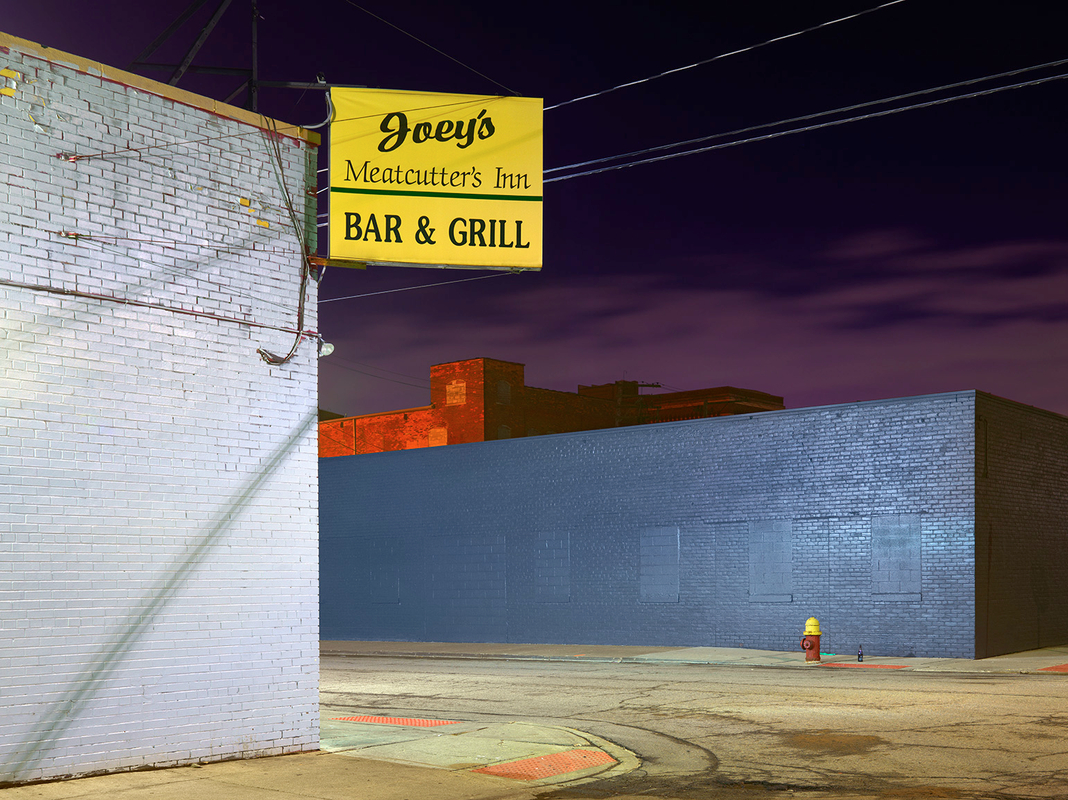
Here’s a photo from Seattle; a boundary to which Western Civ has pushed (just as many ‘Western Civ’ courses are being scrubbed from many curricula). Seattle attracts many who don’t fit into existing laws, rules and expectations.
—
I’ve been viewing most green, red and ideological causes with skepticism. They are woven of various cloths, pulled taut with the strands of various Western philosophical projects, active mostly since the Enlightenment. The more secularization there is, in my experience, the more real-time experiments are being run.
The ‘true-believer’ types tend to worry me most (people secured in their belief of ‘change,’ running their preferred social experiments, championing themselves as crusaders).
As I see the world: Many liberal idealists have been playing with the fire of radical and revolutionary fervor. Fashioned into molten balls and catapulted constantly into existing institutions and public sentiment, such fervor remains mostly out-of-sight beyond the walls of well-formed families, strong suburban ‘communities’ and successful professional life.
Yet, there it is. Sooner or later, behind the ramparts, normal people will have to stand for free-speech on Tuesday, lower taxes on Wednesday, or against the new authoritarian idiocy hurtling down the street along with the Fed-Ex driver.
A huge problem: Human nature and reality haven’t changed much. The progressive vision of sexual, moral and political liberation, deep-down, endorses the violence of its radicals and revolutionaries. Allowing the marginal to trumpet their supposedly true view of the fallen, secular world (oppressor/oppressed hellscape), and their own moral superiority….simply means a new kind of violent zealot.
Most of us can’t bear too much reality for too long, and nearly always not all at once. People believe stuff (in case you hadn’t noticed) and each of us must stand on principle in life. We often choose to sacrifice for the rules in place, punishing the hell of those who don’t share the beliefs (the truth is often much more difficult).
One of the main maps I’ve been using is that nihilism settles in, often downstream of deeper, Western conceptions of (S)elf. It’s simply a denial that objective reality exists, but culturally it’s a lot closer to ‘nothing really matters.’
As a result, I expect fewer Boy Scouts and more punk bands (school-budget funded). Fewer ‘help that old lady across the street’ moments and more ‘mental health check’ moments. Fewer local clubs, and more social protests and global movements to join.
I’d like to propose a truth none of us likes too much: We are often more vulnerable than we think, especially while young. Who we socialize with, where we work, and which ideas saturate our environment, deeply matter. Our thoughts become habit, and our habits become character.
As hokey as this sounds, Dear Reader, deeper maps in our storytelling, anchoring us towards truth, temperance, and wisdom, really matter.
But, you probably knew this already.
As for what we are, the Left revolutionaries beneath the radicals were always there, and the radicals beneath the idealists were there as well. Violence is always justified for revolutionaries. This is just more mainstreamed now.
On the political right, there always were genuine racists, local corruptions and deep dark stupidities buried beneath the town hall. There are biblical zealots and swindling buffoons (although often more excluded from the mainstream in my lifetime).
As for what we are, and what the humanities has to tell us: We’re each capable of great evil and lovable goodness, including humble sacrifice, remarkable virtue and great courage. Great heroes all tend have a fall, Dear Reader, and each of us is capable of selfish desires, endless jealousy and spineless conformity up until the end.
How we act in the group: It’s easy to define a deeper principle, find an external enemy around which to define one’s group, and join-up (it’s tough enough to keep these in-group conflicting interests together). You’re going to have to stand on principles in life. I find myself, and parts of myself, doing this all the time.
So, I expect authority and abuses of authority as long as I’m around, as well as afterwards. I expect coalition-building, politicians making things political, and wars.
When I was a young untenured professor of philosophy, I once received a visit from a colleague from the Comparative Literature Department, an eminent and fashionable literary theorist, who wanted some help from me. I was flattered to be asked, and did my best to oblige, but the drift of his questions about various philosophical topics was strangely perplexing to me. For quite a while we were getting nowhere, until finally he managed to make clear to me what he had come for. He wanted “an epistemology,” he said. An epistemology. Every self-respecting literary theorist had to sport an epistemology that season, it seems, and without one he felt naked, so he had come to me for an epistemology to wear–it was the very next fashion, he was sure, and he wanted the dernier cri in epistemologies. It didn’t matter to him that it be sound, or defensible, or (as one might as well say) true; it just had to be new and different and stylish. Accessorize, my good fellow, or be overlooked at the party’
Worth a read.
The arts and humantities can be given a seriousness of purpose, I’m guessing, but must that purpose necessarily be scientific?
Do creative musical/artistic geniuses really need to understand particularly well how the sciences advance? How much does it matter that a theater major understands how the sciences come to say true things about the world and predict with high accuracy how nature behaves beyond a philosophy course or two?
I could be wrong.
Clearly, one problem is that out of the postmodern malaise comes the nihilism, moral relativism and general desperation where many can be found clinging to the sciences, or some standard of rationalism and reason that doesn’t seem sufficient in answering all the questions religion claims to answer. Nor does it seem sufficient as a platform to understand human nature, history, tradition, the wisdom in our institutions, and the experience past generations can offer beyond its own presumptions.
Lots of people can thus make ideology their guide and political change their purpose, or the State their religion and their own moral failings or moral programs everyone’s moral oughts through the law and politics.
Addition: If the British left, and Eagleton as somewhat representative of it, can’t sanely recognize that part of the problem is the way that Muslims seek a religious kingdom here on earth, and that there can’t be reasonable discussion of this, then…see here, where Roger Scruton suggests a return to religious virtue: From The City Journal: Roger Scruton On “Forgiveness And Irony”
One of the puzzles I have is that the French don't have a reputation for autism, even though we are one of the most autistic nations on Earth: we invented French gardens, the metric system, we administratively divided our nation into little squares that are not related to history… pic.twitter.com/ntpdMWlNNF
— Pascal-Emmanuel Gobry (@pegobry_en) July 3, 2025
Let’s not get too French: Theodore Dalrymple on prostitution during COVID19:
‘The spokeswoman for the Union of Sex Workers in France, Anaïs de Lenclos (a pseudonym, one wonders?), eloquently pointed out the difficulties that prostitutes, male and female, now face.
That sounds pretty French.
In fact, let’s go to Charles Baudelaire, live on the street:
Twilight
Behold the sweet evening, friend of the criminal; It comes like an accomplice, stealthily; the sky Closes slowly like an immense alcove, And impatient man turns into a beast of prey. O evening, kind evening, desired by him Whose arms can say, without lying: “Today We labored!” — It is the evening that comforts Those minds that are consumed by a savage sorrow, The obstinate scholar whose head bends with fatigue And the bowed laborer who returns to his bed.
Meanwhile in the atmosphere malefic demons Awaken sluggishly, like businessmen, And take flight, bumping against porch roofs and shutters. Among the gas flames worried by the wind Prostitution catches alight in the streets; Like an ant-hill she lets her workers out; Everywhere she blazes a secret path, Like an enemy who plans a surprise attack; She moves in the heart of the city of mire Like a worm that steals from Man what he eats. Here and there one hears food sizzle in the kitchens, The theaters yell, the orchestras moan;
The gambling dens, where games of chance delight, Fill up with whores and cardsharps, their accomplices; The burglars, who know neither respite nor mercy, Are soon going to begin their work, they also, And quietly force open cash-boxes and doors To enjoy life awhile and dress their mistresses.
Meditate, O my soul, in this solemn moment, And close your ears to this uproar; It is now that the pains of the sick grow sharper! Somber Night grabs them by the throat; they reach the end Of their destinies and go to the common pit; The hospitals are filled with their sighs. — More than one Will come no more to get his fragrant soup By the fireside, in the evening, with a loved one.
However, most of them have never known The sweetness of a home, have never lived!
— William Aggeler, The Flowers of Evil (Fresno, CA: Academy Library Guild, 1954)
Shelby Steele weaves Gustave Flaubert’s ‘Madame Bovary‘ into his insights about the world, coming to realize the Black Panthers in North Africa..had problems:
How (B)lack should you become when reality intrudes, and reality doesn’t have much good to say?
Which are the rules all of us should follow when it comes to right and wrong?
‘The purpose of today’s civil-rights establishment is not to seek justice, but to seek power for blacks in American life based on the presumption that they are still, in a thousand subtle ways, victimized by white racism. This idea of victimization is an example of what I call a “poetic truth.” Like poetic license, it bends the actual truth in order to put forward a larger and more essential truth—one that, of course, serves one’s cause. Poetic truths succeed by casting themselves as perfectly obvious: “America is a racist nation”; “the immigration debate is driven by racism”; “Zimmerman racially stereotyped Trayvon.” And we say, “Yes, of course,” lest we seem to be racist. Poetic truths work by moral intimidation, not reason.’
‘There were eccentric characters in the hotel. The Paris slums are a gathering-place for eccentric people—people who have fallen into solitary, half-mad grooves of life and given up trying to be normal or decent. Poverty frees them from ordinary standards of behaviour, just as money frees people from work. Some of the lodgers in our hotel lived lives that were curious beyond words.’
I have my doubts all will be made well, in human affairs, by simply including the oldest profession within the latest politico-moral doctrines.
Someone tell the French ladies of the night: Technology has made it possible for people to sell the lowest and highest of things online. There might be…options. Let’s expect the same old problems, however, in new venues (a few moments of beauty, grace and kindness but mostly pimps, drug abuse, robbery, extortion etc).
There’s absolutely nothing funny about Telly Savalas playing Kojak as reported by Norm MacDonald to Jerry Seinfeld, shattering naive fictions in solving a T.V. crime-drama:
On French problems of liberte: Theodore Dalrymple on Michel Houellebecq here:
‘Houellebecq has been accused of being a nihilist and cynic, but far from that, his work is an extended protest against nihilism and cynicism. It is true that he offers no solution to the problem, but it is not the purpose of novels, but rather of tracts, to offer solutions to such problems. For him to tell his readers to take up basket-weaving or some such as the answer to existential emptiness would in fact be an instance of that very existential emptiness.’
The incentives of print/online clickbait aside, our author can’t just write about something so boring and conventionally dull as taking a walk through the city at night, partaking in the pleasures of the flaneur.
A self-date is about reclaiming that control. The choice is yours: What would you do with your time if no one else got to call the shots? For how long would you do it, and when?
I’m being an a**hole here, but, must everything be given a theory and an explanation?
I mean, you can’t handle that kind of freedom to take a walk, right? Nor be alone with your thoughts?
Therapeutic, conformist psycho-babble is pretty common out there, as well as articles about aloneness away from these incessant screens and inter-connectedness.
As I age-out into irrelevance (Gen X), spinning sadly into forgetting, weakness and oblivion, I’d like to remind younger folks: I didn’t ask to be born in something like a Great Unwinding, either. I’ve found some poems, photographs, music and paintings which I love. I hope you come to appreciate them, too. I’ve found work which challenges me, and some principles I find worth defending (speech, property, and the honor freedom requires).
This technology will end up being the main story of our times, quite likely.
Everybody wants to be a (S)elf, nobody wants to be a (S)elf.
I’m pretty sure: The nihilist fog has settled in and will be here for awhile. American politics will likely become even more contentious. Political parties will be increasingly full of (S)elves and (C)auses, as well as the odd principle. Cynicism and ironic detachment will wear much easier than patient duty. Many institutions are becoming captured by true-believers. Righteous people, of course, will often prevail (not necessarily right, nor truthful, nor reasonable…especially in groups and through the laws).
If you’ve read thus far, thank you, so here are some past thoughts and links for free:
We should be comforted when corporate/bureaucratic art is bland, bad, and uncommunicative. After all, do you think you’d trust a bank more or less if it had a shocking modern/pop art sculpture in the lobby?
What about when their marketing team tells you how you should think, behave and act?
The attempt to seek collective purpose and postmodern meaning in modern art, music and even cartoons etc. is fast upon us. The flirtations with nihilism can encourage more desperate collectivist/ideological impulses to fill the void. The excesses are many.
As for a critique of Albany Plaza, another modernist/bureaucratic concrete wonderland, here’s Robert Hughes:
‘At their best, the Schiffs can be models for renewing the unquenched aspiration of a century ago, to place art and its imaginative demands at the center of an effort to build a more humane future’
Humane. Human. Human rights. Make it new. Break with the past. Shape man’s destiny upon new foundations of knowledge, explore new possibilities, and perhaps shape men themselves.
Why, there’s a whole philosophy under there. Not a religion necessarily, and not always moral claims to knowledge, but a whole framework nonetheless.
Well, some of it, anyways.
Related On This Site: MOMA is private, so perhaps it’s not as decadent if they display Tilda Swinton in a box:
Well, trying to suffuse an architectural movement with an entire political philosophy might be a little much, but more ‘local’ would be nice. Also, The Northeast has lost population, while many cities and the Southwest have gained.
‘Classical architecture is not just about history; it’s also about light, color, and human proportions, all of which help us understand it and relate to it so naturally. “People will not look forward to prosperity,” Edmund Burke once said, “who never look backwards to their ancestors.” In politics, as in architecture, tastes evolve. But lasting institutions can be built only on strong foundations.’
Some cool photos at the link.
As previously posted on this site. When the Romantic became the Modern, and a great American poet tried to find place in the world, something that would carry from generation to generation.
Postcard From The Volcano
Children picking up our bones Will never know that these were once As quick as foxes on the hill;
And that in autumn, when the grapes Made sharp air sharper by their smell These had a being, breathing frost;
And least will guess that with our bones We left much more, left what still is The look of things, left what we felt
At what we saw. The spring clouds blow Above the shuttered mansion-house, Beyond our gate and the windy sky
Cries out a literate despair. We knew for long the mansion’s look And what we said of it became
A part of what it is . . . Children, Still weaving budded aureoles, Will speak our speech and never know,
Will say of the mansion that it seems As if he that lived there left behind A spirit storming in blank walls,
A dirty house in a gutted world, A tatter of shadows peaked to white, Smeared with the gold of the opulent sun.
For you kids out there, Duran Duran are a band from Birmingham, England who made it big in the 80’s. They succeeded with genuine musical talent, technical and marketing prowess, a new-romantic visual-style, and deeper artistic aspirations.
————–
There are, no doubt, trade-offs people in the Anglosphere make. Living with our particular Anglo-focus upon government, law, trade, and generally speaking, more open markets. There are reasons English is spoken so widely, after all, while the food still sucks.
Traveling abroad while younger, I often observed the American genius as a kind of egalitarian gathering of talent; general and specialized, ambitious and organized.
Such ‘Americanness’ can be shrewd, though it often comes with a certain optimism and idealism, for which Americans are known.
This is the stuff of American diplomacy, international lawyering, and business management. American advertising techniques, Hollywood movies, franchises like Starbucks and Apple, all can earn almost instant global recognition (if you’re not too far off the beaten path).
As an American, I claim a certain pride, here.
——————
That said, deeper artistic aspirations also tend to seek nourishment apart from such commercial populism and American egalitarianism in particular.
The accomplished artist probably had a lot of natural talent to begin with, but also joins in conversation with serious past talent and endures critique of his development, spends years of life engaged in hard work, and perhaps profits from greater tilt in the culture towards admiration for artists in general.
This can send many American artists out on a mission to gain technique and skills elsewhere. This can fill many American cultural critics with a sense of European yearning and envy, and this can leave some Americans indulging in rather cheap, unimaginative commercialist America-bashing that usually lines-up with preconceived political/ideological commitments.
It’s here in the modern to postmodern to wherever-we’re-heading-now that, as an American, I find much of my daily life being lived.
The latest shows, pop-music, games and movies are the culture, even though we all have deeper ambitions and aspirations, and even if much of that culture has deeper roots of which we remain unaware.
————–
Here’s Robert Hughes from The Guardian on Damien Hirst: ‘Day Of The Dead’
‘If there is anything special about this event, it lies in the extreme disproportion between Hirst’s expected prices and his actual talent. Hirst is basically a pirate, and his skill is shown by the way in which he has managed to bluff so many art-related people, from museum personnel such as Tate’s Nicholas Serota to billionaires in the New York real-estate trade, into giving credence to his originality and the importance of his “ideas”. This skill at manipulation is his real success as an artist. He has manoeuvred himself into the sweet spot where wannabe collectors, no matter how dumb (indeed, the dumber the better), feel somehow ignorable without a Hirst or two.’.
I’m guessing Hughes loathed such confusion over money, art, fame, and our deepest aspirations, and thought such an approach prevents everyday people from entering into conversations with the everyday in great works of art. I find myself attracted to his marriage of Anglo-tradition and more ‘high’ European art-criticism.
For my part, I’d simply argue that more open markets in the Anglo-sphere offer a lower bar to reach a larger audience with one’s artistic ambitions. Such a marriage of art + market may be less likely to happen, in, say, Spain or France.
Perhaps this is true of Duran Duran, Damien Hirst, and various others with some natural talent and access to a wider audience through a global supply-chain.
This lower bar, in turn, can allow for perhaps more questionable art and marketing jargon; postmodern concept-shilling and various bullshit promising freedom within stale ideology and often poorly-executed art.
Or, at least, the above comes with its own Anglo-character.
(Addition: I should add that it gives more people easier access to make and gain exposure to the arts, which benefits a lot more people, but also puts the artist, and modernists, especially, in tension with the really hard task of making something beautiful which can last. Does good art have to be hard, and be made free of ‘The People?,’ or at least the passing fads, genres and styles that come and go?)
“My Bed” will be sold at auction at Christie’s on July 1, and has been given an estimate price of between £800,000 and £1.2m (approximately $1.35 million to $2 million), which seems astonishingly low given the piece’s cultural impact. Indeed, David Maupin, Emin’s dealer in New York who sold the bed to Saatchi in 2000 for £150,000 (about $252,000), has said he thinks the Christie’s estimate is too low. “It’s historic. It’s priceless.”
———————–
‘Cultural impact.’ So, a lot of people noticed it? It took a lot of technical skill? People were shocked by it? People had a strong reaction after seeing it in person?
It made her a celebrity?
I generally prefer the art dealer’s self-interested marketing bulls**t to a journalist’s ‘cultural impact’ claptrap.
‘Oddly enough, it is the intellectual snobbery and elitism of many of the literati that politically correct egalitarianism appeals to; their partiality to literary Marxism is based not on its economic theory but on its hostility to business and the middle class. The character of this anti-bourgeois sentiment therefore has more in common with its origin in aristocratic disdain for the lower orders than with egalitarianism.’
‘In the shorter term, postmodernism has caused an impoverishment of much of the academic humanities, both in the quality of the work being done and the civility of the debates. The sciences have been less affected and are relatively healthy. The social sciences are mixed.
I am optimistic, though, for a couple of reasons. One is that pomo was able to entrench itself in the second half of the twentieth century in large part because first-rate intellectuals were mostly dismissive of it and focused on their own projects. But over the last ten years, after pomo’s excesses became blatant, there has been a vigorous counter-attack and pomo is now on the defensive. Another reason for optimism is that, as a species of skepticism, pomo is ultimately empty and becomes boring. Eventually intellectually-alert individuals get tired of the same old lines and move on. It is one thing, as the pomo can do well, to critique other theories and tear them down. But that merely clears the field for the next new and intriguing theory and for the next generation of energetic young intellectuals.
So while the postmodernism has had its generation or two, I think we’re ready for the next new thing – a strong, fresh, and positive approach to the big issues, one that of course takes into account the critical weapons the pomo have used well over the last while’
Plot(s) of the 1st and 2nd ‘Poltergeist’ movies: A naive surburban family buys a house from greedy speculators who’ve built over a native burial ground. Horror unfolds as they discover the truth about their home.
The haunting spirits were just wayward souls moving Westward across America, having blindly followed their religious leader into a cave for eternity. Slowly they rolled a boulder over the only entrance in preparation for the coming End times.
No more sunlight.
Re-write: The shabby, itinerant preacher wandering the countryside is an Environmentalist. He teaches ‘sustainable’ modern ecology and ‘rewilding anthropology’ at your local liberal-arts college. He’s often over at the Courthouse petitioning for new bike lanes and light-bulb restrictions.
He uses the local poetry slam to share global fossil-fuel extraction statistics.
‘Across all cultures, raising a child is considered one of the most rewarding things a person can do. Yet a chorus of campaigners, scientists, and journalists suggest that everyone should think twice before procreating.’
As I see things, many in the West are replacing belief in a deeper substrate of religious doctrines with belief in a substrate of secular humanist ideals and various flavors of political idealism.
There’s a kind of Neo-Romanticism going on, including religious impulses channeled through secular beliefs and in anti-capital, anti-technology and anti-human directions.
The new crop of kooks will be even more radical…more likely to commit violence…less open to debate.
Remain skeptical and one risks a lonelier life, becoming a drag at parties, the touch of piss in the punch-bowl:
‘Mrs. Westwood, your daughter’s lovely; she’s brought Bayesian statistics to native hunting practices for campus art installations: AI automation to the city Recycling Department of Capital City….I can’t help but wonder…
Do you guys…really believe all this shit?’
I’m not that crude, Dear Reader, pissing only in the punchbowl in my mind (a weak man).
I remember those two Mormons in Ventimiglia years ago, waiting in pouring rain for some other Italian train to arrive. Surrounded by Polizia Ferroviaria, soaked LDS bibles in hand, they both gave a thumbs-up as my car slowly pulled away from the station.
Never figured that one out…
Clean-cut, though.
As I see the world, we’ve mocked the religious so thoroughly that such satire has become the stuff of morons.
The desire to kneel and serve, to be carried away by one’s own’s convictions, embraced by the in-group, spreading The Word to The World, has simply flowed into new channels.
Are these channels sufficient for both the darkness and light within the human heart? Or has the human heart flowed into these ‘-Isms.’ at the expense of deeper wisdom and necessary guardrails?
Which are your guardrails? Freedom of speech? Rule of law? Merit over identity?
Was the environmental debate a ‘rational’ one, or more the slow turning of moral sentiment and popular opinion? A product of the ‘science’ or activist urgency and media/educational repetition? Appeals to your reason or appeals to emotion and authority?
Ah, yes.
The search for Romantic/Primitivized harmony within Mother Nature continues.
‘Olympianism is the characteristic belief system of today’s secularist, and it has itself many of the features of a religion. For one thing, the fusion of political conviction and moral superiority into a single package resembles the way in which religions (outside liberal states) constitute comprehensive ways of life supplying all that is necessary (in the eyes of believers) for salvation. Again, the religions with which we are familiar are monotheistic and refer everything to a single center. In traditional religions, this is usually God; with Olympianism, it is society, understood ultimately as including the whole of humanity. And Olympianism, like many religions, is keen to proselytize. Its characteristic mode of missionary activity is journalism and the media.’
And:
‘Progress, Communism, and Olympianism: these are three versions of the grand Western project. The first rumbles along in the background of our thought, the second is obviously a complete failure, but Olympianism is not only alive but a positively vibrant force in the way we think now. Above all, it determines the Western moral posture towards the rest of the world. It affirms democracy as an ideal, but carefully manipulates attitudes in a nervous attempt to control opinions hostile to Olympianism, such as beliefs in capital or corporal punishment, racial, and otherforms of prejudice, national self-assertion—and indeed, religion.‘
—
I don’t mean to imply some people have turned their limited understanding of climate data into an anti-human, anti-science cult. Given human nature, such a turn of events is completely unforseeable!
Aside from passionate crazies, however, there are certainly not people who’ve turned global warming into a gnawing, apocryphal certainty; certain enough to offload their own fears of death into abstract ideals which might live beyond them. This can lead to technocracy as a form of leadership; knowledge implemented through institutional bureaucracy and more diffuse accountability. Plenty of journalists and aspiring professionals will follow those incentives into careers, opportunity and authority.
Oh boy.
Older folks are left to display one’s virtue, good behavior and rule-following among the living. That Tesla sure is sleek. Now it’s evil!
Show off that new canvas bag. Scowl at the plastic one. This binds people up together and keeps social harmony. The knowledge is here, all that’s left is the wise, equal, and just enforcement of new rules. Don’t you want to be good?
Maybe we can turn this thing around after all, discovering that Romantically primitive modern Eden upon the horizon. We must act.
Alas, young, true believers, reformers and the narrowly righteous see deeper, of course, through the hypocrisy of a more settled complacency. Tim Black at Spiked: “The Ongoing Creation Of Greta Thunberg.“
They can become heroes to some:
‘It is all very disconcerting. From her breakdown, to her recitation of carbon-emission facts, the Greta that emerges in Our House is on Fire doesn’t feel like an individual. She feels like a fictional device. A God’s fool-style character, descended down to Earth to expose our folly.’
And by no means are those on the political Left, often seeking radical revolution and ‘Capitalism’s’ overthrow for the new ‘scientific’ Socialism to come, involved here. Institutions are clearly not susceptible to committed ideologues, operating upon failed theories of (H)istory, forcing themselves into institutions (which radicals don’t normally recognize as having moral legitimacy, unless and until it’s their moral legitimacy).
What if you have an opposing, or different view to a majority? Isn’t that the point of free speech?
‘It’s de rigueur on college campuses to pledge allegiance to the climate agenda, denouncing Luddites who impede progress on the climate policies that all right-thinking people support. Those of us who work in academia are used to this ritual, but every once in a while an academic decides to distinguish himself by making his denunciation louder and more strident than the rest of the crowd. ‘
Above the entrance to the Human Pagoda, are these words:
‘Breathing restrictions keep the Collective healthy. Select a canvas bag for your head when entering the Human Pagoda. Zero-carbon.
Zero-oxygen. Zero-waste.
Namaste.
And be safe.’
From a reader: Christopher Essex discusses ‘Believing In Six Impossible Things Before Breakfast, And Climate Models:’
It really shouldn’t be that difficult a thing to keep a strong interest in the natural world and a desire to understand it quite apart from such true-belief, collectivist virtue-signalling, hyperbole and ideology.
Bad features of the old religion: The holy-chosen, left-behind, and resentful can become somebody within the Church; climbing hierarchies; achieving responsibility and authority. The long-tail of human mediocrity (also within each of us) longs for purpose. Many mediocrities flourish in such places. The acquisitive part of our souls seeks respect, recognition and security. Some people are all-too-happy to embody petty rule if that’s what’s offered. ‘Rule-following punishers’ ain’t a bad way to conceptualize it.
Bad features of the new secular-humanist religion: The holy anointed, left-behind and resentful can join an identity or protest group, challenging power as profession. Under the cover of high idealism, backs to the violent radicals, hatred of ‘the rich’, or ‘capitalists’ or ‘the oppressor’ usually wins the day. The oppressed are an abstraction ever in need of salvation. Much like a bitter crone in the convent wants, in some way, to save your soul, it is the lifelong activists’ conceit to save the ‘Collective Soul’. They tend to be drawn to NGO’s, health-care and education. The knowledge of ‘science’ has already been established, thus an endless project looms.
The two parts which worry me most about the new religion: Violence in the name of revolution is always justified, and knowledge of (M)an’s ends creates monstrous totalitarian consequences.
Such a brave stance to take: Six writers apparently know what is acceptable speech and what isn’t, and thus didn’t think the folks at Charlie Hebdo engaged in acceptable speech.
Skeptics and aesthetics are best in small doses. Try and gather group dynamics around (R)eason, (S)cience and Religious skepticism, and be prepared to run into the problems with which religious groups are all too familiar.
A guy at a town meeting leans over to you, whispering under his breath ‘It’s all rigged. Rigged game.’ He looks you in the eye before leaning back into his seat.
Years later, you find out the guy was brilliant. A legitimate genius. He holed himself away for years, synthesizing economics, philosophy and political thought: Material reality dictates the game we’ve been playing. Here is the knowledge of how that reality will unfold and what we ought to do (eventually get violent against those bastards as we pursue new (M)an).
‘It’s all rigged. Rigged game.‘
Have you ever failed a challenge? A test in school? A work assignment? If so, you’ve likely felt hot shame, fear, and doubt. THAT MANY people passed? What the hell? You start looking around. Misery loves company.
On the other hand, if you pass some challenge or other, especially if you’ve put in the work, you feel good. You feel a sense of pride, satisfaction and achievement. Let’s keep this going.
Dear Reader, if I didn’t think that the postmodern ore pit hadn’t been dug deep and wide, filling with pools of toxic water, I wouldn’t be writing to you. These ideas are getting in the way of the classics, and the wisdom and beauty in the humanities. It’s helping to make our politics dumb, and it’s putting dumb-politics into everything. It’s empowering angry morons and true-believers to do dirt on the arts, sciences and life, and it goes straight down to the levels of belief.
In such a manufactured landscape, people yearn for Nature via ‘the environment.’ The rational/irrational mental-trap ensues (They’re for ‘reason’ and cold logic, we’re about liberation and emotion). Such ideas are spinning off identitarian epistemologies, rising like whirlwinds in our institutions and blocking out the sun.
Life is full of injustices. Resentment finds a way.
—
Roger Scruton on creating museums to the failures of Marxism, much as we do other forms of fascism:
‘One thing we should surely learn from the Russian revolution is that resentment is always on the lookout for the theories that will justify it. And the lesson that bore in on me in vivid and unforgettable ways during my own journeys behind the Iron Curtain, is that resentment, when it finally takes power, spells the death of politics. The real purpose of politics is not to express resentment but to contain and conciliate it.’
‘Marxism, Dalrymple explains, answers several needs:
‘It has its arcana, which persuade believers that they have penetrated to secrets veiled from others, who are possessed of false consciousness.
It appeals to the strongest of all political passions, hatred, and justifies it.
It provides a highly intellectualised rationalisation of a discreditable but almost universal and ineradicable emotion: envy.
It forever puts the blame elsewhere, making self-examination unnecessary and self-knowledge impossible.
It explains everything.
It persuades believers that they have a special destiny in the world. For disgruntled intellectuals, nothing could be more gratifying.’
Aside from the radical doctrines, it’s apparent that many in the West have placed their hopes and aspirations into various flavors of political idealism. Man’s nature is assumed to be fundamentally good, for the most part, merely in need of liberation from previous traditions, injustices and illegitimate claims to authority.
“…and if there could be such a thing as socialism combined with individual liberty, I would be a socialist still. For nothing could be better than living a modest, simple, and free life in an egalitarian society. It took some time before I recognized this as no more than a beautiful dream; that freedom is more important that equality; that the attempt to realize equality endangers freedom; and that, if freedom is lost, there will not even be equality among the unfree.”
The below links are to whom I’m indebted in cobbling such posts together on alas…a blog:
-Thomas Sowell discusses his constrained/unconstrained formulation from a Conflict Of Visions.
How do the extremes, and the people desperate for meaning in their lives through anarchy, ideology and chaos come to dominate downstream of popular and mass liberation movements?
Who are the kinds of people attracting to 20th century mass movements?
Eric Hoffer-A man deeply suspicious of top-down organization and intellectuals running things, yet a man deeply curious and taken with ideas: He strikes this blog as something of an anti-intellectual’s intellectual.
Many people, much of the time, don’t want to handle high risk/high consequence decision-making, nor the consequences of failure.
What happens when the incentives favor process over results? Intentions over outcomes?
Much feminization in our institutions has come at the cost of de-masculinization, often by ‘othering’ normal male behavior (aiming activists’ resentment at the problem) or by using questionable logic (women=good, men=bad, equality=the highest good).
Normal male behavior (more physical activity and aggression, more innate competitive drive, more interest in things and objects, a propensity for violence and risk-taking etc.) still needs practical outlets and to be molded towards good ends.
Just as keeping talented, smart women from professions fuels women’s liberation (where some, but not all, women thrive) women’s liberation is fueling predictable counter-movements.
What happens when fewer Americans agree on what’s good and true and what the ends should be?
I guess we’re finding out.
More social stratification and class-entrenchment? Less social mobility?
I’m guessing many of the people wanting to study (M)an’s origins also believe in a doctrine of (M)an. Looking backwards will predictably reinforce group consensus towards future ends.
“Within a few days, the executive board began receiving angry e-mails from self-identified scientific anthropologists who were irate about dropping the word “science” from the long-range plan.”
‘One’s stance on diversity policies often just depends on what metric you’re trying to optimize, causing both sides to talk past each other. This lack of dialogue is destructive, creating multimillion dollar programs of marginal efficacy and harmful side-effects. If done well, diversity can be good, but it’s far from the panacea it’s made out to be.’
Perhaps Mr. Damore’s case can act as evidence for it:
‘Pournelle’s Iron Law of Bureaucracy states that in any bureaucratic organization there will be two kinds of people”:
First, there will be those who are devoted to the goals of the organization. Examples are dedicated classroom teachers in an educational bureaucracy, many of the engineers and launch technicians and scientists at NASA, even some agricultural scientists and advisors in the former Soviet Union collective farming administration.
Secondly, there will be those dedicated to the organization itself. Examples are many of the administrators in the education system, many professors of education, many teachers union officials, much of the NASA headquarters staff, etc.
The Iron Law states that in every case the second group will gain and keep control of the organization. It will write the rules, and control promotions within the organization.’
The reality of the moon’s composition, the truth made beautiful in a work of art, the unpredictable nature of electoral politics; all become oversimplified to true-believers. We are always in need of seeing ourselves in our stories.
The moon, or a movie, or an election, seen through a veil of progressive activism and reinforced belief, becomes predictably dull.
What’s newer is that such Left-activism seems to have become majority thinking within much of American media and cultural life, while, unsurprisingly, a lot of people disagree…
Once you stop questioning what ‘is,’ many ‘oughts’ follow.
Stoll:
‘There was a wonderful article by an editor at the magazine, Mary Norris, about commas. Wonderful, that is, until this passage, “That was during the Reagan Administration, when many of us suspected that Reagan had some form of dementia, but no one could do anything about it. The country was running on automatic.”
Such politicization can make for bad stewardship of the arts, certainly.
Perhaps New Yorker features are increasingly flogged to maintain readership in a competitive marketplace, or are being put to use for other purposes, like reaffirming political ideology and identities to signal the right beliefs and in-group/out-group loyalties. Many of the progressive pieties can be found on display at the New Yorker.
Unsolicited advice for The New Yorker: Build a wall around your political stable, don’t bet too much on current trends and politicians, and keep other spaces free for the genuinely ‘avant-garde,’ the strange and beautiful, and biting satire when it shows-up.
I ain’t holding my breath.
As previously posted:
Adam Kirsch was not so impressed with the 2009 inauguration ceremony:
‘In our democratic age, however, poets have always had scruples about exalting leaders in verse. Since the French Revolution, there have been great public poems in English, but almost no great official poems. For modern lyric poets, whose first obligation is to the truth of their own experience, it has only been possible to write well on public themes when the public intersects, or interferes, with that experience–when history usurps privacy.’
‘In “Sea Change,” Graham becomes Prospero, casting spells by spelling out her thoughts to merge with ours, and with the voices of the elements. The result is a mingling of perceptions rather than a broadcasting of opinions. Instead of analysis, the poems encourage emotional involvement with the drastic changes overwhelming us, overwhelm- ing the planet.’
and:
‘Strengths and weaknesses, flows and ebbs, yet every poem in “Sea Change” bears memorable lines, with almost haunting (if we truly have but 10 years to “fix” global warming) images of flora and fauna under siege. Jorie Graham has composed a swan song for Earth.’
***Who do you trust for discussions of the arts and culture, and would you just rather publications be up front about their ideological bents and loyalties?
Is it necessary to reclaim secular idealism from many secular idealists? How did we end up here?
Blond has ideas for conservatism in Great Britain, anyways:
‘Among the ideas that compete to determine the world’s future, one can count Catholicism, Islam, and (until recently) Marxism. But only one is dominant, hegemonic, and all-pervasive—liberalism.’
Blond’s apparent challenge to this form of liberalism is a return to the Catholic Church (if it ain’t exactly a neoclassical return to Platonic idealism):
Hmmmm….:
‘The Catholic Church must reenter the political fray, not as a chaplain to left or right but as the herald of a new order.’
As an American, let me offer a brief family anecdote: I was raised by lapsed Catholics (Irish-Catholics mostly, thoroughly American, a little cynical, often skeptical and suspicious of authority). In that spirit, perhaps the below offers some insight into why many Boomers might have drifted away from the Catholic Church if not always towards secular humanist ideals:
There’s a Catholic girls’ high-school weekend retreat with the nuns, and the girls and the nuns are having a decent time of it. One of the girls is epileptic and starts to have seizures. The situation gets pretty serious, and, unfortunately, the nuns don’t handle it too well. In the telling, there’s much fear and diddling-around. Confusion sets-in. Time passes. The girl with epilepsy is halfway-abandoned for a bit. Although the poor girl eventually recovers, there’s a deeper suspicion of medical advancements lurking somewhere in the background. The nuns manage to impress a parochial mediocrity; a lack of calm, actionable knowledge and understanding.
Frankly, many people are happy to hit young girls in the knuckles in order to reinforce metaphysical ideas and correct their behavior, the truth or falsehood of the ideas long ago internalized and no longer questioned. As long as many people get some kind of standing, purpose and security in the world, they’re happy to pay it forward.
As for me, I can’t say I don’t see a lot of parochial mediocrity and a lack of calm and knowledge in many federal bureaucracies these days (people with real power and authority over our lives, supposedly well-meaning). This is to say nothing of corporate HR departments and amongst many academics and the media. Pay insufficient tribute to the latest moral idea, and become a member of a clear minority. Refuse to gather around the high ideals and the increasingly complex rules that come with them (climate change, multiculturalism, diversity, human rights etc.) and be seen as morally evil.
Boomer Blowback: Liberation is an intoxicating drug, and liberationists are pretty good at hiding the resentment they have at ‘the way things are.’ The ideas come robed within lofty ideals and hazy promises. The (S)elf will soon be actualized, globalized and made human. Technology and technocracy (authoritarian paternalism) are best for the individual. Ignore the ideological capture and failures within institutions.
John Kerry saved in Vietnam, on a swift boat, surely. But back at home, to make his political career, he got out in front of the radical, anti-war Left. Not exactly a pro-American, pro-home, nationalism.
That’s the irony: Most in my family regard ideological and liberationist claims as unpersuasive and extreme, but we’re all along for the ride. Institutions and ideas matter.
—
This is why I tend to welcome critiques of liberalism, but also continued satire when it comes to the Catholic Church, too (it’d sure be nice to have equal application and some backbone when it comes to Islam, especially when cartoonists get murdered for cartoons).
That’s what satire is for.
It doesn’t seem like much has changed regarding human nature, either, least of all within the Church (nor the increasingly predictable, increasingly pathetic Boomer vilification of the Church). Perhaps ‘love’ isn’t all you need.
Here’s a previous piece, which could have some explanatory insight. Catholic thinkers aren’t entirely wrong, now:
Del Noce’s emphasis on the role of Marxism in what I called the “anti-Platonic turn” in Western culture is original, and opens up an unconventional perspective on recent cultural history. It calls into question the widespread narrative that views bourgeois liberalism, rooted in the empiricist and individualist thought of early modern Europe, as the lone triumphant protagonist of late modernity. While Del Noce fully recognizes the ideological and political defeat of Marxism in the twentieth century, he argues that Marxist thought left a lasting mark on the culture, so much so that we should actually speak of a “simultaneous success and failure” of Marxism. Whereas it failed to overthrow capitalism and put an end to alienation, its critique of human nature carried the day and catalyzed a radical transformation of liberalism itself. In Del Noce’s view, the proclaimed liberalism of the affluent society is radically different from its nineteenth-century antecedent precisely because it fully absorbed the Marxist metaphysical negations and used them to transition from a “Christian bourgeois” (Kantian, typically) worldview to a “pure bourgeois” one. In the process, it tamed the Marxist revolutionary utopia and turned it into a bourgeois narrative of individualistic liberation (primarily sexual).’
I’m pretty convinced most on the Left want to bring you to the fundamental nihilism, chaos and doubt out of which their ideology becomes the solution.
***Beyond ‘strategic’ politics and philosophy, there are plenty of reasons like the rapid technological advancements and change going-on in our lives (genuine progress and a lot of choice in matters we haven’t always had). There are many downward pressures from global marketplaces, supply chains and mobile labor, too. Perhaps it’s harder to be local these days, being decent and derive the meaning one needs from friends, neighbors, and the kinds of constraints and rewards one has while living in the same place.
———-
Possibly related on this site:
Ken Minogue framed it thusly, and he believes there’s going to be some authority in your life, but you’ve got be particularly careful about which kind, and which rules govern that relationship with authority:
‘Olympianism is the characteristic belief system of today’s secularist, and it has itself many of the features of a religion. For one thing, the fusion of political conviction and moral superiority into a single package resembles the way in which religions (outside liberal states) constitute comprehensive ways of life supplying all that is necessary (in the eyes of believers) for salvation. Again, the religions with which we are familiar are monotheistic and refer everything to a single center. In traditional religions, this is usually God; with Olympianism, it is society, understood ultimately as including the whole of humanity. And Olympianism, like many religions, is keen to proselytize. Its characteristic mode of missionary activity is journalism and the media.’
And:
‘Progress, Communism, and Olympianism: these are three versions of the grand Western project. The first rumbles along in the background of our thought, the second is obviously a complete failure, but Olympianism is not only alive but a positively vibrant force in the way we think now. Above all, it determines the Western moral posture towards the rest of the world. It affirms democracy as an ideal, but carefully manipulates attitudes in a nervous attempt to control opinions hostile to Olympianism, such as beliefs in capital or corporal punishment, racial, and otherforms of prejudice, national self-assertion—and indeed, religion.‘
From Fellini’s ‘Roma.’ Fellini presents a kind of sinister and surreal Papal fashion show.
At least it isn’t a ‘bunga-bunga‘ party (maybe don’t leave models of governance to modern Italy?).
“Blond argues that over the past generation we have witnessed two revolutions, both of which liberated the individual and decimated local associations. First, there was a revolution from the left: a cultural revolution that displaced traditional manners and mores; a legal revolution that emphasized individual rights instead of responsibilities; a welfare revolution in which social workers displaced mutual aid societies and self-organized associations.
Then there was the market revolution from the right. In the age of deregulation, giant chains like Wal-Mart decimated local shop owners. Global financial markets took over small banks, so that the local knowledge of a town banker was replaced by a manic herd of traders thousands of miles away. Unions withered.”
Are we really in a Platonic decline, the kind of which required The Republic?: Are you a gold, silver or bronze medalist?
“The Peloponennisian War created the sorts of tension in Athens that would appear to support Thucydides’ analysis. Obligations to the community required greater sacrifice and presented a clearer conflict with the self-seeking “Homeric” pursuit of one’s status, power and pleasure. In political terms, people had to decide whether or not to plot against the democracy to bring off an Olgarchic coup. In moral terms they had to decide whether or not to ignore the demands of the community, summed up in the requirements of “justice,” in favor of their own honor, status, power, and in general their perceived interest. Plato was familiar with people who preferred self-interest over other-regarding obligation; his own relatives, Critias and Charmides, made these choices when they joined the Thirty Tyrants.
Arguments from natural philosophy did not restrain people like Critias and Charmides. Democritus argues unconvincingly that the requirements of justice and the demands of nature, as understood by Atomism, can be expected to coincide. Protogoras rejects the view that moral beliefs are true and well grounded only if they correspond to some reality independent of believers; admittedly they are matters of convention, but so are all other beliefs about the world. This line or argument removes any ground for preferring nature over convention, but at the same time seems to remove any rational ground for preferring one convention over another.”
Things I learned in a contemporary Irish Literature course:
-The Irish love stories. They’ve packed much of their genius, pathology and truth under their tongues. Hope lives amongst the rocks, in the sea, and at the bottoms of glasses. Hope lives within deeply Catholic repressions, confessions and genuflections. It’s best to beat hope from the young, before life and the British get the job done.
-The proper phrase is ‘Champing At The Bit.’
-People don’t read much all that much, even when the writing is brilliant. Of the five contemporary novels we had going, I accurately predicted the class crowd-favorite would be the one with the prose most like a script.
Like a movie.
What does this have to do with David Lynch?
Much of the purpose of music lies within the sounds and the silences; the point of poems within their saying. Novels, short stories and treatments do a different work. I think this is why pulpy novels often make for popular movies; more manipulable and open-ended. The prose of Henry James, Edith Wharton or Herman Melville, like Baroque friezes, don’t necessarily translate to the screen.
Once you fix the image, much else falls into place, and a different part of your brain lights up.
David Lynch was all the rage during my teen years: Twin Peaks, Blue Velvet, Wild At Heart: I admired how popular and deeply weird his work was. He married sounds, music, images and ideas into unsettling, dreamlike experiences.
He wrestled with the problem of evil. I saw glimpses of the Romanticized American West and manifest destiny. As a transcendentalist, he probably believed in the reincarnation and yogi stuff. As a painter, he was very visually sophisticated.
His work is its own thing and for all the talk about your own thing (and your (S)elf), doing your own thing isn’t easy.
Lynch genuinely explored and pushed the boundaries of his medium. I would be happy to have slid into a booth at Bob’s Big Boy and listened to him for an hour.
At the same time, truthfully, I often felt violated; Lynch’s visual injustices striking me as surrealist, self-indulgent and more about David Lynch’s mind, not my own. His stuff was hit or miss for me:
**A string of shocking, disconcerting and disconnected images: ‘Un Chien Andalou’.
Maybe it’s Pilgrim’s pride, or perhaps the Puritan pursuit of image-less purity, or the Colonialists ecumenical style, or maybe even some Shaker weirdness that finds itself up for analysis.
Perhaps somewhere there’s a spare, Yankee work ethic resting on a simple, wooden shelf in the ‘American mind.’
Could such a thing be discovered within mid 20th-century modernism?
Robert Hughes takes a look at Donald Judd’s ‘Temple Of Aesthetic Fanaticism,’ and Richard Serra’s nod to Jackson Pollack and abstract expressionism in the rawness of material sculpture. You know, making stuff (a potentially sensitive subject with so many technological changes going on right now).
(link may not last):
As for Land Art, Michael Heizer’s life’s-work land-art project is apparently complete, if such a thing can be complete:
Apparently, Heizer’s been working since 1972 on this sculpture in the Eastern Nevada desert, which was originally called ‘Complex One.’ It’s morphed into his life’s work, called City. It’s very large. It can’t be moved. You can’t reproduce it. It represents a break from traditional sculpture. It can’t be put in a museum and it’s not clear that it has a function.
In Brasil, they just started from the top-down and built a city that doesn’t work that well for people: Brasilia: A Planned City
——————
I have to confess that seeing that structure upon the wide open emptiness of Eastern Nevada is comforting for the familiarity it brings. It’s a little bit of order upon the unknown, and the design, or lack thereof (about which a man may wonder), within Nature herself. I think this is why a military installation out in the desert can captivate the imagination as it’s been known to in Hollywood and in the public mind (dreaming of aliens and conspiracies).
To expand on that theme, Wallace Stevens might shed some light. He was an American poet on the hinge between romanticism and modernism:
Anecdote of the Jar
I placed a jar in Tennessee, And round it was, upon a hill. It made the slovenly wilderness Surround that hill.
The wilderness rose up to it, And sprawled around, no longer wild. The jar was round upon the ground And tall and of a port in air.
It took dominion every where. The jar was gray and bare. It did not give of bird or bush, Like nothing else in Tennessee.
What do you do with an uncivilized, wild land? Import European learning and literature “atop” it? Christian tradition and the Natural Law? Import the triumph of the Western mathematical sciences and technology? Import its movements of the arts and the individual artist?
Perhaps there are enclaves in NYC’s commercial bustle where people can lead lives less burdened by the racial history of the U.S., in addition to bettering their lot. Perhaps there are freedoms and opportunities not found in other quarters, either, which have been nurtured by this extended culture. There are schools, like minds, and fellow artists to develop alongside. New York City’s a cultural center, after all.
Despite the decadence and grime, the many fakes, fops, and wannabes drawn to the flame, there is genuine talent and potential genius.
There are also the temptations and realities of celebrity, the creative destruction and ruthlessness of the market, as well as ideas in the modern bubble which can actively discourage artistic development (the incentives and meta-bullshit of a lot of modern art galleries and buyers, the desire for the genius of the Noble Savage).
I believe this is Briton Douglas Murray’s (The Strange Death Of Europe) argument regarding enfant terrible of the 80’s Jean-Michel Basquiat. Whatever natural talent Basquiat may have had, and however much the larger culture thought itself supposedly ready to celebrate such an artist, it is a mess.
Basquiat, through relentless self-promotion, found himself blown up like a balloon over 5th avenue.
Murray:
‘It was not obvious that Basquiat would end up the producer of such trophies. Born in Brooklyn in 1960, he left school at 17 and first gained attention through his co-invention, with a friend, of a character called “SAMO.” Graffiti signed with this name cropped up in SoHo and on the Lower East Side in 1978.’
and:
‘Friends claimed that Basquiat was famously independent of mind and that nobody could tell him what to do. They should at least have tried. If they had said at the outset that, instead of dealing his work, they would help him learn the skills needed to pursue it, then he might not have banged his head so visibly and continuously against his own limitations throughout his short career. Perhaps he understood that he was only getting away with something and worried when it might end. Far greater artists than he have had similar fears and been brought down by them.’
‘Religion is diminished into celebrity..a kind of reverse apotheosis.‘
‘This alienation of the work from the common viewer is actually a form of spiritual vandalism.’
It’s tough to say that art is really about religion (though much clearly is), but rather more about an experience Hughes wants as many people as possible to have, and that such experiences can elevate and expand.
On that note, some previous links and quotes:
Donald Pittenger, at Art Contrarian, and formerly of 2 Blowhards, has been looking at modernism. From the banner of his blog:
‘The point-of-view is that modernism in art is an idea that has, after a century or more, been thoroughly tested and found wanting. Not to say that it should be abolished — just put in its proper, diminished place’
‘…aesthetics is going to replace ethics, art is going to replace religion, as the means through which educated people express their spiritual worthiness…‘
Somewhere apart from Medieval, Christian, Classical and pre-Enlightenment forms of authority and social hierarchy; somewhere away from the kinds of patronage, inspiration, rules, money that bent and shaped previous Art, emerged the Enlightenment and came the Romantic, Modern, and Postmodern.
***As for ideas to fill the holes, there’s definitely one path from Hegelian ‘Geist’ to Marxist class-consciousness to the revolutionary and radical doctrines found in the postmodern soup…but there are also problems with the liberation of the ‘Self’ from Schopenhauer’s ‘Will’ to Nietzsche ‘Will to Power.’
Thanks, reader:
Is street-art, or the use of graffiti & mixed-materials performed illegally out in public (on public and privately owned property) partly due to the success of capital markets?
In honor of a previous James Schuyler poem, which mentions the U.N. building in New York, I’d like to again share the story of Dale Lonagan and Peace Pavilion West.
‘They are, in fact, idealists: and idealism is a cast of mind that Conrad questions even more than he questions radicalism. The logical end of radicalism, in his view, is terrorism; but idealism is the mental aberration that allows terrorism to be brought about. Conrad’s originality was to see that a new tyranny could be generated by people who thought that their rebellion against the old tyranny was rational. Thus his writings seem prescient about what was to happen in the Soviet Union. He didn’t predict the Nazi tyranny because he had underestimated the power of the irrational to organise itself into a state. But then, nobody predicted that except its perpetrators; and anyway, mere prediction was not his business. His business was the psychological analysis made possible by an acute historical awareness. Under Western Eyes is valuable not because it came true but because it rang true even at the time, only now we can better hear the deep, sad note.’
Shading into diversity and moral relativism, and what’s going on here at home and throughout the West: Carlos Lozada took a look at some of Samuel Huntington’s work: ‘Samuel Huntington, a Prophet For The Trump Era:‘
‘Huntington blames pliant politicians and intellectual elites who uphold diversity as the new prime American value, largely because of their misguided guilt toward victims of alleged oppression. So they encourage multiculturalism over a more traditional American identity, he says, and they embrace free trade and porous borders despite the public’s protectionist preferences. It is an uncanny preview of the battles of 2016. Denouncing multiculturalism as “anti-European civilization,” Huntington calls for a renewed nationalism devoted to preserving and enhancing “those qualities that have defined America since its founding.”
—
The following is absolutely, 100% true: Dale Lonagan is back in the news, and the usual ‘Cult Leader or Visionary of The Modern Age?’ rumors have resurfaced. I thought I’d add some color to this barely sketched tale of peace and progress (how did The Human Pagoda come to be)?
The backstory (indoor gamin): Dale Lonagan is the illegitimate child of an international bureaucrat and the climate change journalist sent to cover him. Like so many orphans, Dale’s early life is one of hardship. He was abandoned and neglected, but fortunately for humanity, he was cast adrift within the bosom of collective progress.
The lad learned to survive within the corridors of diffuse economic and unelected bureaucratic power, selling stolen hand-soap at the bathrooms and cafeterias of 405 E. 42nd St.
‘O Global child, brilliant and wild, Earth calls before the Fall‘
Vincent van Gogh [Public domain]
For years, the boy knew only the touch of linoleum and cold marble, drifting off to sleep to the soft sursurrations of motions passing the floor. How such bureaucratese might have nested in his brain is anyone’s guess, but I once heard him recite nineteen climate resolutions consecutively from memory.
***How the outside world may have looked to a young wharf child, peering out from within The International Style:
‘I’d just grab the gallon bags off a the truck at the loading docks. The 10 gallons were bigger than my head. I’d stash ’em alongside my bed (a bed made of shredded U.N. resolutions). I slept myself the world.’
Enter Marine Stroop-Gruyere, Ambassador Minister Undersecretary for the Culture Of Peace. This committed global citizen noticed a young boy darting and wrapping himself awkwardly within a row of global flags.
He wore no socks, nor shoes, and the flags seemed to keep him warm.
After months of debates within her own heart and mind, she took action. She coaxed the young savage from a translator’s booth with morsels of locally sourced honey graham crackers sold for $13.99 a package. She took young Dale to her bosom. Stroop-Gruyere enrolled Dale in the United Nations Tour Guide Program.
After some months, Dale blossomed, soon becoming the youngest ‘Ambassador to The Public‘ in the history of the institution.
Year after year, watching the gavels lift and drop, seeing the commmittees come and go, a long view developed within this growing visionary leader’s heart and mind. Dale began to see that his thoughts, words and actions could make a difference.
‘Overall this is a serious and well-written book that presents a great deal of scientific evidence very effectively. Anyone reading it will learn a lot. But it didn’t change my mind on much, least of all the most controversial questions in this area. If anything, in the Bayesian sense it probably nudged me away from geneticist-based arguments, simply because it did not push me any further towards them.’
As to being able to discuss these ideas, I think most ‘men on the street’ are predisposed to looking at such research as supporting their previously held ideas and experiences (racist, anti-racist, non-racist etc). It takes a mind-jarring moment or longer experience; a friendship, a love, or a deep conversation to start seeing other people as individuals.
Normally, we grow up in a family (surrounded by our genetic familiars), scaling out into further relatives, trusted friends and institutions. Most often, we experience the world through our love relationships (grandma seems to believe in God, Dad really likes woodworking etc).
What worries me more at the moment: Much Civil Rights Idealism and nearly all activist ideology flattens the world into ‘racist’ and ‘non-racist’; getting a lot of human nature wrong. Partly because the sentiment behind such idealist/utopian movements strives against an enemy (mobilizing resentment..ultimately relying on the violence of radicals).
Sadly, in the postmodern fog such ideas have become the default for the media, chattering classes and many institutional gatekeepers.
From Mike Nayna’s Youtube channel: Radical students and some of their thought-leading administrators had a talk at Middlebury, discussing Murray’s work.
Beware anyone who promises you freedom and security by joining a wave of right-thinking people. Questioning such logic is precisely why universities exist, and why so many institutional gatekeepers have failed in their core mission.
A potentially interesting thought: Let’s all take a moment to recall Jeffrey Dahmer, shall we?
What if through the social sciences and American institutional innovation (IQ tests for the military, academic placement testing), there dripped-down a battery of tests given to all American schoolchildren. After an hour or two taken out of a child’s day, a thick envelope would arrive at home a few weeks later; to be examined or unexamined by the parents and/or child:
While possessing above-average intellience, JEFFREY scored high for violent imagery and/or ideation. JEFFREYmight display a predilection to become fixated on objects, animals and/or other living things in his attempts to understand and navigate the world. Providing positive and rewarding outlets for JEFFREY will likely enhance learning opportunities and the chance to develop fruitful interpersonal relationships.
Gurri offered an interesting take on matters socio-cultural:
The dilemma is that this present is defined by a radical distrust of the institutions of industrial society, and of the elites that control them, and of their statements and descriptions of reality. The conference organizers got our predicament right. At every level of contemporary social and political life, we are stuck in the muck of a profound crisis of authority.
Hmmm…:
‘The senior people, largely white and male, seemed to believe that, in punishment for the sins of their fathers, trust had fractured along identity lines. Women today were thought to trust only women, for example. Muslims trusted Muslims, and no one else. Some archetypical essence of “woman” or “Muslim” made internal communications possible, and separated each group from the rest of the human race. It was, to be sure, a disaster of biblical proportions – the story of Babel told in the times of the tweet – and it left the men in charge desperate to put forward individuals of a different sex and skin coloration, to say the things they wanted to hear.
For younger elites, trust involves a sort of cosplay of historical conflicts. They put on elaborate rhetorical superhero costumes, and fight mock-epic battles with Nazis, fascists, “patriarchs,” slave-owners, George III, and the like. Because it’s only a game, no one gets seriously hurt – but nothing ever gets settled, either. Eventually, the young cosplayers must put away their costumes, take one last sip of Kombucha, and set off, seething with repressed virtue, to make money in the world as it really is.’
‘One remembers Weber’s epitaph for the Protestant Ethic, as he contemplated a devitalised bourgeoisie spiritlessly tending the petrified mechanism their ancestors had raised. Adapted, without apology, it might also be used to depict that petrified Utopia of the New Ruling classes of the East.
‘Rulers without honour, administrators without heart, priests without conviction, this nullity imagines that it has attained a level of civilisation never before achieved.’
There’s a popular narrative that drug companies have stolen the soul of psychiatry. That they’ve reduced everything to chemical imbalances. The people who talk about this usually go on to argue that the true causes of mental illness are capitalism and racism. Have doctors forgotten that the real solution isn’t a pill, but structural change that challenges the systems of exploitation and domination that create suffering in the first place?
No. Nobody has forgotten that. Because the third thing you notice at the American Psychiatric Association meeting is that everyone is very, very woke.
Pink and a bit soft-bodied, with a somewhat jazzy Middle-class bathing suit and sandy sideburns, to me He looked from the back like one more professor.
And from the front, too—the boyish, unformed carriage Which foreigners always note in American men, combined As in a professor with that liberal, quizzical,
Articulate gaze so unlike the more focused, more Tolerant expression worn by a man of action (surgeon, Salesman, athlete). On closer inspection was there,
Perhaps, a self-satisfied benign air, a too studied Gentleness toward the child whose hand he held loosely? Absurd to speculate; but then—the woman saw something
Maintaining a healthy skepticism:
Previous ‘elite’ links on this site, arriving at some yet predictable, unrealized truths: Via Marginal Revolution via American Affairs: ‘The Western Elite From A Chinese Perspective:’
‘Everybody wants out. City dwellers want out to the suburbs, suburbia wants out to the country, and tourists can’t go far enough searching for exotic locations and wide open skies. In America a recent strand of radical libertarianism takes this escapism to a new political level. It proposes autonomous islands in the sea, beyond the jurisdictional writ of the state — or any state you’ve ever heard of — where true individual liberty will be preserved on what appear to be decommissioned ocean-going oil rigs. ‘
Starchild had only been at Peace Pavilion West a few weeks before doubts crept in. Another choral recital at dawn?
Didn’t we, as a ‘family’, already clear the landing-pad last Tuesday?
Dear Reader, to make the spiritual case, the less each of us is plugged into family, generational obligations, friends, and our deepest tasks to pay it forward in concrete reality, the more each of us searches for replacement.
Traditions and the belief in God offer profound truth and knowledge claims as to why one ought to live such a life. Unfortunately, human beings are similar wherever you go: Churches are full of dull-minded moralists, busybodies, bitter cynics, hypocrites and true-believers.
So are universities (despite the IQ filter), art colonies and hippie-communes.
Liberationists and ideologists work by appealing to the desire for freedom from responsibility, and from oppression. Often, this occurs with an inverted moral model of ‘rational’ rebellion. They make their own truth and knowledge claims about how reality really is, and how ‘power’ really works.
Change first, ask questions later.
An undiscovered emotional world inside the (S)elf, waiting to be born, appeals, especially, to the dispossessed. Utopian promises and dystopian reality cycle off and on within these ideologies, though one thing seems to remain: The enemy is out there, preventing the good/rational/righteous people from their vision, perpetually absolving these radical midwives of their own behavior.
Artists, creatives, technologists, independent thinkers and seekers of the new seek to buck tradition, at least stress-testing what works, striving to discover new experience. This is a totally normal impulse amongst the young, adventurous, and bold, but also helps explain why the lifelong radical smells like curdled milk.
I think it also helps explain why the new baseline normal of American youth is now closer to the nihilism of Europe.
My view of human nature: Each of us has lovable qualities, good parts, and moral decency, but each of us, at any point, can go off the rails, capable of real evil.
Incentives matter.
—
I’m guessing predictions suggesting AI will soon be filter-layer for most of our interactions are likely to be true. The market, and new technological developments, are roiling our lives right now.
Do as the creators of the technology, and the market-movers do, when possible.
Also likely true: The people whose ideas don’t work in the real world, (often precisely because their ideas don’t work in the real world) are attracted to technological power as technocrats and intellectual power as professors. Ideologists claim the truth/knowledge of the sciences. Religious mystics emerge, aspiring to hold/overthrow Church leadership, causing schisms, aspiring to power.
As for political power, politics is a thing. Political power attracts the ambitious and striving, some good people and some good in people, but a lot of throne-sniffers and power-seekers.
It’s up to the governed to decide who, under what conditions and incentives, such political and cultural elites wield authority.
‘Ideology is a philosophical type of allegiance purporting to transcend the mere particularities of family, religion, or native hearth, and in essence lies in struggle. The world is a battlefield, in which there are two enemies. One is the oppressor, the other consists of fellow ideologies who have generally mistake the conditions of liberation.’
and:
‘Yet for all their differences, ideologies can be specified in terms of a shared hostility to modernity: to liberalism in politics, individualism in moral practice, and the market in economics.’
‘Overall, I would say that for libertarians Minogue’s book provides a litmus test. If you find yourself in vigorous agreement with everything he says, then you probably see no value in efforts to work with progressives to promote libertarian causes. The left is simply too dedicated to projects that Minogue argues undermine individual moral responsibility, and thus they are antithetical to liberty. On the other hand, if you believe that Minogue is too pessimistic about the outlook for freedom in today’s society and too traditional in his outlook on moral responsibility, then you would feel even more uneasy about an alliance with conservatives than about an alliance with progressives.’
‘It was of course Jefferson’s gift at one time or another to put with eloquence the “right” answer to every moral question. In practice, however, he seldom deviated from an opportunistic course, calculated to bring him power.’
A modest proposal: We have (S)elves growing up in postmodern currents, as well as the wildly popular fields of psychology and sociology (claiming to explain both our interior lives and how we behave in groups, respectively).
There are independent and fascinating thinkers in these fields, a lot of wisdom and practical knowledge. In fact, I wouldn’t dissuade you from choosing how to better your own personal/professional life.
There’s also a lot of bullshit.
These fields have become catch-alls for much popular belief, ideologues, every ‘thought-leader’ with a keyboard, and many, many morons.
Certain thinkers are tying psychology/sociology to the mathematical and theoretical sciences, and more rooted truth and knowledge claims.
Other practitioners overlap significantly with the Humanities and many secular belief claims (we’re all humans being, (M)an). In my experience, creative-types, artists and writers composing character studies overlap heavily with these fields.
Personally, I have my doubts about Hippie and humanist idealism, surely, and how such ideas map onto human nature (another bow wave in the secularization of our civilization). Dear Reader, let’s not forget that with the secularization of American life, and the ‘Saganite’ mindset, we also get the problem of
‘I love (S)cience, but all I got was this lousy ideologically captured T-Shirt‘.
Rationalists, and various men of scope offering (for FREE) how to fix all of our problems…could also become…problems.
‘…aesthetics is going to replace ethics, art is going to replace religion, as the means through which educated people express their spiritual worthiness…‘
Mind you, this is Australia, but there’s probably a lot of overlap:
‘I don’t mean to suggest that every bright-eyed PhD candidate in anthropology today sees himself in a priestly role, or feels inspired by a religious vocation. Most are as sceptical of sorcery as of perdition. But what George Feaver has called the New Tribalism is a proud creed, and its gods are jealous gods. Syncretised with the pride and jealousy of the Old Tribalism the result is a powerful endorsement of totem and taboo…’
The Institute had been set up to “do science”, a secular activity. Yet in a curious way it has ended up “doing religion.” In its own eyes the Institute may have seen itself as a producer of scientific records; but in the eyes of Tribalism, both Old and New, its true role was that of a manufacturer of religious artifacts. And having become an archive of sacred objects it was hard to refuse doing priestly duty as the temple guardian as well. In this way a scientific body found itself gradually moving from the world of fact to the world of faith—and from the dull routines of research to the higher excitements of revivalism.’
—
‘But my object is not to refute Rationalism: its errors are interesting only in so far as they reveal its character. We are considering not merely the truth of a doctrine, but the significance of an intellectual fashion in the history of post-Renaissance Europe. And the questions we must try to answer are: What is the generation of this belief in the sovereignty of technique? When springs this supreme confidence in human ‘reason’ thus interpreted? What is the provenance, the context of this intellectual character? And in what circumstances and with what effect did it come to invade European politics?’
Oakeshott, Michael. “Rationalism In Politics“. Rationalism In Politics And Other Essays. Liberty Fund, 1991. Print. (Pg 17).
‘The pedigree of every political ideology shows it to be the creature, not of premeditation in advance of political activity, but meditation upon a manner of politics. In short, politics comes first and a political ideology follows after;…’
Related On This Site: Cass Sunstein’s got to create some space between the Bloomberg backlash and the totalitarians on the Left: Daddy’s Gonna Make You Do It
Leo Strauss argued there is great danger in this approach, i.e. the problems of Europe. Political science, the social sciences, economics and the explanatory power of these products of reason and rationalism could increasingly form the epistemological foundation for explaining the world, people’s interior lives, how we ought to live and what we ought to do. This includes where our rights come from and who should be in charge: Update And Repost- From YouTube: Leo Strauss On The Meno-More On The Fact/Value Distinction?’
‘This conclusion is rarely discussed on a systematic level, although humanists have proposed individual responses to it. Some, for starters, play the “no true humanist” card: there may be bullshit in some humanistic disciplines or by some humanists, but real work in the humanities is just as rigorous and legitimate as work in the sciences. Classicist and philosopher Martha Nussbaum, for example, has accused literary scholar Stanley Fish of radical relativism and gender theorist Judith Butler of deliberate obfuscation; philosopher John Searle has combed through Jacques Derrida’s work to reveal that, for all its ambition and difficulty, it is ultimately “unintelligible.” If Fish and Butler and Derrida have somehow failed in their charge as humanists, then the humanities as a whole don’t have to be responsible for justifying their work.’
I suspect the search for deeper metaphysical and epistemological grounds in the humanities will always be afoot, be they ‘postmodern’ or otherwise. Simply reading texts is not enough for quicker minds, which often seek deeper truth and knowledge claims to anchor thought and so often, reinforce behavioral norms. The ‘why’ questions will nag and often coalesce into higher and competing spires, especially upon university grounds.
The less objectivity there is, the more relational and coalitional in-group/out-group dynamics there is. The Humanities have tended towards the feminine, anyways, especially at the institutional level. Like philosophy, there are schools, often with single thinkers/synthesizers/theorists at competing centers.
Theory: At the level of belief, America has been secularizing, moving Europeward, with secular humanism/liberal idealism up top, activism as agent, and radicalism/anarchism beneath. Progressivism and postmodernism are likely bow waves in this process.
Religious belief and the traditional outlook, once majority, have flipped to minority positions.
Practice: There will be much more nihilism, cynicism and injustice as the core political motivator for more people. More of us will be found swimming in currents of technological dislocation, market isolation, and nihilism/existentialism (the Self as sacred, change over conservation, resentment of tradition/religion).
Like Europe, there will be much more politics as belief, or politics as a means for people to be someone. The rationalist view (Science, Saganites, the Self and the ‘-Isms’) has become dominant at the level of popular belief, while beneath the rationalist view is the irrationalist, liberationist response (emotionalism/nihilism/postmodern ‘body’ talk etc).
On this site, see:
A more religious defense (Roger Scruton) of why you should read great works and the religion-sized-hole-filled by-Marxism-approach (Terry Eagleton) mirroring many downstream debates occuring within the British political economy.
A particularly British affair (hopefully the centuries of stratification support a deeper Marxism on that side of the pond):
What have I gotten wrong, here?: Jordan Peterson deploys Jungian metaphysics, downstream of Nietzsche, to make knowledge claims which challenge Blackmore’s reasonably pedestrian modern materialism and atheism.
In other words, Peterson’s defense of Jungian archetypes, including those potentially found in the Bible (and perhaps viewed from the depths of Nietzsche’s nihilism), might connect with biology more profoundly than Blackmore’s psychological materialism might have been able to address.
Nihilism is an interesting epistemological ground out of which to make knowledge claims of transcendant objects, or at least, out of which to synthesize biological knowledge and knowledge claims which align within the burgeoning field of neuroscience.
The desire each of us seems to have for transcendence, wisdom and stories (especially kids) within the subjectivity of our own lived experiences, the deeper hopes and beliefs which seem ever-present (if not consciously realized) in our waking lives, the relationships with loved ones which inform, and probably ought to inform our moral judgments and moral thinking, might align with Jungian archetypes, Greek myths and the King James Bible, and thus some sort of Nietzschen nihilist denial of objective reality or the structure of the material world explored by the sciences…or…they might not.
‘Lançon is under no illusions about this process: ‘This lack of solidarity was not merely a professional and moral disgrace. By isolating and pointing the finger at Charlie, it helped make the latter the Islamists’ target.’ Death threats and ‘filthy emails’ to the staff were common for a decade.’
There is silence surrounding the bloodshed, along with desire to turn away, ignore, and forget.
Confronting, recalling and remembering upsets many assumptions these days.
As for my American take on the French desire to relentlessly and radically mock all institutional authority (the Catholic Church, ‘bourgeois’ thinking, diametrically opposed political views like Le Front National), well, how very French.
‘Charlie Hebdo (French pronunciation: [ʃaʁli ɛbdo]; French for Charlie Weekly) is a French satirical weekly magazine,[3] featuring cartoons,[4] reports, polemics, and jokes. Irreverent and stridently non-conformist in tone, the publication describes itself as above all secular, skeptic,[5] and atheist,[6] far-left-wing,[7][8] and anti-racist[9] publishing articles about the extreme right (especially the French nationalist National Front party),[10] religion (Catholicism, Islam, Judaism), politics and culture.’
What about the differences between Islam and Islamic civilizations and the post-Enlightenment West? Point them out at your own risk. Violate much secular humanist conventional wisdom (supporting Christian religious liberty when it ain’t cool) and be ignored.
Stand against the oft radically driven causes of the radical Left (beneath much secular-humanist and high-liberal thought) and possibly be threatened with violence.
Draw cartoons insulting the central figure in Islam and maybe get murdered.
Salman Rushdie at about minute 57:00: ‘This idea of separate treatment for separate cultures…I think essentially if we follow that to its conclusion…destroys our ability to have a really moral framework for society.’
Six writers apparently know what is acceptable speech and what isn’t, and thus don’t think the folks at Charlie Hebdo engaged in acceptable speech.
Christopher Hitchens (nearly a free speech absolutist, railing against many of his former friends on the Left) discussing the Yale Press, which was genuinely afraid that publishing this book could lead to violence in the Muslim street:
“…Yale had consulted a range of experts before making its decision and that “[a]ll confirmed that the republication of the cartoons by the Yale University Press ran a serious risk of instigating violence.”
If you hadn’t noticed, many people claiming child-rearing should be monetized, or that every (S)elf is sacred, are probably not going to be satisfied with more commodification of children and atomization of (S)elf in the long-run.
Today’s upper-class liberation often leads to tomorrow’s social dysfunction, after all.
Religions Of Man: Socialism and Communism claim ‘scientific’ knowledge of (M)an’s ends (the people in charge, after the violent revolution, will know your ends better than you). For such folks, humanity is an endlessly malleable clay, shaped currently by the oppressor and the ‘system’ (fascists/tyrants/capitalism) to the bad.
Once we are liberated in the ashes of the old system, while condemned to the materialist/rationalist account of the world, we will be elevated to the good within new systems.
Utopia/dystopia await.
One-World Governmentskepticism: Liberal idealists claim the true, beautiful and the good can scale within liberal ideals. In fact, all that’s left is to put the knowledge/truth claims from the mathematical and social sciences into collective action (Harvard chairs, peace marches, nuclear abolition, communication platform cooperation/competition, a world run by liberal idealists…).
Human nature and reality push back constantly.
In practice, human nature hasn’t changed all that much. Activists (true-believers) and the radicals beneath them live in tension with liberal idealists (and everyone else, really). They co-opt institutions and push out reasonably-minded people. Endless protests eventually get violent, dangerous and destructive.
Evil, or something very much like evil, is always present in our world.
True-believers of all types are attracted to universities/political office precisely because their ideas don’t work in the real world.
There is no World, man. What does your body feel? Postmodern relativism and nihilism (there’s no objective reality)spill from our universities and existentialist chic is increasingly found amongst our young. There are some very deep thinkers to inspire here, and great works of art, and it’s everywhere in the popular culture.
In other words, expect plenty of eye make-up, drug-use and STDs: Moody, gloomy rebellion and contempt (for good and not-so-good reasons). Political movements will become more popular as meaning-making entities.
Meanwhile, the realities of local conflicts and populations consistently move in their own directions and deals with foul tinpot dictators continue (which probably feeds into the postmodern cynicism).
A la Ken Minogue, I’ve been viewing such movements as containing a lot of over-extended utilitarian logic and ‘Olympianism.’ This scaling of liberal ideals congeals into a kind of authoritarian egalitarian paternalism. There’s much to guide us within the best of Civil Rights Activism, undeniably, but, what are the practical consequences should this ideal become the highest thing around?
—
Well, Dear Reader, one way around this seemingly inexorable pull of the modern and postmodern, and the atomization of (S)elf, is towards a kind of Hegelian-inspired ‘Romantic Conservatism’, or back to the family, the land, the local and of course, the universal found in God.
A rampaging modernity ignores the centrality for human beings of community, home and settlement and leaves behind nothing but atomised individuals, “living like ants within their metallic and functional shells.”
…This pervasive sense of homelessness can be overcome, Scruton believed: “underlying that sense of loss is the permanent belief that what has been lost can also be recaptured,” albeit in a modified form, “to reward us for all the toil of separation through which we are condemned by our original transgression.” And he saw this redemptive faith as “the romantic core of conservatism, as you find it—very differently expressed—in Burke and Hegel, in Coleridge, Ruskin, Dostoevsky and T.S. Eliot.” It was found also in F.R. Leavis, who insisted in The Great Tradition (1948) that superior literature displays “a vital capacity for experience, a kind of reverent openness before life, and a marked moral intensity,” and found these qualities present pre-eminently in the novels of Jane Austen, George Eliot, Henry James, Joseph Conrad and D.H. Lawrence. For Leavis, Scruton explained in The Philosopher on Dover Beach (1990):
—
As posted:
In the Q & A afterwards, Scruton receives about as pointed a post-lecture questioning on his metaphysics as I’ve seen.
In the final moments, Robert George also posits that Scruton’s four presented categories actually rather resemble Aristotle’s Order of Nature and three of them Aristotle’s Practical Reason.
Interesting presentation by an interesting thinker, indeed.
Below is some criticism of Scruton from a Kantian-Friesian line of thinking.
Is there a turn back towards the Hegelian ‘we’ from the Kantian ‘I?’
However attractive and practical Scruton’s deployment of the ‘lebenswelt’ in describing the day to day relationships in which we find ourselves (a tissue of contingencies, possibilities and ‘I’ ‘thou’ relationships); however useful the ‘lebenswelt’ might be providing robust criticism of the totalitarian ideologies and scientism of post-Enlightenment ideological utopians, are the Hegelian dangers to abstract, absolutize and collectivize still present?
‘Now, I think that this is an accurate and honest presentation of Wittgenstein’s thought, except perhaps for the notion of “an independent world,” which sounds like a metaphysical assertion; but it also makes it look like Roger Scruton has fallen into the same kind of dark well as the “nonsense machine” of post-modernism that he examined in his other book.
First of all, if we have decided that the “emphasis” of Frege on truth is now to be replaced with the “more fundamental demand” that our language conform to “correctness,” alarm bells should go off. There is in fact nothing more fundamental than truth, if we are talking about knowledge or logic (and not just “communication”); and “correctness” could mean anything, varying with the standard that is applied to judge it. But we quickly get what the standard of “correctness” is, and that is the “common usage” that has “created the rules,” outside of which we cannot “look,” to govern our linguistic practice. These are rules that the invididual cannot decide for himself but that somehow “we,” collectively, in our “form of life” have created.
Key points there are that the autonomous individual and the “independent world” have both dropped out of the treatment. Scruton, as we might suspect for a Hegelian, does not speak up for the individual, but even his explicit invocation of the “independent world” is immediately voided by the assertion that only language itself, in its practice, correctness, and form of life, determines what is going to stand as the equivalent of truth. Thus, the chilling absurdity is that “the ultimate facts are language,” while, naively, we might think that facts are characteristics of the “independent world” that determine truth, as the Early Wittgenstein himself had said. In an objective world without facts, language is the substitute (whose status is somehow established by facts about the world).’
Addition: As a friend points out: Strauss is trying to get around the 2nd Nietzschean crisis of modernity, and the cinching and tightening of moral, political, and philosophical thinking into only an Enlightenment and post-Enlightenment pursuit of truth under Reason alone. The Natural Right and Natural Law Philosophies, including and a pursuit of the truth which can involve religion (Augustine?), or Greek conceptions of the good and the true as applied to the city-state vastly broaden and prevent the inherent nihilism in these waves of modernity as Strauss saw them…historicism being one of these Enlightenment pursuits, from political science to the social sciences to Hegelian and post-Hegelian historicism…the logic is followed to its inherently nihilistic ends. This poses a threat to individual liberty among other things…
‘Used judiciously and with a suitably grim humour I think Plato can be a help. On the one hand he suggests that the issues raised by the relation of Showbiz to the rest of society have changed little over more than two thousand years. On the other, that the myriad effects of high-tech modern illusionism, both social and political, should not be too casually brushed aside.
The ‘is-ness’ of say, Unit Vector scaling (used in game dynamics) need not answer the many questions we might have about reality and the world (how should I behave? why am I here? what is my purpose? where is all this headed? when should I turn GTA off and go to bed?) but hopefully, such knowledge will simply produce people capable of understanding this knowledge and applying it, as well many others just enjoying a game.
Against the modern grain of having such questions asked solely by the religious, countered by the New Atheists and the secular, but also by the increasingly moralistic ‘-Ismologists’ and ‘Wokists’, it’s interesting to cast such a debate in more ancient terms.
Such framing can even provide breathing-room beneath the arguments flung over the table between analytic philosophers and many a postmodern nihilist.
Do Roger Scruton’s argments hold up, disassociating the arts and humanities from simply copying the Sciences, but also keeping the arts and humanities out of the hands of Marxist materialists, New Atheists, ideologues and ‘-Ismologists?’
‘It is true that the theory of the meme does not deny the role of culture, nor does it undermine the nineteenth-century view that culture properly understood is as much an activity of the rational mind as is science. But the concept of the meme belongs with other subversive concepts — Marx’s “ideology,” Freud’s unconscious, Foucault’s “discourse” — in being aimed at discrediting common prejudice. It seeks to expose illusions and to explain away our dreams. But the meme is itself a dream, a piece of ideology, accepted not for its truth but for the illusory power that it confers on the one who conjures with it. It has produced some striking arguments, not least those given by Daniel Dennett in Breaking the Spell, in which he explains away religion as a particularly successful but dangerous meme.‘
Those concepts according to Scruton, are not science, but rather ‘scientism.’
And he focuses back-in on judgment, or the capacity for judgment attached to ‘I,’ and an ‘I’ which looks towards transcendence:
‘Surely human beings can do better than this — by the pursuit of genuine scientific explanation on the one hand, and by the study of high culture on the other. A culture does not comprise works of art only, nor is it directed solely to aesthetic interests. It is the sphere of intrinsically interesting artifacts, linked by the faculty of judgment to our aspirations and ideals. We appreciate works of art, arguments, works of history and literature, manners, dress, jokes, and forms of behavior. And all these things are shaped through judgment. But what kind of judgment, and to what does that judgment lead.’
I believe a great safehouse of American freedom has traditionally lain in the beliefs, actions and behaviors of various religious groups (Puritans, Protestants…but, increasingly Catholics and Mormons).
For better and worse.
I’ve been asked about the secularization of the American mind, and some of its potential consequences, for better and worse.
Criticism is welcome, of course.
Part 1 – The Romanticization of Nature. Say you have an aunt, and she lives out by herself in a cottage. She never found a man (likes the fellas, though). It might not be magical fairies in the rocks, nor the local Gods which inspire her, so much as: ‘Nature never did betray the heart that loved her‘.
Your aunt is wise enough with a good head on her shoulders. She’s been mostly good to you and the family, earning her own money. She mostly stays out of political arguments. She isn’t a nun, but she worked for a few years as an HR manager (alas), after getting a B.A. in psychology and the arts.
Your aunt probably believes something like: ‘You must open your senses, following Nature’s lead. There you find your Self and your freedom.’
Now, your aunt doesn’t get numbers, but she ain’t dumb, so she’s not out to discover a new natural law after careful study and a lot of math and modeling. Maybe your aunt likes a little poetry, and paints too (quite good). She reads literature.
She also might like to imagine the good men (AND women), and the good in men, safely guiding the Ship Of State; our institutions producing expanding fields knowledge, knowledge good enough to inform these same men (AND women) as they guide us all along.
Additionally, she points out that adhering to tradition tethers a lot of women to sometimes awful men, subordinating talented, smart women to eternal, gray servitude outside of the job market/professions.
Pretty f**king unfair, she says. She’s not entirely wrong.
The Romantics were a back-to-Nature group of poets, thinkers and intellectuals, so let’s start figuring out where the dangers might lie (min 34:22): ’There was a great turn towards emotionalism. There was a sudden interest in the primitive and remote; the remote in time and the remote in place. There was a outbreak of craving for the infinite.’
A movement emerged, about 1760–1840, which has deeply affected our conceptions of the Self, Art, heroes and villains, and most importantly, what makes life worth living.
—
In the meantime, get lost in some Bach:
Join me, fellow Saganite.
Maybe you can understand the immediacy and raw emotional power of Beethoven. Or you want pop/rock/metal/hip hop because it speaks to your heart and your memories.
Bach’s too complicated and life’s too short (can’t follow a single voice/melodic line…how the hell are these pieces fitting together?).
‘In the shorter term, postmodernism has caused an impoverishment of much of the academic humanities, both in the quality of the work being done and the civility of the debates. The sciences have been less affected and are relatively healthy. The social sciences are mixed.
I am optimistic, though, for a couple of reasons. One is that pomo was able to entrench itself in the second half of the twentieth century in large part because first-rate intellectuals were mostly dismissive of it and focused on their own projects. But over the last ten years, after pomo’s excesses became blatant, there has been a vigorous counter-attack and pomo is now on the defensive. Another reason for optimism is that, as a species of skepticism, pomo is ultimately empty and becomes boring. Eventually intellectually-alert individuals get tired of the same old lines and move on. It is one thing, as the pomo can do well, to critique other theories and tear them down. But that merely clears the field for the next new and intriguing theory and for the next generation of energetic young intellectuals.
So while the postmodernism has had its generation or two, I think we’re ready for the next new thing – a strong, fresh, and positive approach to the big issues, one that of course takes into account the critical weapons the pomo have used well over the last while’
—
As posted:
Perhaps there is now a post-post modernist response to the postmoderns afoot. The video below is a move back towards liberal political philosophy embracing science, reason and the fruits of modernity; carving this space anew in the postmodern fog.
Unfortunately for me, I currently use two maps (Straussian reason/revelation) and the Platonic (there are only five republics possible..really just four) telling me America will likely resemble Europe in the following ways:
–There will be more pronounced, and deeper reasons to resent family formation, ‘bourgeois’ values, religious belief and tradition. Such things will remain more curious and distant from ‘the man on the street.’
–Against our American orphism, there could be more nihilistic, surrealistic and futuristic art (more Nietzsche/Emerson line), movements emerging naturally. You know, the kinda stuff in Europe the past century. This follows from the hollowing-out of our over-built, over-leveraged institutions and questionable stewardship as we settle into the postmodern fog. These artists will be the people out there (personally and physically) creating beautiful, often true works, while shifting perceptions, sometimes generations hence.
-There will potentially much less economic mobility, economic growth, and more politicians promising relief in the form of money, power, and access through our parties. In other words, I envision the rhetoric/reality gap widening so that skepticism slides into cynicism much more often, and is much more easily justified. More entrenched classes and more resentment mobilizing into political and social movements.
Come to think of it, Charles Murray and the Middlebury College administrator he rode in on.
Definitely witches:
On a semi-related note, a reader points out that a major flaw in utilitarian logic (attached to probably the most comprehensive moral liberal philosophy thought and written) might find some expression in Shirley Jackson’s ‘The Lottery.‘
Dear Reader, I’m not entirely persuaded while skimming Jackson’s story. The townsfolk didn’t necessarily have stated reasons for their collective act, other than ‘this is the way we’ve always done things.’ That’s kind of the point, which is to say people don’t always have have good points for long-established traditions, but many rocks do.
The people claiming sound reasons and empirical evidence for creating national seatbelt laws to save the lives of X number of citizens had, well, a lot of empirical evidence. One visualization technique, as I understand it, to aid in this particular critique of utilitarian logic involves building a machine in the town square, which will, with good evidence, save about twenty lives a year.
The problem is you’ve got to feed one person into it every year.
This machine is working for other towns, though. In fact, it’s so important it’s become law for all towns. Regional machines will be necessary. Have you guys visited The Machine in D.C.?
Thousands saved.
Come to think of it, maybe I could see the selection process being somewhat akin to what occurred in The Lottery. People haven’t changed much and most of the village elders run on how well The Machine is run.
Michael Moynihan at The Free Press on Vice Magazine’s rise and fall:
‘The walls of Vice’s sprawling Brooklyn headquarters were lined with magazine covers charting the company’s transformation from insouciant Canadian post-punk magazine to money-printing media colossus.’
This blog’s opinion: It’s hard to run a business, and journalism rarely pays. If your city is large enough to support zines, and maybe a free daily or weekly newspaper, the back pages will usually be full of hookers, puppy mills and thugs (flea markets and market bazaars are the default…for the digital wold as well).
Or your journalism will become full of attractive, self-important leeches full with the blood of influence.
Of note: Liberation today, dissolution into pathetic conformity tomorrow.
What might be interesting politically: One of the post-punk Vice founders went reactionary right, while most others went liberation-Left into postmodern, relativistic ideological territory (power and victimhood games).
Travel back in the mists of time: Imagine that really smart, really ambitious people (Gates, Zuckerberg, Musk etc) instead of playing aristocratic games at King’s court, or innovating weaponry and going off to fight a few towns over, are better incentivized to make something useful for everyone.
Most fail, some fail upwards, and a few get rich because there’s some deep law going on (rich doesn’t necessarily=good or wise outside of their domain of knowledge). Nevertheless. our ambitious and smart men produce winning products, gobble up competitors, and have enough revenue to offset their failures for a while (like our bodies, really…until we die).
Meanwhile, most of the rest of us remain free enough to have another bunch come along and build something that makes all of our lives better, if we can handle the disruption.
As I see things, human nature being what it is, the more people don’t have religious certainty, family and friends, and small-town togetherness, the more they keep disappearing into the postmodern void.
Only to come out years later with a paying gig at an NGO, or with eighteen tattoos and the latest (M)oral (C)ause.
When you begin the see the strands of Romanticism, towards the Self and liberation, seeking a back-to-Nature set of universals as guiding ideals; more of what’s going on in American culture makes sense.
Intellectuals and creatives have established and grown along these Western intellectual roots far longer.
During the 60’s, there was and is a core group of Communists, Socialists and radical groups overtaking key functions of universities and taking to the streets. But, there were also ‘-Ists’ of various kinds, sympathatiques, and a few people interested in broader definitions of freedom.
Let’s say you or your parents avoided much of this activity (or weren’t yet alive) during the 60’s mass popularization of the Self.
We are all downstream one way or another.
Via A Reader-Isaiah Berlin’s Lectures On The Roots Of Romanticism.
‘Scruton is at his best in Central Europe, when conducting his vivisection of the Institute for Social Research, a.k.a. the Frankfurt School, a.k.a. the cultural Marxist — an intellectual movement which must rank alongside monetarism and supply side economics as one of the most astonishingly successful of the 20th century.’
As previously posted-
A buzz fills the Melissa J. Winthrop learning annex. Enthusiasm is high. After some coffee and light refreshments, an assistant begins taping a curtain over a window.
‘That’s funny.’
‘Is Judy still Treasurer?’
‘Has anyone seen Judy?’
A light commotion rustles amongst the Ladies Of The Sacred Modern Art(s). A second assistant joins the first, and they are definitely covering all of the windows, one by one.
‘Ladies and Gentleman, please welcome your new Chair(W)oman, Katherine Maher’
Two young men, thin as beanstalks, fill in quickly to the emergency exit doors. The loud thunk of a chain is heard…
========
Some favorite quotes, as often repeated.
“The moral world has no particular objection to vice, but an insuperable repugnance to hearing vice called by its proper name.”
Carlo Lancellotti, on the works of Italian political thinker, Augusto Del Noce.
Full piece here, which could have some explanatory insight:
Del Noce’s emphasis on the role of Marxism in what I called the “anti-Platonic turn” in Western culture is original, and opens up an unconventional perspective on recent cultural history. It calls into question the widespread narrative that views bourgeois liberalism, rooted in the empiricist and individualist thought of early modern Europe, as the lone triumphant protagonist of late modernity. While Del Noce fully recognizes the ideological and political defeat of Marxism in the twentieth century, he argues that Marxist thought left a lasting mark on the culture, so much so that we should actually speak of a “simultaneous success and failure” of Marxism. Whereas it failed to overthrow capitalism and put an end to alienation, its critique of human nature carried the day and catalyzed a radical transformation of liberalism itself. In Del Noce’s view, the proclaimed liberalism of the affluent society is radically different from its nineteenth-century antecedent precisely because it fully absorbed the Marxist metaphysical negations and used them to transition from a “Christian bourgeois” (Kantian, typically) worldview to a “pure bourgeois” one. In the process, it tamed the Marxist revolutionary utopia and turned it into a bourgeois narrative of individualistic liberation (primarily sexual).’
‘Quit talking bad about women, homosexuals, and preferred social minorities, and you can say anything you want about people who haven’t been to college, manual workers, country people, peasants, religious people, unmodern people, old people, and so on.’
‘They are, in fact, idealists: and idealism is a cast of mind that Conrad questions even more than he questions radicalism. The logical end of radicalism, in his view, is terrorism; but idealism is the mental aberration that allows terrorism to be brought about. Conrad’s originality was to see that a new tyranny could be generated by people who thought that their rebellion against the old tyranny was rational. Thus his writings seem prescient about what was to happen in the Soviet Union. He didn’t predict the Nazi tyranny because he had underestimated the power of the irrational to organise itself into a state. But then, nobody predicted that except its perpetrators; and anyway, mere prediction was not his business. His business was the psychological analysis made possible by an acute historical awareness. Under Western Eyes is valuable not because it came true but because it rang true even at the time, only now we can better hear the deep, sad note.’
‘Outrage supposedly felt on behalf of others is extremely gratifying for more than one reason. It has the appearance of selflessness, and everyone likes to feel that he is selfless. It confers moral respectability on the desire to hate or despise something or somebody, a desire never far from the human heart. It provides him who feels it the possibility of transcendent purpose, if he decides to work toward the elimination of the supposed cause of his outrage. And it may even give him a reasonably lucrative career, if he becomes a professional campaigner or politician: For there is nothing like stirring up resentment for the creation of a political clientele.’
—
Ken Minogue framed it thusly:
‘Olympianism is the characteristic belief system of today’s secularist, and it has itself many of the features of a religion. For one thing, the fusion of political conviction and moral superiority into a single package resembles the way in which religions (outside liberal states) constitute comprehensive ways of life supplying all that is necessary (in the eyes of believers) for salvation. Again, the religions with which we are familiar are monotheistic and refer everything to a single center. In traditional religions, this is usually God; with Olympianism, it is society, understood ultimately as including the whole of humanity. And Olympianism, like many religions, is keen to proselytize. Its characteristic mode of missionary activity is journalism and the media.’
And:
‘Progress, Communism, and Olympianism: these are three versions of the grand Western project. The first rumbles along in the background of our thought, the second is obviously a complete failure, but Olympianism is not only alive but a positively vibrant force in the way we think now. Above all, it determines the Western moral posture towards the rest of the world. It affirms democracy as an ideal, but carefully manipulates attitudes in a nervous attempt to control opinions hostile to Olympianism, such as beliefs in capital or corporal punishment, racial, and otherforms of prejudice, national self-assertion—and indeed, religion‘
Perhaps there are enclaves in NYC’s commercial bustle where people can lead lives less burdened by the racial history of the U.S., in addition to bettering their lot. Perhaps there are freedoms and opportunities not found in other quarters, either, which have been nurtured by this extended culture. There are schools, like minds, and fellow artists to develop alongside. New York City’s a cultural center, after all.
Despite the decadence and grime, the many fakes, fops, and wannabes drawn to the flame, there is genuine talent and potential genius.
There are also the temptations and realities of celebrity, the creative destruction and ruthlessness of the market, as well as ideas in the modern bubble which can actively discourage artistic development (the incentives and meta-bullshit of a lot of modern art galleries and buyers, the desire for the genius of the Noble Savage).
I believe this is Briton Douglas Murray’s (The Strange Death Of Europe) argument regarding enfant terrible of the 80’s Jean-Michel Basquiat. Whatever natural talent Basquiat may have had, and however much the larger culture thought itself supposedly ready to celebrate such an artist, it is a mess.
Basquiat, through relentless self-promotion, found himself blown up like a balloon over 5th avenue.
Murray:
‘It was not obvious that Basquiat would end up the producer of such trophies. Born in Brooklyn in 1960, he left school at 17 and first gained attention through his co-invention, with a friend, of a character called “SAMO.” Graffiti signed with this name cropped up in SoHo and on the Lower East Side in 1978.’
and:
‘Friends claimed that Basquiat was famously independent of mind and that nobody could tell him what to do. They should at least have tried. If they had said at the outset that, instead of dealing his work, they would help him learn the skills needed to pursue it, then he might not have banged his head so visibly and continuously against his own limitations throughout his short career. Perhaps he understood that he was only getting away with something and worried when it might end. Far greater artists than he have had similar fears and been brought down by them.’
‘Religion is diminished into celebrity..a kind of reverse apotheosis.‘
‘This alienation of the work from the common viewer is actually a form of spiritual vandalism.’
It’s tough to say that art is really about religion (though much clearly is), but rather more about an experience Hughes wants as many people as possible to have, and that such experiences can elevate and expand.
On that note, some previous links and quotes:
Donald Pittenger, at Art Contrarian, and formerly of 2 Blowhards, has been looking at modernism. From the banner of his blog:
‘The point-of-view is that modernism in art is an idea that has, after a century or more, been thoroughly tested and found wanting. Not to say that it should be abolished — just put in its proper, diminished place’
‘…aesthetics is going to replace ethics, art is going to replace religion, as the means through which educated people express their spiritual worthiness…‘
Somewhere apart from Medieval, Christian, Classical and pre-Enlightenment forms of authority and social hierarchy; somewhere away from the kinds of patronage, inspiration, rules, money that bent and shaped previous Art, emerged the Enlightenment and came the Romantic, Modern, and Postmodern.
***As for ideas to fill the holes, there’s definitely one path from Hegelian ‘Geist’ to Marxist class-consciousness to the revolutionary and radical doctrines found in the postmodern soup…but there are also problems with the liberation of the ‘Self’ from Schopenhauer’s ‘Will’ to Nietzsche ‘Will to Power.’
Thanks, reader:
Is street-art, or the use of graffiti & mixed-materials performed illegally out in public (on public and privately owned property) partly due to the success of capital markets?
I think it’s probably a little better at The New Yorker in 2023 (see this Salman Rushdie piece). That said, activism remains a source of renewal for true-believers. This creates enormous downward pressure upon independent thought and creative expression (the kind of which the New Yorker has traditionally supported in long-form writing and the visual arts). Activist editorializing is probably a lot like going to Church, where inward reflection occurs in song and sacrament, chanting and togetherness. Beneath the political ideals, liberals and radicals often have their ‘hearts and minds’ in similar places.
The blind spots: People, ideas and the world outside of these beliefs and convictions, like all of us, to some extent.
My deeper take: Much of this view gets human nature badly wrong (the depth of evil and the problems within hearts and minds…explored in literature, poetry and the visual arts).
It also turns (H)istory into a kind of ideo-theology, abstracting (M)an into an endlessly perfectible and managerial product. This partially explains why our ‘post-modern’ lives become full with nihilistic ‘presentism’ and (S)elf-performance with a shitty, divided politics.
‘They are, in fact, idealists: and idealism is a cast of mind that Conrad questions even more than he questions radicalism. The logical end of radicalism, in his view, is terrorism; but idealism is the mental aberration that allows terrorism to be brought about. Conrad’s originality was to see that a new tyranny could be generated by people who thought that their rebellion against the old tyranny was rational. Thus his writings seem prescient about what was to happen in the Soviet Union. He didn’t predict the Nazi tyranny because he had underestimated the power of the irrational to organise itself into a state. But then, nobody predicted that except its perpetrators; and anyway, mere prediction was not his business. His business was the psychological analysis made possible by an acute historical awareness. Under Western Eyes is valuable not because it came true but because it rang true even at the time, only now we can better hear the deep, sad note.’
It just might be possible to nurture experimental literature, poetry and the ‘avant-garde’ without explicit political bias:
‘Is it necessary for us to have a conservative voice or something like that? We’ve discussed it, but I’m not sure exactly what it would look like. I think The New Yorker’s niche is pretty comfortably in this progressive space and it’s much less of an issue to us than it is to The New York Times.’
I actually might agree on two fronts: The New Yorker definitely caters to progressive political ideals (a long-term winning market strategy?) AND that there’s something loathsome about hiring just to fill quotas. The idea of letting other people live their own lives and make their own decisions is socrazy it just might work.
The latter is lost on many true-believing progressives, as the presupposed rigged ‘system’ of the oppressor justifies all manner of intrusion into existing institutions through protest, radical unrest and forced quota-systems.
Maybe some deeper currents from Romanticism to Modernism to Postmodernism are worth thinking about. As I see things, many people who care deeply about the avant-garde also bind themselves to ever narrower political and ideological commitments.
The journey of The Western Self bears proper care.
In the meantime, check out this tweet from Peace Pavilion West (my fictional community of back-to-nature collectivists exploring the Self).
What started out as Peace, Love and Inclusion at the Human Pagoda, a community transcending all human limitations, a buzzing colony building eco-pods to the very Heavens, devolved into ever stronger chaos and ever stronger central authority.
After our liberation, the promise of equality always seemed shimmering on the horizon.
It takes a big man to tweet at The New Yorker:
At Peace Pavilion West, we have banished all free enterprise, becoming a ‘closed community.’ Collective love and our Supreme Leader’s revolutionary teachings shall guide us. Namaste, Eustace.
Thinking one has actionable knowledge of (M)ankind’s ends while implementing those ends into political revolutions has ended up very, very badly these past generations.
If you view the modern project as sailing the gulf between Nature (wonderful spring days, happy babies, Pompei, The Plague), and human nature (love, mercy, humility, hatred, cruelty, egoism), then a certain depressive realism seems reasonable.
Part of my journey has involved being interested in the arts, making my way to Nietzsche, Arthur Schopenhauer, Leo Strauss and Plato early on.
While attending Penn State, I sat-in on a lecture by Jacques Derrida. He discussed his work on the work of Romanian Jewish poet Paul Celan. Listening to the arch-deconstructionist spending an hour discussing Ashglory was interesting, if a bit baffling. There was a lot of brilliance, gibberish, insight, ambition, and hubris in that room.
I didn’t take notes and kept wondering why so many did.
—
In bearing witness to the modern quest of wringing every last drop of meaning from the Self (Self-Help books, confessionals, gurus), I get worried. When I look around and see so much energy spent ‘deconstructing’ comedy, cartoons, pop-culture and political ideals, I worry deeper trends are playing out (see the confessional postmodern poets of the 1950’s).
It’s not so much (R)eason, but the attempts to define Man’s (R)ational Ends within political doctrines I worry about. The less people have in their lives about which to feel purpose, the more people look to political movements.
I worry trying to synthesize the arts and sciences in popular fashion will not halt the turn towards postmodern anti-reason and irrational modern mysticism.
It’s not so much neuroscience and psychology as expanding fields of knowledge which worry, but the oft smug certainty of many institutionalized folks justifying personal and political interests in the wake of such thinking. It’s all too easy to mistake the edges of one’s thinking for the edges of the world.
It’s not so much progress which bothers me, but progressivism writ large (and so many other ‘-Isms’) uniting in-groups against out-group enemies insisting change ought to be the default position.
Where your thoughts are, your actions and hopes tend to follow.
I’ve been told ‘think-pieces’ are vital in understanding (M)odern (L)ife. Another round of therapy and ‘Self-Care’ ought to do it. Here’s a statistic. Here’s another statistic. Don’t get trampled, Dear Reader, clamoring towards the latest (M)oral (C)ause.
‘These things are not words, they are alphabetical processions. And they are not rare; one can open a German newspaper at any time and see them marching majestically across the page–and if he has any imagination he can see the banners and hear the music, too. They impart a martial thrill to the meekest subject. I take a great interest in these curiosities. Whenever I come across a good one, I stuff it and put it in my museum. In this way I have made quite a valuable collection. When I get duplicates, I exchange with other collectors, and thus increase the variety of my stock. Here rare some specimens which I lately bought at an auction sale of the effects of a bankrupt bric-a-brac hunter:
Generalstaatsverordnetenversammlungen.
Alterthumswissenschaften.
Kinderbewahrungsanstalten.
Unabhaengigkeitserklaerungen.
Wiedererstellungbestrebungen.
Waffenstillstandsunterhandlungen.’
—
Gore Vidal could see and become what was coming (socially liberal for sure, when minority supporting was more dangerous and more ‘progressive’).
‘As a lover, Henry Miller is a national resource, on the order of Yosemite National Park. Later, exhausted by his unearthly potency, she realizes that for the first time she has met Man … one for whom post coitum is not triste but rhetorical. When lesser men sleep, Miller talks about the cosmos, the artist, the sterility of modern life.’
—
The Jack D Ripper school is ‘essence-denying.’ Pretty simple, really.
If you hadn’t noticed, many American institutions (law, politics, education) have become overbuilt and more corrupt than usual. Arrangements made more than two generations ago, including treaties like N.A.T.O, find themselves up for re-negotiation. The worse parts of many people (activists/extremists/third-rate true-believers) and not-the-best-people(Trump/Biden) find themselves in leadership positions by virtue of populist resurgence and/or sclerotic parasitism. Our personal and work lives, indeed our very most important thoughts/habits, are being altered by new technologies.
What to make of all this?
It’s hard to get good men, and the good in men, into positions of authority. Even then, it can be very hard to get them out of positions of authority, or for them to accept legitimate criticism of their own failures (as individuals and parts of a coalition). Such is human nature. George Washington was an exception, not the rule.
Political Philosophy: My take on the longer liberal idealist/secular humanist view, for which I have grudging respect: Although I find humanism inadequate in properly constraining the worse parts of our natures, and inadequate in properly incentivizing the better parts of our natures long-term, one could do a lot worse. Rationalism, and rationalizing every problem won’t ever replace the need for courage, sacrifice and honor. Seeing all institutions as a ‘system’ tends to be a habit of people on the Left. Often in asking about specifics of ‘the system’ one gets a melange of half-formed ideas and half-truths.
On that note, a particularly bad habit of conservatives is thinking that all institutions are always worth defending with honor, at all times. Many a conservative type has passed beyond youthful license into aged conformity, with quite a lot of hypocrisy along the way but hopefully some wisdom. Like anyone, ask their children and the people who know them their flaws. Human nature is what it is, alas, for me and you.
As we’ve seen with liberal idealism, the weaknesses here are fairly obvious (more so for outsiders): The assumption of endless ‘progress’, ‘liberty’ and an ever-growing list of ‘human rights’ eventually runs into both human nature and reality. Championing activism, and radical activism, eventually cedes the public square and to anti-speech identitarians and radical terrorists who incentivize bloody violence. In other words, much like religious movements, sects, and every church/town meeting/co-op/work meeting you’ve ever been to, I’d argue a few patterns emerge:
Eventually the most interested end-up controlling the promotions/hiring/firing. These are not usually the most talented/mission-criticial for success. Here, you find some unstable people, some self-absorbed assholes and some righteous true-believers. But you also find some decent, no-bullshit folks, some good administrators and solid, steadfast types. Everyone is a position of authority has the potential to abuse that authority, and everyone knows something you don’t. Unless people who have skin in the game participate, authority can become rotten quickly.
There are ALWAYS truly crazy, true-believing, ‘revealed-truth’ fanatics, as well as ‘rule-following punishers’ found within every organization. Instability and ignorance renew themselves daily. Fanatics don’t usually have much going on in life. Like crazy church types and whatever truths they might have (ecstatic, righteous, convinced), true-believers exert upward pressure upon the organization, and upon the reasonable, steadfast types. Secularizing has gone along with making space for the radical Left. The radical left is full of terrorists, fanatic soft-Marxists, anti-fascists, and ‘whatever-you’re-for-we’re-against’ types. The postmodern void has created (S)elves in a void and individuals left to find their own way through lots of failing institutions. These realities have left strident types to dictate and control language, chair administrative functions and the ‘change-pipeline’ within our institutions.
What props up the empty lives of people living on the edge is often an institutionalized truth, which they’ve internalized. Once you universalize a truth, even reasonable-sounding, common-sense truths, they will be clung to by the emotionally and spiritually needy, the physically hungry and least among us, often followed to extremes. Universalization leads to corruption of ideas (abstracted out of context), and crises of authority. You’ve got the get the right ideas for long-term stability.
A little bit more: The ‘Saganites’ in my family tend to see their liberal idealism as the true inheritance of ‘The Enlightenment,’ and they see themselves as its inheritors (mathematicians/teachers/artists). The knowledge/truth claims are solid enough for action. PBS is a worthy vehicle to share knowledge/truth, helping everyone to Self-betterment, stronger families and communities; offering more substance than the free-market/endless marketplace. Point to a better scalable vision, they ask. Relative to home/hearth/Jesus/local tradition alone, they have a point. Relative to the radical Left and regressive movements, radical liberationists, and violent, chaotic anti-fascists…they don’t have much to say.
—
The conservative, American traditional view has also failed in important ways, not merely to outflank the radical Left, and the general shift towards liberal idealism/secular humanism. It’s also failed, like previous liberal political coalitions, to navigate through the postmodern fog of relativism; the failure of older orders. Many conservative types have drifted further right and towards the embrace of religious revival, retreated to the Catholic hierarchy, and towards the radical Left’s embrace in a mirror image (identitarian, ideological, racial etc.).
Such events are hardly surprising.
What’ll probably happen, but who knows for sure?: New coalitions of consensus and public opinion will form, seeking control of popular media/law/politics, and the highest chairs. These will be full of stifling conformity or reasonable law-following common-sense, depending on how you look at things. Many individuals, within coalitions, will pursue their aims. The center of the fulcrum will very likely be more Left and secular than before.
From my position, this means a slower-growth economy, more ‘class’ stratification, and less religious belief. It will mean more isolated ‘(S)elves’ seeking meaning through political ideas, coalitions and soft activist activity (I think this is a net loss to independent thought and the space to be neutral).
‘All too often, the issue of anti-Semitism in Europe is written about as an amorphous problem, like it was some noxious vapor floating in the ether that occasionally inflicts itself on individual Jews. In reality, it usually manifests in three distinct forms—left, right, and Muslim.’
What is a hate crime? The Times explains, “hate crime is defined as any criminal offence which is perceived by the victim or any other person to be motivated by hostility or prejudice towards someone based on a personal characteristic. In fact, the expression of hatred—or perceived as such—now is itself a crime.”
—
This blog is currently operating as follows: Many radical and doctrinal ideologues aim to co-opt institutions, bending them toward utopian goals, and often in dysfunctional and authoritarian directions.
Many people who are on, or have been sympathetic to, the political Left, are actively course-correcting.
‘In the wake of the violence at Middlebury and Berkeley, and in the aftermath of the faculty mob that coalesced to condemn gender studies professor Rebecca Tuvel, many commentators have begun analyzing the new campus culture of intersectionality as a form of fundamentalist religion including public rituals with more than a passing resemblance to witch-hunts.’
‘A true devotee of freedom of speech says, ‘Let everyone speak, because it is important that all sides are heard and that the public has the right to use their moral muscles and decide who they trust and who they don’t’. The new, partial campaigners for friends’ speech effectively say, ‘Let my friend speak. She is interesting. She will tell the public what they need to hear.’ These are profoundly different positions, the former built on liberty and humanism, the latter motored by a desire to protect oneself, and oneself alone, from censorship. The former is free speech; the latter ‘me speech.’
As previously and consistently posted-Thanks to a reader. Pournelle’s Iron Law of Bureaucracy:
A solid libertarian direction makes much sense:
‘Pournelle’s Iron Law of Bureaucracy states that in any bureaucratic organization there will be two kinds of people”:
First, there will be those who are devoted to the goals of the organization. Examples are dedicated classroom teachers in an educational bureaucracy, many of the engineers and launch technicians and scientists at NASA, even some agricultural scientists and advisors in the former Soviet Union collective farming administration.
Secondly, there will be those dedicated to the organization itself. Examples are many of the administrators in the education system, many professors of education, many teachers union officials, much of the NASA headquarters staff, etc.
The Iron Law states that in every case the second group will gain and keep control of the organization. It will write the rules, and control promotions within the organization.’
Just one guy taking a look at the world he found himself in and taking some photos and videos along the way:
‘Major Martin Manhoff spent more than two years in the Soviet Union in the early 1950s, serving as assistant army attaché at the U.S. Embassy, which was located just off Red Square at the beginning of his time in Moscow.’
‘In the early spring of this year, an angry dispute broke out in the United Kingdom between the mainstream Jewish communal organizations and the leader of the radical left, currently head of the Labour Party, who is Jeremy Corbyn; and a couple of days later, a roughly similar dispute broke out in France between the equivalent French Jewish organization and Corbyn’s counterpart on the French left, who is Jean-Luc Mélenchon; and the double outbreak suggested a trend, which raises a question. It is about America and the Democratic Party.’
Movements of radical and revolutionary liberation depend upon the removal of injustice, and solidarity around certain ideals. It seems as more individuals think in terms of group identity and identity politics, ‘the system’ becomes that which unites such identity groups against a common enemy, even if they come to have influence within ‘the system. ‘
Personally, I see ‘the system’ as largely comprised of everyday people engaged in maintaining the laws, traditions and institutions upon which we all depend. Such people often have their own reasons, thoughts and feelings as they go about their duties. Such activities are best done locally. Public trust in federal institutions is dangerously low at the moment, for many good reasons.
We could be in for a bad patch, indeed.
It seems more than fair to critique the laws, traditions and institutions which can and have brutally oppressed and excluded some, but how do the ideas and doctrines of radical liberation actually engage the energies and beliefs of the people within them? What are some consequences of these ideas in practice, shorter and longer-term? Why is authoritarianism so often claimed in enemies but never within these movements themselves (oh so human a characteristic…but a hallmark here), exacerbating authoritarian tendencies?
—
At its best, it seems to me the melting pot model engages the reasons people can become nasty, tribal, groupish, and violent towards one another, saying something like: ‘Follow the laws, become a citizen, learn the language, defend the country and get ahead. If you can’t get yourself ahead, get your kids ahead.’
There are obvious shortcomings of defending home and hearth, and that which is familiar and loved within such a model. It doesn’t necessarily scale, and people being what we so often are, can easily resist change and outsiders and new ideas when what’s new might enrich us. All of us can dwell in the natural ignorance of the head and the nostalgic sentiments of the heart for too long, and sometimes we can just be plain wrong.
Yet, the liberty allowed to pursue one’s own ends in such a fashion and the wisdom of seeing human nature more as it is, seem much more humane and capable of political stability and economic opportunity.
If you’re still with me, forget all the above, Dear Reader.
Clear your mind and focus on a single image. Allow this image to occupy your thoughts.
Relax as the image becomes a single, ancient eye. Now open this eye, a lizard’s eye, and see the New World.
Join the Snake Cult! (and enjoy some prime Arnie ‘mittel-English’):
I recall musical and deeply rhythmic English (Bowles was a composer who lived in Morocco for most of his life), along with a recurrent theme of Western innocence, ignorance and arrogance meeting ancient North African realities and brutalities.
‘Moments passed with no movement but then the snake suddenly made a move towards Allal. It then began to slither across Allal’s body and then rested next to his head. He was very calm at this moment and looked right into the snake’s eyes and felt almost one with the snake. Soon his eyes closed and he fell asleep in this position.’
What have you done with your I/Eye, dear Reader?
Something tells me the kind of fantastical savagery and imaginative schlock of Conan the Barbarian doesn’t quite capture the deeply moral, frighteningly real and lushly imagined Bowlesian world…
A healthy skepticism regarding politics and politicians probably wouldn’t hurt people self-selecting towards certain ideals with the idea of re-designing, re-shaping and ‘modernizing’ our institutions. I harbor many doubts about some Englightenment thinkers’ universal knowledge claims, though I recognize the foundational structure of many such ideas within many of our institutions:
‘The scientific study of politics is, then a great but limited achievement of our century. Like any other form of understanding, it gains its power from its limitations, but it happens that the specific limitations of science in its fullest sense are restrictive in the understanding of human life. But political science often escapes this limitation by ignoring the strict requirements of science as a discipline. Much of its material is historical and descriptive, as indeed it must be if we are to recognize that any understanding of the government of modern states cannot be separated from the culture of the people who live in them.’
Minogue, Kenneth. Politics. Oxford: Oxford University Press, 1995. (Pg 93).
‘The tattoo in modern society is thus a subject of greater interest and deeper significance than might at first be supposed, a subject worthy of reflection and a possible departure point for an assessment of the soul of modern man.’
Being something of a coward, I wouldn’t approach a bunch of guys outside a biker bar asking just what in the hell’s going on with all those tattoos.
‘Prison tat?’ doesn’t seem like the best icebreaker while strolling the Vegas strip.
Maybe soothing isn’t always what you need or want from your (A)rt?
Some of the stuff is pretty ecstatic:
The Tyger
Tyger Tyger, burning bright, In the forests of the night; What immortal hand or eye, Could frame thy fearful symmetry?
In what distant deeps or skies. Burnt the fire of thine eyes? On what wings dare he aspire? What the hand, dare seize the fire?
And what shoulder, & what art, Could twist the sinews of thy heart? And when thy heart began to beat, What dread hand? & what dread feet?
What the hammer? what the chain, In what furnace was thy brain? What the anvil? what dread grasp, Dare its deadly terrors clasp!
When the stars threw down their spears And water’d heaven with their tears: Did he smile his work to see? Did he who made the Lamb make thee?
Tyger Tyger burning bright, In the forests of the night: What immortal hand or eye, Dare frame thy fearful symmetry?
‘Art history department chair and the course’s instructor Tim Barringer told the News that he plans to demonstrate that a class about the history of art does not just mean Western art. Rather, when there are so many other regions, genres and traditions — all “equally deserving of study” — putting European art on a pedestal is “problematic,” he said.’
Some people are trying to erode common sense until it becomes less common:
‘The horrors and atrocities of history have been edited out of primary and secondary education except where they can be blamed on racism, sexism, and imperialism — toxins embedded in oppressive outside structures that must be smashed and remade. But the real problem resides in human nature, which religion as well as great art sees as eternally torn by a war between the forces of darkness and light.’
Christopher Hitchens (nearly a free speech absolutist, railing against many of his former friends on the Left) discussing the Yale Press, which was genuinely afraid that publishing this book could lead to violence in the Muslim street:
“…Yale had consulted a range of experts before making its decision and that “[a]ll confirmed that the republication of the cartoons by the Yale University Press ran a serious risk of instigating violence.”
Thanks: Includes anecdotes involving Virginia Woolf, Ludwig Wittgenstein and logical positivism, John Maynard Keynes, and a funny one with Winston Churchill; talk about being near the center of 20th-century intellectual life…
Regarding the above conversation between writer Bret Easton Ellis and mathematician Eric Weinstein: Both men tell coming-of-age tales as Gen Xer’s during the early 1980’s; a glamourized, somewhat nihilistic youth culture and a deep personal freedom.
I’ve been to L.A. a few times (Raymond Chandler kept me going when I was far away from my language) and David Hockney has captured some of the light and landscape of that particular place.
We all have likely have some contact with Los Angeles through the movies, and particular stylized visions of it:
‘Noyce was like a great many bright young men and women from Dissenting Protestant families in the Middle West after the Second World War. They had been raised as Baptists, Methodists, Congregationalists, Presbyterians, United Brethren, whatever. They had been led through the Church door and prodded toward religion, but it had never come alive for them. Sundays made their skulls feel like dried-out husks. So they slowly walked away from the church and silently, without so much as a growl of rebellion, congratulated themselves on their independence of mind and headed into another way of life. Only decades later, in most cases, would they discover how, absentmindedly, inexplicably, they had brought the old ways along for the journey nonetheless. It was as if . . . through some extraordinary mistake . . . they had been sewn into the linings of their coats!
Does L.A. or the music made there even have a center?:
More broadly, in interacting with many Millenials I often find myself thinking: What the hell happened to a rough and ready sense of independence, freedom and responsibility? Am I alone in my deeper sense of patriotism, gratitude and a skepticism regarding the new, emergent rules?
Freedom of Speech! America!
‘Whatever,’ comes the reply. ‘We’ll see.‘
Am I just living in a post-60’s and post-Boomer bubble myself? To some extent, yes. But I’d also like to point out just how many intellectuals are still looking for a ‘Brotherhood Of Man’.
Sometimes, the best you can hope for from the ‘change’ focused smart types is a defeated Modern skepticism, rather than revolutionary zeal and the global Church Of Mankind.
Generation
Birth Years
Silent Generation
1925-1945
Boomers
1946-1964
Gen X
1965-1979
Millenials
1980-1995
Next
1996-
Weinstein’s argument as I understand it: Something fundamental shifted around 1972 in American economic and institutional life. It’s when a previously more explosive rate of economic growth stalled. Since that time, most folks within our academic, cultural and political institutions simply haven’t adjusted.
It’s harder to get into many housing markets now, and it’s harder to compete with global labor for jobs and academic positions. Our current politics is a clown-show (for many reasons). Much stagnation has ensued, and many of our current institutional hierarchies might just possess dark, unspoken ponzi knowledge at their hearts.
The sooner you got in, the better off you are.
If such a theory be true, these conditions can easily erode a basic sense of fairness, institutional trust and continuity. This could allow more space for the postmodern and nihilist drift both men discuss, and the growing desire for (S)elves looking for (C)ommunities and rules. EQUALITY now. More space for Socialism. Anarchy. More space for a retreat from the public square into one’s family and church.
Such a theory just might also stroke the egos of people who think of themselves as relatively independent, such as myself.
Dear Reader, I’ve got to watch out for that. I like to think of myself as ahead of some curves.
Weinstein:
‘Increasingly the research seemed to show that interventions by government, universities and industry in the US labor market for scientists, especially after the University system stopped growing organically in the early 1970s were exceedingly problematic.’
A few more thoughts and personal experiences as an undergraduate English major which support the theory: There were plenty of talented undergrads, sure, but there were also clearly not enough slots to develop and mature their talents within the institutions.
A writing MFA? Don’t be a sucker.
The older the professor, usually the more rigorous and focused the teaching. The higher the expectations and the less existential questions of pedagogy there were. Fewer ontological questions of Self in the World emerged as confessional blank verse and personalized syllabi.
Later on, briefly (you should be as happy as I am I’m not a lawyer), I saw legal education displaying similar troubling trends, even though law requires a clearer logical and objective rigor: All the top-tier law grads were vying for teaching spots at second and third-tier law schools. If you started at a second or third-tier law school….good luck.
Don’t be a sucker, now. Find your (S)elf. Freedom is next.
‘Coates fails to notice that his blanket exoneration of the perpetrators actually dehumanizes them. On his view, when the young perpetrators pull the trigger or thrust the knife in they are only vectors of forces, not agents with purposes, desires, plans, or motives. Therefore they are not really men at all, so that, ironically enough, they become for him Invisible Man writ large.‘
Many black writers in America should be recognized as having crossed bridges over chasms in communicating their experiences, experiences which have often made even the best radicalize to some degree in the face of such injustice.
Regardless, I’m guessing we’re all best off if the same high standards are universally applied when it comes to quality of prose, depth of thought, scope of imagination and moral courage. Good writing deserves as much: Genuine, even if grudging or even if unfettered, respect.
Works of art are going to do what they’re going to do, polemics what they do, and I tend to believe that respect for the freedom, responsibility, agency and complexity of the individual ought to be central. Realizing the interior lives of others, especially if they’re just characters in a novel, even when they fail miserably and do horrible things, is what I’ve taken to be a core feature of writing which has moved me. This, much more than ideological solidarity and what may be the shared popular sentiment of the moment.
To my mind, there’s something comic about a man (and I can’t be alone) espousing rather radical political views (theories of victimhood, a lack of individual agency and anti-white racism, postmodern ‘body’ talk etc.) while being feted, possibly with the intent of appeasement and assimilation, by mostly less radical (and often very white) audiences.
That’s got to create some tension.
As to politics and social institutions, sent in by a reader, here’s a talk given by John McWhorter about his views in ‘Losing The Race‘, a man who strikes me as politically amorphous, unsatisfyingly moderate for some, and often very sensible. As has been the case for a while, there [are] a whole range of views out there:
‘Universal values only make sense in a very specific context…the attempt to universalize them, or project or impose them…just leads to their appropriation by sinister forces.”
I wonder what this would mean when applied to American foreign policy, the Cold War, and Western influence when it comes to world order at the moment…this call for a return to tradition, local politics and religion.
Scruton saw postmodern nihilism as one of the greatest threats to Western civilization right now. Is the Hegelian conceptual framework really a good one to hang the Lebenswelt upon, and a kind of finding yourself in the eyes of others and the works of the world?
My current frustration: The rush away from tradition, towards liberation, and towards the Left has rearranged many of our institutional arrangements and ‘what’s cool’ away from duty, responsibility, much common sense, and many elements of the American past.
It’s not clear at all that what’s replacing such traditions won’t be worse, and not better, especially when you measure people as capable of great evil and good, and mobs as dangerous, and liberation as not liberty.
It’d be nice if many liberal idealists said ‘I didn’t realize the postmodern problems were so deep, the cost of simply ‘change for its own sake’ so steep, in terms of institutional stewardship, speech, and liberty.
If you view the modern project as sailing the gulf between Nature (wonderful spring days, happy babies, Pompei, The Plague), and human nature (love, mercy, humility, hatred, cruelty, egoism), then a certain depressive realism seems reasonable.
Part of my journey has involved being interested in the arts, making my way to Nietzsche, Arthur Schopenhauer, Leo Strauss and Plato early on.
While attending Penn State, I sat-in on a lecture by Jacques Derrida. He discussed his work on the work of Romanian Jewish poet Paul Celan. Listening to the arch-deconstructionist spending an hour discussing Ashglory was interesting, if a bit baffling. There was a lot of brilliance, gibberish, insight, ambition, and hubris in that room.
I didn’t take notes and kept wondering why so many did.
—
In bearing witness to the modern quest of wringing every last drop of meaning from the Self (Self-Help books, confessionals, gurus), I get worried. When I look around and see so much energy spent ‘deconstructing’ comedy, cartoons, pop-culture and political ideals, I worry deeper trends are playing out (see the confessional postmodern poets of the 1950’s).
It’s not so much (R)eason, but the attempts to define Man’s (R)ational Ends within political doctrines I worry about. The less people have in their lives about which to feel purpose, the more people look to political movements.
I worry trying to synthesize the arts and sciences in popular fashion will not halt the turn towards postmodern anti-reason and irrational modern mysticism.
It’s not so much neuroscience and psychology as expanding fields of knowledge which worry, but the oft smug certainty of many institutionalized folks justifying personal and political interests in the wake of such thinking. It’s all too easy to mistake the edges of one’s thinking for the edges of the world.
It’s not so much progress which bothers me, but progressivism writ large (and so many other ‘-Isms’) uniting in-groups against out-group enemies insisting change ought to be the default position.
Where your thoughts are, your actions and hopes tend to follow.
What is modernism, exactly? This blog is still trying to work towards a definition:
‘Like many scholars of modernism, I’m often asked two questions: What is modernism? And why is modernist studies, it seems, all the rage right now? I don’t have a good, succinct answer to either question — and I’ve no doubt frustrated plenty of friends because of that — but the reasons why I don’t are pretty telling.’
From the comments:
‘The most useful definition of modernist fiction I’ve encountered comes from Brian McHale’s Postmodernist Fiction. He says modernist fiction tends to “foreground epistemological questions” such as “How can I interpret the world I’m part of? What is there to be known?Who knows it? What are the limits of that knowledge?” In contrast, postmodernist fiction tends to “foreground ontological questions” such as “What is a world? What kinds of worlds are there and how are they constituted? What happens when…boundaries between worlds are violated?’
‘There is no morality in art. There is morality in religion; there are philosophical objectives embedded in politics. The two are intertwined in a society and reflected in its art. When you sever art from its cultural moorings and make “newness” the overriding criterion by which the merits of a work are judged, then anything is possible. This results in crap. Not always’
James Joyce, Virginia Woolf, Ezra Pound, the Bauhaus, the imagists, the futurists etc. Some of those influences have morphed into post-modernism or where such currents have flowed and keep flowing.
Lileks’ take:
The primary urge of the revolutionary and the modernist and the adolescent: impatience.’
About that new Barbie movie…
Here’s my riff without having seen the thing (alas, the cardinal sin). Maybe I shouldn’t be forgiven.
I’m guessing its director is grounding herself in a kind of epistemological feminism which grounds itself in the Bloomsbury Group, Virginia Woolf, and, say, Mary Shelley and Mary Wollstonecraft.
Here’s Greta Gerwig getting the treatment reserved for those in the bully pulpit (of course radicalism within postmodernism never inhabits the bully pulpit in good faith…without blame and utopian visioneering).
It’s sad to see actual talent, creativity and some vision hitched to such an idea-wagon.
What am I talking about?: We still have a lot of men and women not just having sex, but building trust and respect and tending to the garden of love (daily, patient work). Out of this comes the covenant of marriage, where each works to provide the cradle of safety, love and then structure, punishment and expectation for all of our future citizens.
Such people are known as ‘good citizens’ and ‘good parents.’ They know the world ain’t perfect and is full of suffering and patient duty. They often have jobs they don’t like. These people usually make rules and laws that are ‘square.’
These people are still there, but square views currently form a minority in the cultural, intellectual and entertainment spheres (as elite as many are). As square and sometimes unyielding and crushingly stupid such views can be when it comes to artistic creation, we need this family structure to form a civil society and have laws.
We have managed to create a creative, intellectual and elite class of people gone real and fake radical, denouncing anything remotely square, even within themselves. And they’re telling stories.
How did we get here? Rough men populated the mountains east of L.A. to mine ore from the ground (whoring, drinking, fighting and sometimes ‘murderin’…breaking their bodies in the mines, solving daily problems with ingenuity, some cool engineering and camaraderie).
A little later, there settled storytellin’ men into L.A.
These men built studios, gathering the latest visual technology from far and wide. The business was much more built on good writers with actual life experience and maybe something to say. But there was also some whoring, drinking, fighting and somewhat less murderin’.
I can tolerate some misandry and cutting men down to size, as long as it’s well done. Oh, plenty of good women writers have stuff to say about that. In fact, I’m guessing ‘Barbie’ is probably well-made in terms of the apparatus (production, scoring, latest technology, some character stuff). There’s probably some good narrative structure.
But it’s also probably got a lot of internal logic which leads to oppressor/oppressed victimhood, pitting the sexes against one another, and nihilistic despair and therapeutic Self-help.
We’re slowly civilizing, but, right into the radicalism that’s caused so much un-civilization in Europe these past centuries.
Ultimately, the internal logic of such radical feminism encourages bouts of cynical self-loathing, world-hating and man-hating (woman-hating too), and a revolutionary terrorism against all existing rules and laws.
Not exactly good for civilization, and certainly not for young girls and boys, who will become future people holding civilization up.
‘I have been reading this interesting book of Prof. Richard Nisbett, entitled The Geography of Thought: How Asians and Westerners think differently… and why (2003). Nisbett is a Professor of social psychology at the University of Michigan and has written several books and articles on cognitive processes, intelligence and how the environment is an important determinant of IQ and differences in world perceptions.’
He distills Nisbett’s arguments into an easy-to-read table format.
Francis Fukuyama has some disagreement with Huntington’s later “The Clash Of Civilizations” argument as too narrow and confining, and I think in the long run, worries that it despite its prescience it could lead us into trouble:
“Sam, in my view, underrated the universalism of the appeal of living in modern, free societies with accountable governments. His argument rests heavily on the view that modernization and Westernization are two completely separate processes, something which I rather doubt.”
and
“The gloomy picture he paints of a world riven by cultural conflict is one favored by the Islamists and Russian nationalists, but is less helpful in explaining contemporary China or India, or indeed in explaining the motives of people in the Muslim world or Russia who are not Islamists or nationalists.”
Fukuyama argues that Hungtington came of age when modernism was dominant. He also seems to take issue with the epistemological foundations of this largely social-science driven and philosophical worldview that has drastically shaped the last century and a half:
“Modernization theory had its origins in the works of late nineteenth century European social theorists like Henry Maine, Émile Durkheim, Karl Marx, Ferdinand Tönnies, and Max Weber.”
By the same token, some of the American right’s response has been to look to such thinkers as Friedrich Hayek, Von Mises, Leo Strauss and perhaps Karl Popper. Here’s a quote from Popper that may be illuminating:
“…and if there could be such a thing as socialism combined with individual liberty, I would be a socialist still. For nothing could be better than living a modest, simple, and free life in an egalitarian society. It took some time before I recognized this as no more than a beautiful dream; that freedom is more important that equality; that the attempt to realize equality endangers freedom; and that, if freedom is lost, there will not even be equality among the unfree.”
We’re still importing a lot of our ideas from the failures and triumphs of Europe…and not just the Anglo tradition. Fukuyama thinks Huntington was quite at the center of those ideas, and an American vision.
Interesting take: Marxism, in addition to being a social and economic theory, and a theory of (H)istory claiming to predict the future, is also something like a gnostic faith.
I’ve had conversations with precisely the kinds of people you’d expect to be Marxists on the streets of Seattle (grimy, neurotic and ‘fringe’..chicken or the egg?). I’ve also had conversations with high IQ, well-adjusted people working in big tech, all handing-out flyers on the same streets (did ya hear Cuba has the best health-care in the world?).
So maybe Kant’s Critique of Pure Reason did lop the head off of German Deism. Maybe Hegel then turned the prostrate Body into ‘The State’ and a kind of royal ‘We’ in search of a spirtual home on Earth. Maybe Karl Marx came along using the antinomies–>dialectical method–>critical theory lineage, turning ‘the State’ into half-rotten superstructure about to be overthrown for perfectible (M)an and the Utopia to come.
My two cents: Here are some realities I don’t think many liberal idealists have addressed (especially the Boomers), involving the costs of all that ‘social change’ via the 68’ers. Just as do the most religious and Puritan among us, our high-minded and liberal idealist Americans rely upon the same principles the radicals will always seek to undermine (more visible now that our institutions are weak/failing for various reasons).
The new civic religion has been driven quite a bit by radical zeal, forcing liberals to support the latest moral good, wielding the latest (C)ause as bludgeon, harnessing discontent into Progressive Statism.
Carl Sagan and John Lennon want us to hold hands, of course, come to know (S)cience and save the Planet, bringing PBS to the masses through rational public policy.
We’ve all built our houses in the same bay, it turns out, and we’ve all planted our pylons in the same tidal muck. This Marxist utopianism, and these radicals, hacking into all the pylons, of course, have their reasons.
In practice, Marxism scales into global activism and authoritarian technocracy, with an inability to understand individuals and local life at all. This is why it resolves into collectivist identitarianism and more or less the Eye of Sauron.
Maybe this was one of the true costs of 60’s radicalism, which relatively fewer are happy to discuss.
The radicalism was there all along.
What’s coming as a response to all this chaos?
Religious revivals? Prohibitive religious moralism?
‘By going deep into the minds of six apostates Whittaker Chambers, James Burnham, Ronald Reagan, Norman Podhoretz, David Horowitz, and Christopher Hitchens, Oppenheimer offers an unusually intimate history of the American left, and the right’s reaction.’
Gray highlights something I certainly find attractive about conservatism:
‘Ever since it emerged in the late 18th century as a distinct tradition of modern thought, conservatism has been defined by a suspicion of grand schemes of world improvement. Whether their thinking was grounded in a religious belief in original sin (as in the cases of Edmund Burke and the American conservative Russell Kirk) or a sceptical view of the power of human reason (as in David Hume and Michael Oakeshott), conservatives distrusted any attempt to remake the world according to the dictates of high-minded ideals and abstract models.’
Neo-conservatism comes in for criticism as having a hand in all of modern American politics.
Gray:
‘George W Bush’s crazed pursuit of regime change and its continuation in some policies of the Obama administration, particularly when acting under the direction of Hillary Clinton, were the result.’
A few humble observations about the second Iraq invasion:
–There was a reassertion of many Americans’ nationalism, pride, and fear, especially after 9/11, and the desire for revenge against that rather awful blow against civilians and innocents at home, in a business setting no less (3,000 lives lost and a lot of terror). Strategically, Iraq could be convincingly argued to be a serious misstep.
–George W. Bush’s inherited guilt at leaving the Iraqi Kurds to their fate under Saddam on his father’s watch seems to have played a part (for which I have no evidence, but I’ve long thought…which is a product of deeper American life and politics).
Let me know if/how wrong I might be.
——–
Perhaps one of Gray’s main takeaways, a la Oppenheimer, is the almost religious-type experience some people have had within Communist ideals, an experience which drastically shaped this past century, and our lives.
He finishes with:
‘Except for Chambers and Horowitz, Oppenheimer’s apostates learned very little from their journey across the political spectrum. Those who banged the drum for war were as ignorant of the countries whose governments they wanted to overthrow as they been had of the workers they had claimed to be fighting for in the past. In both cases they used people of whom they knew nothing to satisfy their own need for significance. Believing they had left behind the mistakes of the radical left, they helped create a new right that repeated the same follies. Along the way, an older and more civilised conservatism was consigned to the memory hole.’
Hitchens could be entertaining, especially on grounds I’m guessing he knew instinctively well as a former Trotskyite: Ideologies, while highlighting truths, promise a one-stop shop on truth, knowledge, how to be in the world, what to do and what the future will be.
People can kill for less, and when they adhere to such systems, then they can end-up killing more:
Technology can affect each of us personally and intimately; vast distances suddenly bridged and scaled downwards. Endless distractions.
How to live and what to do? Family, friends, neighbors, colleagues, people in the academy; some people are handling this change better than others, personally and professionally.
High rates of technological change are likely a leading cause for our institutional chaos right now; the political extremes dominating discourse, the shifting middle, the more visibly grubby political class members ascendance and the social media mobbing.
It seems many on the ideological Left are thinking the same (back to the Commune), despite a longer, rather successful march through many institutions and likely being overstretched at the moment (the dark web cometh).
I figure if you know how to value that which matters most, you’ll navigate alright. Don’t forget to do right by those you love, and those who love you: Work, effort, and sacrifice. Take a look at the stars when you can. Keep learning. Take it easy, sometimes.
And don’t join a f**kin’ cult!
-Nxivm is pronounced ‘Nexium,’ which sounds prettly classy (the purple pill) and legit (like something carved at Caesar’s Palace parking lot) : The ‘Sex Cult’ That Preached Empowerment
-Is Nxivm lower on the rung of ‘bad ideas’ than Heaven’s Gate (a steaming pile of scripture, New Age lunacy, weird sexual abnegation and half-baked astronomy..):
Dorothy Thompson speculates who would go Nazi in a room full of people at a dinner party.
‘Kind, good, happy, gentlemanly, secure people never go Nazi. They may be the gentle philosopher whose name is in the Blue Book, or Bill from City College to whom democracy gave a chance to design airplanes–you’ll never make Nazis out of them. But the frustrated and humiliated intellectual, the rich and scared speculator, the spoiled son, the labor tyrant, the fellow who has achieved success by smelling out the wind of success–they would all go Nazi in a crisis.’
Power through discipline! Strengthen your will!
Intellectuals running things…who joins mass movements?
Dear Reader, after all these waves of secularization, leveling-down, and marketing-up of our lives, the ideal society will form at last. Human beings are pretty-much good, and just need the right guidance from the most wise and knowledgeable among us. From ‘socially conscious’ corporate-posturing to ‘benevolent’ managerial idealists running our lives, freedom is next!
-Koons gets the Annie Leibovitz treatment (a well-made, but unfortunate photo at the link).
-This is not a commentary on Koons’ art, some of which I like well enough, it’s a much worse beast; another attempt at cultural criticism.
In the talk around Koons, what often stands-out to me was how much talk there was about Koons himself, and the search for meaning in all that talk. The concept of artist-as-individual is nothing new; an isolated Self, quite apart from society, mining his interior life and experiences in order to represent beauty, meaning, and some attempt at expressing universal truths through his work and craft. This is unsurprisingly part of what all artists do, and the extreme individuality of this process is what Western artists somewhat consciously have been doing for a few centuries now, from musicians to writers to sculptors, from romanticism to modernism to post-modernism and beyond.
The fact that Koons is doing this with such relentless self-promotion and while also courting celebrity is arguably a much more ‘modern’ phenomenon. A certain amount of melliflous, abstract bullshit seems part of the Koons’ game, as if you’d walked onto a used-art lot as Koons tours you around, asking what’s-it-gonna-take-to-get-you-into-one-of-his-pieces. He offers you an invitation and a return to part of your Self. He can make you whole again within the work produced by his Self.
Jeff Koons is a brand.
Perhaps this is what it takes these days to make a living by schmoozing with wealthy art-buyers, but in some ways, it has a distinctly American feel. High and low culture mix in a highly commercial, utilitarian way. The urge to merge abstract art and the avant-garde with mass, pop-culture is expressed. Fame and meta-critiques on fame, celebrity, money, and the Self amplified for all the other Selfs to see has implications for much of our culture, I suspect.
As to establishing Koons’ bona fides enough to merit attention by Vanity Fair, here are a few quotes from the piece:
Everyone’s getting in on the bullshit!
“Jeff is the Warhol of his time,” proclaims Adam Weinberg, the Whitney’s director.’
You need an L.G.B.T. blessing to be truly avant-garde these days:
‘The reference to Curtis ties Koons to the last true avant-garde—a pedigree the artist likes. Curtis, who refused to be called a drag queen, was a pioneer of the L.G.B.T. movement and, like Candy Darling, was made famous by Warhol’
And:
‘What Warhol and Koons do have in common, though, is an uncanny ability to nail an image or an object so that it catches the Zeitgeist.’
Partially true, perhaps, but what if the Zeitgeist is nothing but a leafy suburb full of good schools, intact families, and moderate lives? Isn’t this why some youngish people (ahem…many hipsters) often leave their small towns and suburbs looking for meaning, group membership and purpose in what can end-up vaguely collectivist and vaguely individualist lives in cities?
Everyone’s an artist, these days.
Also, you must establish modernist credentials for the brand:
‘Koons’s job at MoMA gave him the opportunity to immerse himself in the history of modernism, in particular the ideas of Marcel Duchamp, who changed art history by showing how everyday objects, or “readymades,” could be elevated into the realm of art, depending on context. Duchamp’s theories were a revelation to Koons.’
Yes, dear reader, Piketty and Brecht in the same paragraph:
‘Barbara Kruger, the artist whose unsentimental pronouncements have been cutting to the chase about the art world for decades, says “Oh boy” when I call to discuss Koons, whom she has known since they both were starting out in New York. She needed to think about it and later wrote me: “Jeff is like the man who fell to earth, who, in this grotesque time of art flippage and speculative mania, is either the icing on the cake or some kind of Piketty-esque harbinger of the return of Brecht’s ‘making strange.’
And finally, while I have no quarrel with neurosicence, pop-neuroscience is often a repository for the modern search for legitimate experiences and theories of the Self:
‘Dr. Eric R. Kandel, a Nobel Prize-winning neuroscientist, was so impressed with the show that he e-mailed Koons afterward. I asked Kandel why. He explained, “I have been interested in the ‘beholder’s share,’ an idea that came from the Viennese art historian Alois Riegl. It involves the concept that when a painter paints a painting or a sculptor makes a sculpture it is not complete unless a beholder, a viewer, responds to it.”
Kandel adds, “When you looked at the sculptures you saw yourself embedded in the gazing balls. Artists sometimes put mirrors in works, but they don’t design the work so that you find yourself in the arms or chest of a statue, which is what Jeff did.’
Go and find your Self and be made whole, dear reader, within Jeff Koons’ work and the Jeff Koons brand, and try and tell the dancer from the dance.
————————
Koons’ Made In Heaven only amplifies that sound, blurring the line between art and porn, private experience and public show, innocence (so easily corrupted) and naive, narcissistic indulgence.
‘This type of dislocated imagery is what motivates people. They’re amused by it, but they have a lot of guilt and shame that they respond to it. I was trying to remove that guilt and shame.’
Another quote which highlights an idea of some import to the nation:
‘Coming from a suburban, middle-class background, as he did, he felt that there was something, if not dignified, at least, too easily discarded about this kind of imagery and this kind of sentiment.’
Whittaker Chambers, David Horowitz, and other heretics having fled from the radical ideologies of the Left are explained as part of a movement that helped define a century in which, for Packer, the American right has come to dominate.
In fact, he finishes with:
‘The downward slide from Chambers and Reagan to Coulter and Trump has surely swept along a few young idealists who thought they were joining the side of freedom and truth, then realized too late that they had signed on for junk science and white identity politics. Ted Cruz’s vision would require the toppling of just about every pillar of the country’s social and economic structure. You don’t have to look elsewhere for the destructive utopianism that turns believers into apostates. In a few years’ time, we’ll be reading the chilling inside story, written by a campaign aide who barely got out alive.’
I can imagine the view from the New Yorker office in Manhattan might be magnifying the various and sundry evangelicals, mouth-breathing gun-nuts, racist xenophobes and ‘junk-scientists’ gathering at the Black Gate Of Mordor. These are simple folk, really. The J6 event (at least a riot) simply acted as confirmation.
Traditional folks, country folks, religious folks and unmodern folks have all become out-groups, treated with scorn, pity or, perhap; sad rubes to be rounded-up by the new fields of knowledge implemented within a benevolent managerial state.
Welcome to the minority! There sure was a lot of dishonesty, cowardice and injustice in how this profound shift is playing out.
We all know that even if ideal human societies with ever more freedom and equality aren’t possible, we should still try and make them a reality, right? Many people’s hearts are in the right place, after all.
Or do ‘The People’ possess one big heart they all have to share?
Do ‘real-scientists’ all read the New Yorker for the latest scientific discoveries explained in 2,000 word long-form essays?
Unclear.
———————-
Of course, while there is a special kind of concern-trolling on display in Packer’s piece, there is also a fair amount of truth: It is the heretics ‘mugged by reality’ who’ve helped to lead the conservative movement in the U.S.
Irving Kristol is just one example. I like to imagine his son, Bill, employing his talents as a regional franchise manager for some Honda dealerships in central Ohio or Wendy’s in Tennessee. Would his views remain the same in the salons of the Upper East side?
Would anyone care?
Longer-term, I suspect it’s bound to happen that more ‘neoconservatives’ fall-out of the intellectual grace of worldviews like those often found at the New Yorker, where liberal-Left democratic and secular humanism rule the roost. There’s plenty of soft-collectivism on display, (with its own attendant hippie and post-hippie utopian idealism), safe-spaces for feminism and environmentalism (alarming levels of enviro-dread, lately), along with much post 68′ civil-rights radicalism and what I call ‘brownstone activism.’
Such views are having more and more real-world consequences.
Human nature and reality await.
I don’t know if such observations make me conservative (surely, they do to some), but I often find myself wondering where such ideals lead, exactly? What responsibilities do they impose upon me?
How much equality is enough? How will you know when it is enough? What kinds of moral authority do these ideals rely upon and what kind of institutions do they actually produce in the real world?
Which freedoms and opportunities have they brought me? Are these worth the trade-offs?
If such arguments are well-made, they always have a chance of convincing me.
In the meantime, however, there’s Packer’s piece, where at least there’s some recognition of the following:
‘In the twentieth century, the void left by the loss of religion was sometimes filled by totalizing political systems, and the result was a literary genre of confession that is as powerful and probing as the Augustinian kind.’
Addition: Nice wild swing at Augustinians, there.
Let me know what I’ve got wrong, as so much depends upon where you start:
Technology: Chapt GPT will likely create an assistive-technological training platform for the ambitious and reasonably bright. Many jobs now done by people will simply be automated; and many more technological skills will likely live on steeper curves of obsolescence. There’s no replacement for competence, reliability, and focused attention, of course. People are expecting a lot more choice in their lives, and are self-selecting based on their current preferences (most of us are doing this, to some extent).
Globalization: Both India and China are producing hundreds of thousands of high IQ, specially trained, hard-working software and hardware engineers competing for slots in American higher Ed and the American tech sector. There is global competition in many sectors of the economy.
Past and current trade deals are trying to address the inherent dislocation that comes when capital chases cheap labor, when industry dies out in one area and blooms in another.
America has an aging population (less so than China and many European countries), and many hopelessly insolvent social programs based on somewhat Ponzi-like projections that can’t be maintained as they currently exist. This is a serious, serious problem.
Aren’t you glad we’re so busy politicizing many personal problems?
The American university and current government models are bloated, with a lot of waste and poor incentives, producing a lot of people with unforgivable student-loan debt and degrees of questionable value in current job markets. Our public sector is woefully unable to handle such change. With the postmodern move, and all the ‘studies’ departments and busy-work administrators, I don’t see how pretty dramatic change isn’t forced upon a lot of people unwilling to move their food bowls.
———————–
As previously posted-A breath of fresh air from George Packer at the New Yorker: ‘Mute Button:‘
‘The problem with free speech is that it’s hard, and self-censorship is the path of least resistance. But, once you learn to keep yourself from voicing unwelcome thoughts, you forget how to think them—how to think freely at all—and ideas perish at conception. Washiqur Rahman and Avijit Roy had more to fear than most of us, but they lived and died as free men.’
Maybe this kind of moral courage will make a comeback…
‘Intersectionality is not just a branch of feminism, a means by which to advance women’s interests, or an analysis of matters of social concern. It is an all-encompassing philosophy that advances a unique politics, metaphysics, aesthetics, and epistemology, as well as its own (rather bizarre) interpretation of history. It is effectively a secular religion.1′
Many liberation-based ideologues and radical discontents have ridden the postmodern waves into academies and various other institutions of influence.
This blog operates under the assumption that, generally, people who’ve only conceived of the world as a series of power relationships, or fumblings of Self against the objectively meaningless void, or through lenses of collectivist oppression and victimhood, are generally people to be nowhere near positions of authority and stewardship.
Hey, it’s just the Arts & Sciences, as well as your freedoms.
—
Who is ‘Rasta Dale’?
Despite his humble beginnings as the bastard son of an itinerant diplomat and the global-warming journalist sent to cover him, Dale has worked hard to become the supreme leader of Peace Pavilion West. He oversees daily work assignments, Temple activities and breeding celebrations.
Protecting the environment, promoting women’s freedom and protesting warmongers here on Spaceship Earth are all in a day’s work in the community, and for Dale.
Here are some recent articles Dale wholeheartedly supports:
As I’m doing PR for PPW, I like to include my commentary when relevant.
Community Gardens IN THE SKY!
Rasta Dale gave a sermon last night. I don’t quote exactly: ‘A garden in each living unit…prevents ransacking by the EPA, corporate raiders, and fallen community members…foul, filthy despoilers shall not weaken our resolve as Gaia’s chosen children.’ Starchild wept.
Of course Dr. Seuss should get political! Make everything political!
Dr. Seuss's political cartoons have been finding a new audience among those opposed to the “America First” policies of President Trump, writes Sophie Gilbert https://t.co/oh0vw5O57Gpic.twitter.com/kAhyBpn8o8
Dale had a dark period after the last EPA raid. He was found in the Temple by himself mumbling ‘Now we are all zero-waste:’
Here's advice from one family who significantly cut back on food waste for three months: ▪️ Plan out meals for the week to reduce excess food purchases ▪️ Know when food is actually spoiled ▪️ Stray from recipes ▪️ Study personal food wastehttps://t.co/fFNB0OzV7o
Making the ‘personal political’ tends to politicize all aspects of life. It’s unsurprising that a few good artists will fall on more conservative sides of topical political discussion.
As I see the world: Radical doctrines weaponize personal confessions into political (C)auses. Envy is a deep and nearly constant human emotion, and when the green eyed monster appears, honest self-criticism is much harder than righteous indignation (maybe this guy is smarter/better than me…what can I learn from him?).
I should add: There are plenty of religious prigs who are, essentially, failures at life. More than a few have traced their bitterness into a God-shaped mold.
It’s no surprise the basics learned in youth sports (how to lose honorably, the long hours of toil and sacrifice, the daily practice) are eschewed by most ideologues. If you’re weak and/or losing, becoming anointed into an ideology plugs into one of the deepest human desires: Defining yourself by what you are not, and finding group membership and meaning. The thought that ‘they’ are winning, and thus, I’m (we’re) losing is powerful stuff.
I’m somebody. I can win. I’m less racist than you. I’m more deeply (H)uman than you. I feel more authentically than my enemies. Sister Nancy is the most God-fearing gal in the whole convent.
Human nature hasn’t changed all that much, as every revolutionary radical seems to find out the hard way.
For anyone not in dire straits (genuine need and/or actual oppression), inviting the clumsy hands of ideological (C)ause into the bedroom is a kind of lunacy. Liberation doctrines valorize anti-heroes, medicalize illnesses and glamorize vices into badges of authenticity.
This tends to lead to a lot more failure, and more ideology to fill the holes.
I’m pretty sure: Deep down, rebels and anti-heroes still have authoritarian tendencies and tragic flaws: See History. Most sane people don’t idealize sickness and disease. When it comes to drugs, alcohol and the Zubercocks of this world, what awaits is often just a sad lonely death and a whimper.
Reality bites.
Word to the wise: Placing your eggs in the activist basket is a long-term losing game (gays/lesbians/actual minorities) as I see the world. Short- and mid-term gains gather into an ever-growing list of human ‘rights’ which normalize the marginalized and politicize the personal. But politics is a thing. It’s about distributing unequal resources and making decisions. It’s contentious and corruption is usually the rule, not the exception. Believing in politics won’t bring more ‘peace’. Bureaucracy is a large organization where power and authority accrue, but instead of corporate bureaucracies subject to market forces, they continue on with bad incentives and the same amount of inequality as before.
Individual eggs get scrambled into unrecognizable omelettes of mass justice. Many individuals find out too late there’s no real space for individuals in mass movements and passionate (C)auses.
—
This blog welcomes lenses with which to view works of modern art.
‘Clarity: As I’ve said, the movie abstracts from concrete reality certain general character types, purges from them the nuance and complexity in which we find these general patterns embedded in everyday life, and re-embodies them in extreme characters so that we might more carefully consider those types. Just as we know more clearly what it is to be a triangle by abstracting from particular triangles (red ones, green ones, triangles drawn in ink, triangles drawn in chalk, etc.) and considering the general pattern, so too does the movie allow us to see more clearly what it is to be a desperate man, a cruel man, a weak man, a dishonest man, a broken man, and so on, by way of its skillful caricatures.
So, in its integrity, proportion, and clarity, Glengarry has the marks of a beautiful thing, despite its grim subject matter. One need not admire and approve of Satan in order to admire and approve of Dante’s or Milton’s literary representations of Satan, and one need not admire or approve of the sorts of people represented in a film like Glengarry in order to admire and approve of the representation itself.’
‘You call yourself a salesman you son-of-a-bitch?:’
For those who’ve ever had a real job, and seen people at their best and worst, or been reasonably honest about their own motivations and willingness to be do right by others under duress, well, there’s a lot of truth to be found in this particular work of art.
Like boxing gyms and MMA matches, or call-centers full of debt collectors, or daily life on public city buses, the stuff of humanity is pretty much the same as anywhere else, just more raw and closer to the surface.
On fuller display, perhaps.
Feser provides some reasonable context, here, the kind that forms the backbone of a good Catholic education, and which this blog considers to have enriched the debate.
For those who didn’t ask!:
As this blog sees things, the modernist project is not explicitly ideological, but it is extremely ambitious: Make it new. Start from the ground up, or go back to the foundations and take a really good look, and have the individual genius start building his own, new foundations (alone or in contact with others, such as the Bloomsbury Group).
It takes really talentedindividuals to pull this off; often individuals with previous exposure to tradition; young practitioners with enough talent and perseverance, as well as enough of a pedagogy to inherit and rebel against should they choose.
As this blog has noted, it’s not hard to witness a string of causation between high modernist aims and a lot of the modern and postmodern aimlessness we see all around us. There sure are a lot of poseurs and would-be artists bobbing in the postmodern stew, left to sort out the entire world and their relation to it alone, or upon a stage (as alone and not alone as one can be).
They write these f**king art blurbs before they have any art! What the f**k is this lady doing?:
‘The most useful definition of modernist fiction I’ve encountered comes from Brian McHale’s Postmodernist Fiction. He says modernist fiction tends to “foreground epistemological questions” such as “How can I interpret the world I’m part of? What is there to be known? Who knows it? What are the limits of that knowledge?” In contrast, postmodernist fiction tends to “foreground ontological questions” such as “What is a world? What kinds of worlds are there and how are they constituted? What happens when…boundaries between worlds are violated?’
The above can invite all manner of despair and isolation, and perhaps a deeper cynicism we see in upcoming generations’ rather pervasive desire for fame and recognition.
The above can also exacerbate the spiritual and meaning-making demands individuals place upon the Marketplace, the Church, and in The Media and The Academy (where an authoritarian/totalitarian radical Left seeks to control institutions, institutions where a kind of Western secular humanism and standard-issue political idealism often dominates).
As I see it, I cannot call myself a believer in the questions the Catholic Church claims to to be able to answer, but many modern political and politico-philsophical movements are incomplete at best, and dangerously wrong at worst.
Ah well…there’s my two cents.
There’s good art to be found, of course, but like most well-made things, good art is relatively rare, its ultimate value and quality endlessly disputed, but perhaps, enduring.
–Born and raised in Chicago, Mamet seems pretty old-school and pretty tough. He reminds me a bit of Norman Mailer, verbally pugilistic and combative, though unlike Mailer he’s taken a different turn into ju-jitsu, instead of boxing, as well as into a different set of motivating principles. Alec Baldwin’s Death-Of-A-Salesman-on-steroids speech from Glengarry Glen Ross is a well-known example of Mamet’s work (demonstrating the kind of balls-out truth-telling dialogue from which Baldwin has possibly not recovered). I’m guessing Mamet grew-up back before anti-bullying campaigns and excessive political correctness became the norm.
***As I understand it, Thomas Sowell, after becoming a young Marxist eventually became a young ex-Marxist, embracing a hard-bitten empiricism regarding outcomes and results, not the intentions, of economic and social policies. See him discuss his later vision of human nature and political organization in a Conflict Of Visions.
–Mamet cites the Bible, but mainly the Talmud as a source of wisdom and knowledge to draw upon as a guide for flawed human nature. Jewish folks in the U.S. have traditionally formed a reliably liberal/Democratic voting bloc, so unlike many Christian religious conservatives, they aren’t necessarily voting Republican. There are no doubt many reasons for this, but to be sure, there are also many tales of neoconservatives ‘mugged’ out of the social sciences and policy-making halls of the liberal establishment into doubt and skepticism, some chased away by the New Left. There is also a conservative Christian/Jewish pro-Israel alliance which has traditionally been strong on national defense (some fundamentals of that American/Israeli relationship may be changing).
Religious belief can ground one in a kind of traditional and tragic view of human nature. This, say, as opposed to human nature understood as simply a blank slate or existentialist absurdity, or by some political movements as human clay to be molded with the right knowledge and right people in charge of our social institutions (they always seem to nominate themselves). As Mamet discusses in the video, there are distinctions to be made between Talmudic justice and social justice.
I’m guessing he might agree there are distinctions to be made between abstract equality and equality under the law (the exception of Civil Rights and black folks held under the civil laws is discussed). I’m also guessing he’d argue there are distinctions to be made between life, liberty, and the pursuit of happiness on one hand, and liberation theology and/or individual freedom granted by a rights-based cohort in charge of government on the other.
–Mamet also touches on the fact that the arts aren’t a political endeavor. If writing a play is simply a didactic enterprise and/or a vehicle for deploying a political philosophy (Ayn Rand?), then I think the artist has probably failed in some fundamental way to show the audience/reader a unique truth which only that work of art has to show. Didactic art can come across as clunky at best, pure propaganda at worst.
Personally, I tend to believe that politics, religion, convention and popular thinking all have trouble with the arts.
Anyways, this is just a brief summary. Any thoughts or comments are welcome.
Arguably, American aristocratic elements (older money, older institutions) are becoming much less religious; the older W.A.S.P. habits and networks less rooted in Church teaching. This has implications for engagement with the market (love, lust, sex, technology, booze, money, work), where a zealous progressivism rules the day.
Where gather the influential true-believers? Can the market and the individual bear that much weight?
If it isn’t a sad-eyed Christ, endlessly bearing the suffering of your sins, around which hope-giving subjects do spinsters gather?
‘But in the year 2000, with Fascism and Communism both discredited, why, I wondered, were so many turning back toward Rousseau? What was the attraction of romantic primitivism? How had ethnic culture become a beau ideal? Cities certainly have their problems, but why did New Yorkers see tribal societies as exemplary and tribespeople as paragons of social virtue?’
If it isn’t their own families and challenges at which to aim their compassion and energy, is it the W.H.O? Is it the latest raft of policy ideas to address early childhood education (sure to transcend the hard choices/failures and realities of this world)?
It’s unclear to me if this lady fancies herself a member of an artistic aristocracy (museum-docent avant-garde), or is more the humorless, Quaker scold-type. If what you regard as beyond reproach are your political ideals…and political activism is where to find your true-belief (hopes)…don’t be surprised when other people have other ideas, and your (C)ause wins or loses in the bare-knuckled bruising of politics-on-the-ground.
(Can I stay out of the Trump/anti-Trump ridiculousness? I earn my money elsewhere, and while I don’t really consider myself above the fray…this fray is really dumb).
From a few years ago.
If we imagine an individual, late into the night, tossing and turning during a crisis of faith, identity, or some regular tragedy, such an individual will likely find the world anew within the habits and networks of majority liberal idealisms (environmentalism, feminism, anti-racism etc.). I’d argue a secular humanism and various flavors Left-leaning progressivism have become closer to a majority (Dear Reader, we can talk about the postmodern well of the (S)elf later, and the Will/Will to Power later).
Freedom is next. Activism is generally a moral good.
‘…aesthetics is going to replace ethics, art is going to replace religion, as the means through which educated people express their spiritual worthiness…‘
We’ve got a lot of free-market dynamism within the latest wave of genuine technological progress (Musk, Bezos, Gates et al.); men of scope scaling to build empires generally within the law, or with a nod to the laws. The more lawgivers there are, the more unholy unions of public sentiment and private empires gather into authority.
To whom the institutions they’ve created must tithe, tells us quite a bit about beliefs, habits and institutions.
‘…if I understand your thesis correctly, you argue that the beliefs, mindsets and manners that animated earlier Protestantism have not been abandoned, but instead have been projected on to the political realm.’
‘The Mainline churches helped define American culture in several ways. First of all, the churches were mostly apolitical, which has had a profound effect on American culture. For instance, there’s never been a great American political novel. The average French streetwalker in a novel by Zola knows more about politics than the heroes of the greatest American novels. What is it to be an American? At the highest artistic level, it is to be concerned about the cosmos and the self. Politics is incidental to Moby Dick, The Scarlet Letter and Huckleberry Finn. And that’s because Mainline Protestantism rendered politics secondary to what it deems is most important — namely, salvation and the self.’
How did money actually work among those in America’s elite?:
But the old monopoly of power had gone, and the country was the poorer for it. “The tragedy of American civilization,” Auchincloss wrote in 1980, “is that it has swept away WASP morality and put nothing in its place.”
Here’s another Auchincloss quote from a reader (haven’t checked this one out…probably a quote site). The prose strikes me as kind of post-Wharton, mannered and dull:
“I used to go to church. I even went through a rather intense religious period when I was sixteen. But the idea of an everlasting life — a never-ending banquet, as a stupid visiting minister to our church once appallingly described it — filled me with a greater terror than the concept of extinction…”
In fact, what will you do with your own blandness, dear reader, entombing the flaming desire to be woke within; the little half-opened doors of ecstasy and ‘environmental justice’?:
Earth Quaker Action Team is ON IT. (I’m not sure the Quakers ever had much institutional authority…so this could well be a marketing ploy to start more Quaking)
For some disaffected liberals, weaning one’s Self from increasingly biased outlets can be liberating. There are diminishing returns within the ‘activist’ and ‘liberationist’ doctrines, constantly centering activist concerns as virtuous and the latest sexual/moral/political liberation as sacred. Sooner or later, within the ‘-Ism’ soup, individuals realize THEIR speech, property, and legal rights can become threatened.
Disagree at your own peril.
We all depend, to some extent, on existing institutions for our freedoms. Freedoms come with responsibilities.
Liberalism requires proper philosophical and moral grounding to claim authority, while the knowledge claims of the sciences/social sciences/secular idealists continually run aground (as all authority does, as we all do) upon human nature and reality. Rationalists can’t plan everything and don’t know everything. The social sciences don’t describe everything and can’t merely be minted into public policy by self-appointed gatekeepers. Liberal idealists keep getting mugged from their Left within the nihilist, postmodern Fog Of The Self.
In terms of media, people want substance, reasonable fact-checking, and a place to mostly suspend disbelief while reinforcing existing belief. Peter Boghossian might be filling some small bit of that need.
Twitter as part of the Public Square: Back when I got a liberal arts education, I concluded something similar: The old guard had pedagogy and structure younger people, for the most part, had trouble accessing. There were systemic issues within the epistemology of a liberal arts education, while fewer and fewer people were actively reading. I figured the same, deeper postmodern philosophical debate would just occur on a delay for publications like The New Yorker, The Atlantic, and NPR, and within our institutions (law/politics/media).
It was here long before me.
If the institutions are having systemic issues, then the outlets reporting on them, and leaning upon older technologies, are having systemic issues as well.
I’d have to say I agree with about 90% of the below, because speech means supporting the people you don’t like, and whom you think are dangerous:
One of the more solid moral foundations for why you should be liberal still comes from J.S. Mill:
“The likings and dislikings of society, or of some powerful portion of it, are thus the main thing which has practically determined the rules laid down for general observance, under the penalties of law or opinion. And in general, those who have been in advance of society in thought and feeling, have left this condition of things unassailed in principle, however they may have come into conflict with it in some of its details. They have occupied themselves rather in inquiring what things society ought to like or dislike, than in questioning whether its likings or dislikings should be a law to individuals. They preferred endeavoring to alter the feelings of mankind on the particular points on which they were themselves heretical, rather than make common cause in defence of freedom, with heretics generally. The only case in which the higher ground has been taken on principle and maintained with consistency, by any but an individual here and there, is that of religious belief:…”
John Stuart Mill, On Liberty (New York: Barnes & Noble, 2007), 8-9.
My past predictions regarding NPR (dear reader, these are hardly groundbreaking): I expect further Leftward political partisanship and general moral suspicion of the laws, civic nationalism and patriotism. There will be ebbs and flows surrounding ‘-Ism’ righteousness and the latest political (C)ause. There will be tactical advances in politics and ‘culture’, followed by retreats into a kind of existential despair of the (S)elf, usually cured by the balm of collectivist and identity-driven movements, fortified by hatred of anything traditional and religious. Sometimes Democrat, sometimes activist, NPR readers will continue to be dully predictable, but now dully predictable, mostly from the Left.
The rapid curve of current technological change will continue apace.
I think it’s pretty obvious what’s happened in universities is happening on a delay throughout many American media institutions.
Just as the ‘Hitler-year-zero-fight-fascism-now’ Left has been co-opting language and many positions within existing institutions and hierarchies, the ‘New Right’ will no longer accept the civility, ‘work-within-the-system’ tactics of the old establishment. I see Donald Trump merely as a vote against that system and those rules, and a signpost on the way into the postmodern landscape.
I’m not counting on the way stations of liberal idealism to necessarily contain points further Left, either. My problem with many elements of the Left are well-established problems. There is justification and rationalization of violence in pursuit of the (C)ause. There is incomplete and utopian conceptualization of human nature, political and economic realities, along with a ‘change-first’ worldview. There is a well-documented focus on collectivist and class-identity politics which squash the individual, backing us into new forms of Statist authority and control.
There will be a liberal stiffening of spines, at times, of course. But, many on the Left harbor a particular hatred for liberal idealists.
Behold my mighty tweet, which mocks and mocks the weakness of many liberal hopes. Of course, this is all the more reason to dig deep in the Humanities! You’ve got to get at the weaknesses, the hatreds, and the foibles of your own heart to realize what is lovable, noble, and possible with your own life.
It’s tough to have much sympathy for those who dig shallow, make the personal political, and help our politics become a jumbled mess, riding the current university model into many an over-leveraged loan mill.
What if their duty was not merely to collect a salary and keep the cruise-members happy, but to try and look from the crow’s nest and keep the ship afloat?
—
I get it, the Beatles were an excellent band. Dance Hall boys from Liverpool made globally successful and good, with remarkable depth for the popular appeal. ‘Blackbird’ and ‘Yesterday,’ for me, strike deep and stay there (I prefer McCartney as songwriter).
But please stop being such losers!
I couldn’t even type ‘suckling’ correctly, or else it auto-corrected. Further proof that maybe I’m the loser.
At Peace Pavilion West, the Beatles fresco is finished. John and Paul recline in the lap of a sucking Gaia. George and Ringo gaze, with empathy, upon a newly inked Peace treaty.
Musical notes are fed tenderly, like wisdom, into the open mouths of Empathetic pilgrims.
‘Quit talking bad about women, homosexuals, and preferred social minorities, and you can say anything you want about people who haven’t been to college, manual workers, country people, peasants, religious people, unmodern people, old people, and so on.’
Here are some of the pressures to which NPR is subject:
1. Market pressures-It’s easy to go for the lowest common denominator in the marketplace (sex sells). Resisting such tactics requires sticking to principles. NPR does a pretty good job at this, though my problem is with the judgment and principles they’re using; subject to the capture of liberatory radicalism (free your ‘Self’ politically, morally and sexually, replacing beliefs with overwhelmingly Democrat political allegiance, New-Age/Political idealism and State-funded Sex Education). There’s a combination of stiff moralism and weird license at NPR.
2. Technological pressures-I have many bookish and well-read friends who are terrified of technology. They have some good reasons and some ridiculously bad ones for this. NPR is not exactly cutting-edge though they are pretty mainstream. Success requires manipulating the latest technology.
3. The Problems Of Ideological Capture-What you think tends to become who you become regarding habit and character. Where your thoughts go, so go your moral sentiments, beliefs and actions. Liberal idealists argue for some pretty scalable post-Enlightenment ideals (universal humanism, open markets, free speech).
Problems tend to start, however, regarding a deeper base of Selves living in relative isolation; flirting with nihilism, existentialism, anarchy, and Communism/Socialism. Liberal idealists can easily become caught between a tradition or law they personally uphold, while simultaneously supporting the activist who may have no regard whatsoever for any particulary existing tradition or law.
This quote has stuck with me over the last few months:
‘They are, in fact, idealists: and idealism is a cast of mind that Conrad questions even more than he questions radicalism. The logical end of radicalism, in his view, is terrorism; but idealism is the mental aberration that allows terrorism to be brought about. Conrad’s originality was to see that a new tyranny could be generated by people who thought that their rebellion against the old tyranny was rational. Thus his writings seem prescient about what was to happen in the Soviet Union. He didn’t predict the Nazi tyranny because he had underestimated the power of the irrational to organise itself into a state. But then, nobody predicted that except its perpetrators; and anyway, mere prediction was not his business. His business was the psychological analysis made possible by an acute historical awareness. Under Western Eyes is valuable not because it came true but because it rang true even at the time, only now we can better hear the deep, sad note.’
Personally, I am persuaded such pressures orginate in insufficiently deep maps of human nature, Nature, and how hard it can be to maintain legitimate authority.
(S)cience, Social (S)cience and Free Speech & Assembly: As we can see with true radicals and revolutionaries, the ideological capture within our institutions comes from a presumed moral authority; a moral authority drafting off of the truth and knowledge claims made by the Sciences, the Social Sciences, and ‘The Expert.’
Listening to the Beatles, watching episodes of Nature with David Attenborough, and supporting the latest moral cause may placate radicals for a while, but only for a while. Often such habits make liberals easier targets.
This is, I believe, how we’ve arrived at many conservatives, libertarians, some broader disaffected moderates and a Newer Left (the Weinsteins, much of the ‘Dark Web’) suddenly having to defend the truth and knowledge claims of the Sciences, the Social Sciences, free assembly and free speech.
Useful?: On one side a generally more religious, more traditional, more patriotic cultural majority and on the other a less religious, less traditional, less patriotic cultural minority. Gradually, then suddenly, the iceberg flips.
‘Home, hearth, town, state and nation,’ becomes more like ‘home, foyer, community, democracy units and global human village’ a good deal more than before.
The data that Eric Kaufmann presents and explains about ideological prejudice, social intolerance, and “affective polarization” (“Political Discrimination as Civil-Rights Struggle,” July 12) are as disturbing as they are depressing. Progressive authoritarianism is a growing problem, particularly among young elites and thus at the commanding heights of business, culture, and education. ‘
This blog’s take: What do you think of the analogy? Useful?
What you most focus on as a threat, often reveals what you most value.
Freedom doesn’t equal liberation. Many people causing the iceberg to flip have done so by promoting illiberal thought and action, violence, ideological utopianism, and of course, through the further control of language (words=violence).
Liberalism proper hasn’t provided a sufficient-enough moral framework to prevent this state of affairs, and the force of the iceberg’s flip has scattered apart the old Liberal Guard, the ‘classicals’, the Old Left (Marxists and free-speech, pro-science Left).
There are deeper currents affecting all of us.
Meanwhile, much of the cultural production (music, T.V., acceptable discourse) continues to drift along where it does…
I know, I know. Smith and Hayek may not be enough, but they offer quite a bit:
‘Smith offers us nothing less than a critique of ‘scientific socialism’, a doctrine that was to emerge almost two centuries later. This theory asserts that a benevolent government may achieve the social good, or, at any rate, socially desirable ends, through planning and directing a society and its citizens by means of legislation, rules, regulations and administrative fiat. ‘
Of notein the video below: Lancellotti discusses that Augusto Del Noce didn’t go full Catholic integralist (more of a Christian Democrat). Also, once the transcendant is pursued through politics, politics tends to go crazy. Politics is what it is, and can’t serve us any more than it has/hasn’t in the past. America’s a little later in the secularization game, but it’s happening.
Del Noce’s emphasis on the role of Marxism in what I called the “anti-Platonic turn” in Western culture is original, and opens up an unconventional perspective on recent cultural history. It calls into question the widespread narrative that views bourgeois liberalism, rooted in the empiricist and individualist thought of early modern Europe, as the lone triumphant protagonist of late modernity. While Del Noce fully recognizes the ideological and political defeat of Marxism in the twentieth century, he argues that Marxist thought left a lasting mark on the culture, so much so that we should actually speak of a “simultaneous success and failure” of Marxism. Whereas it failed to overthrow capitalism and put an end to alienation, its critique of human nature carried the day and catalyzed a radical transformation of liberalism itself. In Del Noce’s view, the proclaimed liberalism of the affluent society is radically different from its nineteenth-century antecedent precisely because it fully absorbed the Marxist metaphysical negations and used them to transition from a “Christian bourgeois” (Kantian, typically) worldview to a “pure bourgeois” one. In the process, it tamed the Marxist revolutionary utopia and turned it into a bourgeois narrative of individualistic liberation (primarily sexual).’
‘Olympianism is the characteristic belief system of today’s secularist, and it has itself many of the features of a religion. For one thing, the fusion of political conviction and moral superiority into a single package resembles the way in which religions (outside liberal states) constitute comprehensive ways of life supplying all that is necessary (in the eyes of believers) for salvation. Again, the religions with which we are familiar are monotheistic and refer everything to a single center. In traditional religions, this is usually God; with Olympianism, it is society, understood ultimately as including the whole of humanity. And Olympianism, like many religions, is keen to proselytize. Its characteristic mode of missionary activity is journalism and the media.’
And:
‘Progress, Communism, and Olympianism: these are three versions of the grand Western project. The first rumbles along in the background of our thought, the second is obviously a complete failure, but Olympianism is not only alive but a positively vibrant force in the way we think now. Above all, it determines the Western moral posture towards the rest of the world. It affirms democracy as an ideal, but carefully manipulates attitudes in a nervous attempt to control opinions hostile to Olympianism, such as beliefs in capital or corporal punishment, racial, and otherforms of prejudice, national self-assertion—and indeed, religion‘
‘John Gray’s “Silence of Animals” is an attack on humanism. He condemns this widely accepted secular faith as a form of delusional self-flattery.’
and:
‘The question Gray poses is of fundamental importance, so one wishes the book were better. It is not a systematic argument, but a varied collection of testimonies interspersed with Gray’s comments.’
Clearly humanism could use more serious critics and pushback.
Nagel finishes with:
‘Gray thinks the belief in progress is fueled by humanists’ worship of “a divinized version of themselves.” To replace it he offers contemplation: “Contemplation can be understood as an activity that aims not to change the world or to understand it, but simply to let it be.” Though he distinguishes this from the ideal of mystical transcendence toward a higher order of being, it, too, seems more like a form of escape than a form of realism. Hope is a virtue, and we should not give it up so easily.’
Gray discusses the book here:
While science may proceed and real progress is taking place, in the realms of ethics and politics, Gray suggests things are learned but they don’t stay learned.
‘A strong dislike of pretension, accompanied by a happy delight in puncturing it through satire and parody, is also a major element in his literary criticism. His demolition of Ezra Pound is especially effective because, as a classical scholar and linguist, he is able to establish that many of Pound’s most admired technical effects are in reality simple errors of grammar or translation.’
Ha!:
“Those teach who can’t do” runs the dictum,
But for some even that’s out of reach:
They can’t even teach—so they’ve picked ’em
To teach other people to teach.
Then alas for the next generation,
For the pots fairly crackle with thorn.
Where psychology meets education
A terrible bullshit is born.’
Ha!
Many people still can’t handle how bad Communism was on the ground, and fewer these days are looking to keep the ideology up in the air, partly thanks to Conquest and his labors:
—
My two cents: There are many stripes of Western liberal, from the quite reasonable secular humanist, data-driven political liberal and laissez-faire type, to somewhat less reasonable lifetime protesters, pie-in-the-sky idealists, and professional activists (feminists, environmentalists etc.). There are also further Left radicals, ideologues and revolutionaries.
This blog generally agrees the aim of social revolutionaries is to create anarchy, destabilizing civil society and implementing some variant of totalitarian ideological conformity and/or authoritarian rules and laws into the breach.
One had better believe that true-belief, and the moral judgments attached to animating political ideals, mean business, even if that business is anti-business (whatever you’re for, Mr./Mrs Bourgeois, they’re against).
If I am persuaded to be liberal in one matter or another, it is usually because the liberal point-of-view arises out of respect for the individual, is sufficiently grounded in knowledge and truth claims, and chooses not to use revolutionaries as a battering ram against ‘the bad guys’ now; the political liberal later.
The above, to me, has been one of the great errors of many Boomers, Hippies, and those political liberals on watch during the generation of 1968: The failure to recognize what the wages of radical social change, in many cases, actually are.
Insitutional instability and political disarray have many causes, but I’d argue that insufficient curation of the arts and sciences, institutional rules, and the civil ties keeping a nation of laws together, are clearly important causes worth watching.
There has been a lot of change, quickly.
Below are some quotations still helping me make sense of the world:
‘Olympianism is the characteristic belief system of today’s secularist, and it has itself many of the features of a religion. For one thing, the fusion of political conviction and moral superiority into a single package resembles the way in which religions (outside liberal states) constitute comprehensive ways of life supplying all that is necessary (in the eyes of believers) for salvation. Again, the religions with which we are familiar are monotheistic and refer everything to a single center. In traditional religions, this is usually God; with Olympianism, it is society, understood ultimately as including the whole of humanity. And Olympianism, like many religions, is keen to proselytize. Its characteristic mode of missionary activity is journalism and the media.’
And:
‘Progress, Communism, and Olympianism: these are three versions of the grand Western project. The first rumbles along in the background of our thought, the second is obviously a complete failure, but Olympianism is not only alive but a positively vibrant force in the way we think now. Above all, it determines the Western moral posture towards the rest of the world. It affirms democracy as an ideal, but carefully manipulates attitudes in a nervous attempt to control opinions hostile to Olympianism, such as beliefs in capital or corporal punishment, racial, and otherforms of prejudice, national self-assertion—and indeed, religion‘
‘They are, in fact, idealists: and idealism is a cast of mind that Conrad questions even more than he questions radicalism. The logical end of radicalism, in his view, is terrorism; but idealism is the mental aberration that allows terrorism to be brought about. Conrad’s originality was to see that a new tyranny could be generated by people who thought that their rebellion against the old tyranny was rational. Thus his writings seem prescient about what was to happen in the Soviet Union. He didn’t predict the Nazi tyranny because he had underestimated the power of the irrational to organise itself into a state. But then, nobody predicted that except its perpetrators; and anyway, mere prediction was not his business. His business was the psychological analysis made possible by an acute historical awareness. Under Western Eyes is valuable not because it came true but because it rang true even at the time, only now we can better hear the deep, sad note.’
————————————-
Added bonus if you act now in the face of no possible objective knowledge.
Part of Bryan Magee’s series:
=========================
Nietzsche directed his thought against Christian morality, secular morality (Kantian and utilitarian), was quite anti-democratic, and anti-Socratic.
The below ideas surely manifest themselves within politics. Yet, the goal should lie in demonstrating that many unfounded truth and knowledge claims, forged into belief, and acted upon righteously, have real-world consequences. Some environmentalist fools can be dangerous, sure. There are kooks and violent nutbags living on the edge of chaos, preferring the end of their own lives and relative unimportance to be transcended through end-times activism.
Such people can be found amongst church pews, communes, art-colonies and flophouses; pretty much where all people can be found.
The extremes don’t necessarily define the middle either, even though a few loud, strident voices often become the cutting-edge of policy and groupthink.
It’d be nice if more people in the middle approached such ideas with skepticism:
—
As posted:
I don’t mean to imply some people have turned their limited understanding of climate data into an anti-human, anti-science cult. Given human nature, such a turn of events is completely unforseeable!
Aside from passionate crazies, however, there are certainly not people who’ve turned global warming into a gnawing, apocryphal certainty; certain enough to offload their own fears of death into abstract ideals which might live beyond them. This can lead to technocracy as a form of leadership; knowledge implemented through institutional bureaucracy and more diffuse accountability. Plenty of journalists and aspiring professionals will follow those incentives into careers, opportunity and authority.
One debate exists between environmentalists, conservationists and ecologists who often push for economic regulation through activism and the laws; usually in order to protect a natural area, habitat or species (some harbor an “holistic” vision of nature, though it can be much more complex, including a simple love of nature and natural beauty) against the doctrines that do much to maintain individual, economic and political liberty.
“For today’s ecologists, their hope of regeneration presupposes a return to primitivism, and thus, whether they wish to enunciate it or not, concomitant anarchy, the burning before the replanting, the cutting down of the dead tree. The father of the movement is an utter rejection of all that is, and for at least three millennia all that was.”
Libertarians would generally see many environmentalists as a threat to their definition of liberty.
-Another environmentalist root comes by way of the’ Tragic Earth’ romantic lament, which may have as much to do with the rise and fall of post-modernism in American Universities as it does with Nature, and the restless attempt to fill the post-modern void in a post-Nietzschean world. I think part of this is due to the collapse of the modern liberal arts curriculum to its current state, which has followed excessive relativism and multi-culturalism to some of its logical conclusions. The “science is settled” may be appealing to many in filling that void. Of course, good poems and poets transcend the often strange things good poets can believe, but I suspect this has something to do with it. Al Gore has probably been influenced by this school of thought, though he is a politician, carbon-credit-salesman, and a poet.
Whatever your view of the science, its transition and use for ideological, economic and political purposes should give intelligent people pause, not just those who see threats to liberty.
Self-reliance may still be a better intellectual American influence, even with some downside to pragmatism.
‘Across all cultures, raising a child is considered one of the most rewarding things a person can do. Yet a chorus of campaigners, scientists, and journalists suggest that everyone should think twice before procreating.’
Urbanists love to hate Joel Kotkin, as he has offered them much in the way of criticism. At the New Urbanist website, I found the following quote:
“Only when humans are again permitted to build authentic urbanism — those cities, towns, and villages that nurture us by their comforts and delights — will we cease the despoiling of Nature by escaping to sprawl.”
Bjorn Lomborg is skeptical of ‘Earth Hour’ in Blinded By The Light. Go towards the light.
Dan Robinson was the guy heading south, then rapidly east, in the hopes of staying on a parallel northward track to the May 31st, 2013 El Reno, Oklahoma tornado. I can appreciate a man driving towards such a thing.
‘I was not trying to get close. I knew from how the tornado first appeared that it would be very large, violent and dangerous. My goal was simply to remain in a good position for photography and video, which I felt would be best with the tornado backlit by the bright skies to the southwest. I wanted to be just close enough to have a high-contrast view. ‘
It turns out that particular evening, many of the variables leading to supercell formation, and even EF5 tornado formation, were in place. So many were in place, in fact, that this became one of the most violent and dangerous tornadoes ever recorded.
It changed directions suddenly. It slowed down to 5 mph and sped up to nearly 50 mph. 2.6 miles wide at one point? 300 mph wind?
Eight people died.
The guy in a Toyota Yaris, slipping on a wet, gravely Oklahoma road unable to disable traction control doesn’t exactly come off a hero. The guy suddenly racing for his life, enveloped in the outer wind-field, is easily criticized. Bigger balls than many? Maybe. Stupid enough to get killed? Possibly.
Thanks, Dan, for chasing on your own dime, sharing your information, and respecting the wishes of the families of those in the car behind you. That was the last anyone saw of them.
It is what it is.
From the Weather Service video below: A small percentage of the world’s surface supports the kinds of extreme clashing air masses found on the U.S. plains. Very few thunderstorms become supercells, and very few of those supercells form tornadoes. Even fewer tornadoes become violent F4 and F5 monsters which spawn sub-vortices and anti-cyclones.
The El Reno, Oklahoma tornado from 2013 took the lives of eight people, including experienced stormchasers known for their judgment and contributions to the rest of us.
Many proposed Enlightenment universal truths, truths used to make moral claims, and truths often used to guide modern institutions and political movements (and a lot secular global humanism besides) come into conflict with local, religious, traditional, patriotic and national truths, a conflict which can be witnessed in much current political debate here in America.
I think Dalrymple is leveraging such a gap to highlight the downside realities of Muslim immigration to Europe:
‘When I learned of the provenance of the Manchester bomber, namely that he was the son of Libyan refugees, I asked myself a question that is now almost disallowable, even in the privacy of one’s own mind: whether any authority, in granting them asylum in Britain, asked whether it was in the national interest to do so. In all probability, the answer is no. The officials concerned probably thought only that they were applying a universal rule, or pseudo-universal rule, that in the name of humanity all political refugees (as Salman Abedi’s parents were) have an automatic right of asylum. And if they, the officials, were to be criticised, they would no doubt reply that there were a thousand, or five thousand, refugees for every suicide bomber, and that therefore the admission of Salman Abedi’s parents was a risk that had, on humanitarian grounds, to be taken.’
A student suggests (with the necessary caveat of having the proper politics) that point of entry to Shakespeare really shouldn’t be solidarity around current political ideals, especially solidarity as advocated by professors:
‘Students I spoke with after class appreciated the “relevance” of the lecture, noting how the election had revitalized the otherwise inaccessible works of Shakespeare. It’s been over 7 months since Trump was elected, yet my professors show no signs of putting their political digressions on hold. The spread of this phenomenon to subjects like Literature and English reflects a troubling trend: the growing partisanship of higher education.’
It’s hard to see how playing fast and loose with much of the humanities curriculum these past generations, while simultaneously inviting much political idealism, activism and radicalism to settle into academies won’t also invite a subsequent political response by those who don’t share in the ideals (if it’s got ‘studies’ after it…).
If you’re going to gather around political ideals, don’t be surprised when you’ve carved up the world into a series of political fiefdoms.
If it’s any consolation-I discovered similar trends occurring about twenty years ago: The vague notion there had actually been, and should be, a canon, along with much overt and covert political idealism uniting people in the academy.
But, I also found a lot to absorb, experience and hold dear.
It can be a bitter pill to swallow realizing how much shallowness, group-think and moral cowardice there is in a place dedicated to the pursuit of truth and wisdom, especially regarding radical ideologies, but that’s not all there is.
Try and leave things a little better than you found them.
Many people aren’t content to live with the idea of conservation, nor tradition. It’s unseemly, backwoods, and quaint. Tradition is the place from which change must occur and new thinking must arise. You can’t step in the same river twice. The only constant is change.
All these aphorisms and heuristics, a clever saying or joke passed off as one’s own, or the sometimes chilling ‘that’s always the way we’ve done things around here.’ There’s no shortage of rules thoughtlessly accepted, blindly followed, and sometimes ruthlessly enforced.
Often heard : A lot of what came before isn’t merely an expression of what and who we are, to some extent, it’s just the winners talking. ‘They’ know when to break the rules and when to merely bend them. The main purpose of (H)istory, if such a thing exists, is to develop tools in the space modernity has created. ‘We’ must curate our (S)elves and make a society worth living in, towards the sacred secular ideals based on (S)cience.
How Best To Serve Man?
Current social institutions should be ‘critically’ examined, texts ‘deconstructed,’ and laid end-to-end on the table.
What I’ve encountered: Artists can live wildly in their thought and souls, and their lives, and sometimes all of the above. If the talent is deep, the skill fashioned for purpose, and the thing well-made, the work might live on. Many artists die unrecognized (a thousand tiny deaths until the real one). The mental state of artistic production can be a messy, glorious thing to behold.
The Romantic period brought the individual genius, towering above all else, to a central place in what I’d call ‘modern’ and ‘postmodern’ conceptions of the (S)elf.
Many in the humanities likely believe the goal is to challenge humanity itself. Via Hegelian dialectic, or various flavors of Marxist/post-Marxist thought, and through what I call the ‘-Isms’ (secular idealism up top, radical roots beneath).
—
What about a good ‘ol Humanities education with such profound institutional failure? What are some possibilities?
Interesting paper presented by Erika Kiss, beginning about minute 32:00 (the whole conference is likely worth your time for more knowledge on Oakeshott).
According to Kiss, Oakeshott’s non-teleological, non-purposive view of education is potentially a response to Friedrich Hayek, Martha Nussbaum, and Allan Bloom, in the sense that all of these thinkers posit some useful purpose or outcome in getting a liberal education.
Friedrich Hayek’s profound epistemological attack on rationalist thought is still a system itself, and attaches learning to market-based processes which eventually drive freedom and new thinking in universities. The two are mutually dependent to some extent.
Martha Nussbaum attaches liberal learning to ends such as making us ‘Aristotelian citizens of the world’, or better citizens in a democracy, which has struck me as incomplete at best.
Allan Bloom is profoundly influenced by Straussian neo-classicism, and wants love, classical learning, honor and duty to perhaps be those reasons why a young man or woman should read the classics. This, instead of crass commercialism, the influences of popular music, deconstructionism and logical positivism.
Via A Reader-Isaiah Berlin’s Lectures On The Roots Of Romanticism. Romanticism–>Modernism–>Postmodernism–>Wherever We’re Heading Now
Maybe it all started with Beethoven: Everyone’s a (S)elf.
Isaiah Berlin pretty much blackballed Roger Scruton, so it’s not all roses.
“The works of Shakespeare contain important knowledge. But it is not scientific knowledge, nor could it ever be built into a theory. It is knowledge of the human heart”
“…in the days when the humanities involved knowledge of classical languages and an acquaintance with German scholarship, there was no doubt that they required real mental discipline, even if their point could reasonably be doubted. But once subjects like English were admitted to a central place in the curriculum, the question of their validity became urgent. And then, in the wake of English came the pseudo-humanities—women’s studies, gay studies and the like—which were based on the assumption that, if English is a discipline, so too are they.”
Our author speculates who would go Nazi in a room full of people at a dinner party. Continuing on a recent theme around here and in society more broadly:
‘Kind, good, happy, gentlemanly, secure people never go Nazi. They may be the gentle philosopher whose name is in the Blue Book, or Bill from City College to whom democracy gave a chance to design airplanes–you’ll never make Nazis out of them. But the frustrated and humiliated intellectual, the rich and scared speculator, the spoiled son, the labor tyrant, the fellow who has achieved success by smelling out the wind of success–they would all go Nazi in a crisis.’
Her powers of analysis could be useful…and I still refer to her piece from time to time.
‘Is it best to take short views? Sometimes it is. When the going gets tough, it is best to pull in one’s horns, hunker down, and just try to get through the next week, the next day, the next hour.‘
But, speaking for myself, a life without long views would not be worth living. I thrill at the passage in Plato’s Republic, Book Six (486a), where the philosopher is described as a “spectator of all time and existence.” And then there is this beautiful formulation by William James:
Read through for the James quote…
Vallicella:
‘In my experience, one cannot argue with another’s sensibility. And much of life comes down to precisely that — sensibility.‘
In my humble experience: Make space for the sensibility of others, because much of your sensibility is merely hardened habit and lessons wrung from experience. Shit happens.
Some of your sensibility is a makeshift shrine, fashioned from the popular ideas of your youth. Some of it is your deepest conscience speaking to you.
Young people are moving forward, as they should, to gain experience. Upon aging, I’m reminded constantly of how little I know. Would that becomes wisdom.
—
On that note, please enjoy a Seattle photo. If you like it, here’s another ‘Seattle Empire‘ photo. I’m an amateur, working at a thing. Photography has already given more that I could have expected.
‘Therein lies the central tension of Speak, Memory. Its prose is meticulous, suggesting memory as an exercise in exacting dictation from an omniscient oracle, yet its message points to memory as mutable, prone to the passage of time and the vagaries of imagination’
“Nabokov in America” is rewarding on all counts, as biography, as photo album (there are many pictures of people, Western landscapes and motels) and as appreciative criticism. Not least, Roper even avoids the arch style so often adopted by critics faintly trying to emulate their inimitable subject.’
What’s more American than an exiled member of the Russian aristocracy intimately making his way into the English language and peering out from a thousand Motor Lodges?
A little bit about politics and also the politics amidst fellow writers and critics:
‘…when in doubt, I always follow the simple method of choosing that line of conduct which may be the most displeasing to the Reds and the Russells.’
and:
‘Who’s in, who’s out, and where are the snows of yesteryear. All very amusing. I am a little sorry to be left out. Nobody can decide if I am a middle-aged American writer or an old Russian writer—or an ageless international freak.’
On his professional collection of butterflies:
‘The pleasures and rewards of literary inspiration are nothing beside the rapture of discovering a new organ under the microscope or an undescribed species on a mountainside in Iran or Peru. It is not improbable that had there been no revolution in Russia, I would have devoted myself entirely to lepidopterology and never written any novels at all.’
Via Youtube: An interviewer, Nabokov and Lionel Trilling discuss ‘Lolita:’
‘Congress shall make no law respecting an establishment of religion, or prohibiting the free exercise thereof; or abridging the freedom of speech, or of the press; or the right of the people peaceably to assemble, and to petition the Government for a redress of grievances.’
‘Recognizing the ancient ideas at work in these modern arguments puts those of us committed to America’s parrhesiastic tradition of speaking truth to power in a better position to defend it. It suggests that to defeat the modern proponents of isegoria—and remind the modern parrhesiastes what they are fighting for—one must go beyond the First Amendment to the other, orienting principle of American democracy behind it, namely equality. After all, the genius of the First Amendment lies in bringing isegoria and parrhesia together, by securing the equal right and liberty of citizens not simply to “exercise their reason” but to speak their minds. It does so because the alternative is to allow the powers-that-happen-to-be to grant that liberty as a license to some individuals while denying it to others.’
Further exploration in the video below…:
My brief summary (let me know what I may have gotten wrong): Bejan appeals to two ancient and somewhat conflicting Greek concepts in order to define two types of ‘free speech.’
Isegoria: More associated with reason, argument, and debate. You may feel, believe and think certain things to be true, but you’re a member/citizen of a Republic and you’ve got to martial your arguments and follow the rules (not all people may be members/citizens either, depending on the rules). Many Enlightenment figures (Locke, Kant, Spinoza) appealed to reason more through isegoria according to Bejan (given the tricky course they had to navigate with the existing authority of the time). Think first, speak later.
Parrhesia: More associated with open, honest and frank discussion, and with much less concern as to consequences: ‘Say-it-all’ Socrates was voted to death by the People after all, despite his reasoning prowess. She brings up Diogenes (the lantern guy), who flaunted convention, tooks serious risks and even masturbated publicly. She brings up all the racy stuff even Quakers and various other sects said against each other in the early days of our Republic.
So, why create this particular framework, and why is it necessary to ‘go around’ the 1st amendment upon it in pursuit of Equality?: Perhaps one of Bejan’s aims is to resuscitate an American liberalism which would allow old-school liberals to appeal to young activists and a lot of young people influenced by activists, obliquely routing all back to the Constitution. Only through becoming aware of their own assumptions can liberals better address the ‘hate-speech’ concept (with no Constitutional basis) which has taken root in our universities, for example.
Bejan relies on some data and some anecdotal evidence from her own teaching experience to justify a potential shift in public sentiment, requiring of her approach. Such evidence might line-up with elements of libertarian/conservative critiques of liberalism, too, which tend to focus on liberals lacking a sufficiently profound moral framework to justify why liberals should make and enforce laws, and run our institutions, especially when those institutions are judged by outcomes, not intentions, bound as they are within a Constitutional framework.
So far, I’m not sure I’m persuaded by Bejan’s reasoning, for why not just stick to teaching, promoting and discussing the Constitution? Has Bejan really punched a hole back to the Greeks, or has she fashioned a tool-at-hand to grasp certain products of Enlightenment modernity to address more crises of modernity?
***In the video Bejan mentions, in non-Burkean, non-conservative fashion, our founding documents, the French Revolutionaries, and the U.N. charter as examples of rights-based thinking. Of course, beyond debates about liberalism, there’s quite a lot of dispute about where our rights might come from in the first place (from God, from a Deity, from Nature, from Nature’s Laws, from past Laws and Charters, from knowledge gained through the Natural Sciences, from the latest Social Science, from coalitions of like-minded people, from majorities/pluralities of people, from top-down lists of rights and ideological platforms etc.)
‘I keep hearing about a supposed “hate speech” exception to the First Amendment, or statements such as, “This isn’t free speech, it’s hate speech,” or “When does free speech stop and hate speech begin?” But there is no hate speech exception to the First Amendment. Hateful ideas (whatever exactly that might mean) are just as protected under the First Amendment as other ideas.‘
‘A true devotee of freedom of speech says, ‘Let everyone speak, because it is important that all sides are heard and that the public has the right to use their moral muscles and decide who they trust and who they don’t’. The new, partial campaigners for friends’ speech effectively say, ‘Let my friend speak. She is interesting. She will tell the public what they need to hear.’ These are profoundly different positions, the former built on liberty and humanism, the latter motored by a desire to protect oneself, and oneself alone, from censorship. The former is free speech; the latter ‘me speech.’
Also:
“First, if any opinion is compelled to silence, that opinion may, for aught we can certainly know, be true. To deny this is to assume our own infallibility.’
‘Secondly, though the silenced opinion be an error, it may, and very commonly does, contain a portion of truth; and since the general or prevailing opinion on any subject is rarely or never the whole truth, it is only by the collision of adverse opinions that the remainder of the truth has any chance of being supplied. ‘
‘Thirdly, even if the received opinion be not only true, but the whole truth; unless it is suffered to be, and actually is, vigorously and earnestly contested, it will, by most of those who receive it, be held in the manner of a prejudice, with little comprehension or feeling of its rational grounds. ‘
And not only this, but, fourthly, the meaning of the doctrine itself will be in danger of being lost, or enfeebled, and deprived of its vital effect on the character and conduct: the dogma becoming a mere formal profession, inefficacious for good, but cumbering the ground, and preventing the growth of any real and heartfelt conviction, from reason or personal experience.”
Tzvetan Todorov is primarily a literary theorist, but it’s often worth highlighting the following:
“Or take the current fetishisation of The Science, or as Todorov calls it, ‘scientism’.”
and
“We experience this most often, although far from exclusively, through environmentalist discourse. Here, science supplants politics. Competing visions of the good are ruled out in favour of that which the science demands, be it reduced energy consumption or a massive wind-power project. This, as Todorov sees it, involves a conflation of two types of reasoning, the moral (or the promotion of the good) and the scientific (or the discovery of truth).”
On this analysis, those who would defend skepticism and political conservatism against climate change politics (demanding less, much less and in some ways more, from their politics …and with a healthier understanding of what politics can do) are boxed out.
But our author is somewhat critical of Todorov’s approach:
“Any redemption of the hopes of the Enlightenment, any revival of the core principles of Enlightenment, from autonomy to secularism, can never be a purely intellectual exercise.”
Also On This Site: Philosopher Of Art Denis Dutton of the Arts & Letters Daily says the arts and Darwin can be sucessfully synthesized: Review of Denis Dutton’s ‘The Art Instinct’