Also: Hot dogs.

—

Also: Hot dogs.
—
‘The most useful definition of modernist fiction I’ve encountered comes from Brian McHale’s Postmodernist Fiction. He says modernist fiction tends to “foreground epistemological questions” such as “How can I interpret the world I’m part of? What is there to be known? Who knows it? What are the limits of that knowledge?” In contrast, postmodernist fiction tends to “foreground ontological questions” such as “What is a world? What kinds of worlds are there and how are they constituted? What happens when…boundaries between worlds are violated?’
In addition to the move away from traditional Romantic rhyme and meter towards modern blank verse, there’s also a certain conception of the Self rendered in them; a presentation of our natures that might be worth examining in some detail.
I believe we can see clearly a move away from tradition towards the Self, the Poet isolated, the poem itself as a means of communication, and an anxiety so common within the 20th century.
I should note that a friend points out Harold Bloom does it much better (well, yes…obviously). From this blurb:
‘At the heart of Bloom’s project is the ancient quarrel between “poetry” and “philosophy.” In Bloom’s opinion, we ought not have to choose between Homer and Plato; we can have both, as long as we recognize that poetry is superior.’
Says the guy who writes about poetry…
What does one find within, as one looks without, waking from sleep and dream?
What kind of world is this, and can the poet actually help us know it?
T.S. Eliot (Preludes: Stanza 3)
3.
You tossed a blanket from the bed
You lay upon your back, and waited;
You dozed, and watched the night revealing
The thousand sordid images
Of which your soul was constituted;
They flickered against the ceiling.
And when all the world came back
And the light crept up between the shutters
And you heard the sparrows in the gutters,
You had such a vision of the street
As the street hardly understands;
Sitting along the bed’s edge, where
You curled the papers from your hair,
Or clasped the yellow soles of feet
In the palms of both soiled hands.
—
The world will stain you, and it is a fallen, modern world, rendered profoundly and exquisitely.
As consciousness creeps in, building a bridge to the day, to the world, to the facts left as though they were the first facts, the light as though it were the first light, what one finds is distressing, both within and without.
That distress must be ‘made new,’ which is to say, the suffering (original?) in which we all sometimes find ourselves must match our experiences within the modern city and world, at least, the world created within Eliot’s lyrical verse.
Of the four poems, only the first and last have a 3rd-person subject.
—
Wallace Stevens‘ ‘I’ is in a more contemplative state, but it’s an ‘I’ exploring similar themes, and experiencing some distress in trying to know how the world actually is, and what might lie within.
The journey to The Self may not be a journey for the faint of heart.
The Poems Of Our Climate (stanzas II and III)
II
Say even that this complete simplicity
Stripped one of all one’s torments, concealed
The evilly compounded, vital I
And made it fresh in a world of white,
A world of clear water, brilliant-edged,
Still one would want more, one would need more,
More than a world of white and snowy scents.
III
There would still remain the never-resting mind,
So that one would want to escape, come back
To what had been so long composed.
The imperfect is our paradise.
Note that, in this bitterness, delight,
Since the imperfect is so hot in us,
Lies in flawed words and stubborn sounds.
—
Even if the verse can describe a perfected world, delivering us, perhaps, a little closer to perfection, our poet is still not free from the impulses and desires which simply never cease.
Interestingly, we end-up not with a discussion of the heart, the spirit, libido etc. as a source for those desires (for Plato, the irrational), but rather, for Stevens, just a mind.
We also find more Romantic elements of language and an almost baroque/rococo arrangement of words and ideas, dandyish even, yet combined with an intense effort to abstract, define, and clarify. From here, the poet may proceed on his task of flawed words and stubborn sounds.
***I find myself thinking of elements of modern architecture and abstract-expressionist painting. The meaning, or at least some delivery from our restless existences, can be found within the abstract itself. Or at least within a retreat to the abstract for its own sake, away from the world.
The modernist, glass-walled house on the hill will exist in its own space, offering and defying meaning. The structure’s own shapes will be stripped down to often mathematically precise forms interacting with Nature. These shall guide Man, or at least offer individual men a little refuge.
It is perhaps in Stevens’ poem we can see the questions of knowledge about the world suggesting questions about whether there is a world at all, or, at least, what kind of worlds each Self might be able to inhabit.
—
Here’s one of Robert Lowell’s poems, occurring a generation later, in the mid 20th-century, as part of the confessionals.
The Self is extremely isolated. In fact, Lowell went more than a little crazy. Unlike the known nervous breakdown of Eliot from which Eliot recovered, Lowell’s life was essentially one long breakdown from which he never recovered.
Here he is, looking back:
Epilogue
Those blessed structures plot and rhyme-
why are they no help to me now
i want to make
something imagined not recalled?
I hear the noise of my own voice:
The painter’s vision is not a lens
it trembles to caress the light.
But sometimes everything i write
With the threadbare art of my eye
seems a snapshot
lurid rapid garish grouped
heightened from life
yet paralyzed by fact.
All’s misalliance.
Yet why not say what happened?
Pray for the grace of accuracy
Vermeer gave to the sun’s illumination
stealing like the tide across a map
to his girl solid with yearning.
We are poor passing facts.
warned by that to give
each figure in the photograph
his living name.
—
The weight of having to make that meaning, for yourself, and by yourself, is a horrible weight indeed. One can glorify one’s Self and family, but that, alas, only goes so far. Rhyme and form still carry one’s living name, as far as they do.
Of course, there’s still wonderful rhythm and form here (this is excellent verse), but blanker now, with a relentless focus on the ‘I.’ The poet is perhaps talking a little more to himself, and the poem keeps self-consciously calling attention to itself.
—
In fact, it reminded me of the poem below, by Robert Creeley, which was published a few years afterwards.
From this page:
‘Creeley was a leader in the generational shift that veered away from history and tradition as primary poetic sources and gave new prominence to the ongoing experiences of an individual’s life. Because of this emphasis, the major events of his life loom large in his literary work.’
There’s Nothing but the Self and the Eye seeking and making meaning, by itself within a void of emotionally compact and precise language (of course there’s still form and other things besides).
Can the poet fit inside the little abstract chapel of words he’s building for himself (let alone the world, tradition etc.)?
For all the talk about ‘space,’ there seems very little.
The Window
Position is where you
put it, where it is,
did you, for example, that
large tank there, silvered,
with the white church along-
side, lift
all that, to what
purpose? How
heavy the slow
world is with
everything put
in place. Some
man walks by, a
car beside him on
the dropped
road, a leaf of
yellow color is
going to
fall. It
all drops into
place. My
face is heavy
with the sight. I can
feel my eye breaking.
—
The distress is still there…but I’d argue that we are now a good distance away from the grandness of Eliot’s vision, his religiosity and virtuosity with form and meter at the dawn of Modernism. Very few people can/could do what Eliot did (addition: even if he can help us gain knowledge of our Selves or the world).
That said, it’s unclear there’s enough tradition and confidence to even undertake such a project, now, even as such talents come along. The state of things is more scattered. We’re in a very different place of selves and artists isolated, of anxiety and post-anxiety.
Aside from the very accomplished poets above, in terms of both knowledge (epistemology) and being (ontology), we often have writers feeling pressure to weigh-in on such questions without even being about to write that well; artists who can’t draw or paint that well, and frankly, quite a bit of bullshit besides.
So, where are we headed? Who’s ‘we’ exactly?
Predictions are hard, especially about the future.
As previously posted:
Why not just put a few algorithms to work in writing those artist statements?
Bathe in the bathos of a warming world:
A reader sends a link to a SF Gate review of poet Jorie Graham’s ‘Sea Change:‘
‘In “Sea Change,” Graham becomes Prospero, casting spells by spelling out her thoughts to merge with ours, and with the voices of the elements. The result is a mingling of perceptions rather than a broadcasting of opinions. Instead of analysis, the poems encourage emotional involvement with the drastic changes overwhelming us, overwhelm- ing the planet.’
and:
‘Strengths and weaknesses, flows and ebbs, yet every poem in “Sea Change” bears memorable lines, with almost haunting (if we truly have but 10 years to “fix” global warming) images of flora and fauna under siege. Jorie Graham has composed a swan song for Earth.’
Oh boy.
What are these poems being asked to do?
Denis Dutton suggests art could head towards Darwin (and may offer new direction from the troubles of the modern art aimlessness and shallow depth) Review of Denis Dutton’s ‘The Art Instinct’
Roger Scruton says keep politics out of the arts, and political judgment apart from aesthetic judgment…this includes race studies/feminist departments/gay studies etc.: Roger Scruton In The American Spectator Via A & L Daily: Farewell To Judgment
Ah, Look At All The Lonely People-‘Jeff Koons Is Back’ Via Vanity Fair


—

‘Chaotic, dark, confined, dangerous, beautiful.’ Those are the five words that popped into my head after checking out ‘Subway.’
Ars Celare Artem.
Those Latin words, shared by a friend, popped into my head, too.
Throughout your life, depending on circumstances, you’re paying attention to different things: ‘What is that man doing..is this a problem?’ ‘She’s definitely checking me out.’ ‘Man, I’m bored. I really can’t miss this interview.’ ‘I guess…….we’ll just wait for the results.’
Human misery, neglect and loneliness are on display, but so are simple joy, love and connection.
Davidson rode the NYC City subway lines during the early 1980’s for long hours and months with Leica Rangefinder and Nikon SLR in tow. In fact, I’d argue Davidson’s choices really make the beauty and moments of connection ‘pop.’
Lens choices and angled composition

—
MoMA no. 1: https://www.moma.org/collection/works/216851. How much of the frame does the subject’s head fill. 1/12? Not a lot, yet all the angles seem to converge. There’s some small comfort in such vulnerability and some small order in the territorial scrawling, but not much.

—
MoMA no. 15: https://www.moma.org/collection/works/216851. How close is too close, before each of us appears somewhat absurd, undignified and….greasy? I almost object to the framing of this lady, but the color and composition really work (the red flower pops against the purple scrawls).

—
MoMA no. 42: https://www.moma.org/collection/works/216851. Is she classy? Out for a night on the town? A wannabe society-type? A waitress at some dive bar? a call-girl?
She’s got a quiet dignity, perhaps…but more like some rare animal caught suddenly on a trail cam. The leading lines of the car and the embers of the day fade quietly behind her.
As for the photo, it’s tough to balance the flash on her, the low light inside the car, and the natural light outside, so the horizon is a bit overexposed, but boy does the whole thing work.

—
MoMA no. 6: https://www.moma.org/collection/works/216851
The gang forms them, and they form the gang. They’re scraggly and young enough to be slightly pathetic (Orphans from The Warriors?), but the hand tat and knife-cuts around the eyes are serious enough.
Kids in bad circumstances grow up fast. Dangerous places tend to mobilize what’s dangerous within us. Davidson frames the open space/vanishing point on the right, catching lovely light against the stacked chaos on the left.

—
MoMA no. 21: https://www.moma.org/collection/works/216851
This seems like an in-between place; a private moment for a young girl on a public train.
The color palette is cool (green/gray/blue) and the doors appear weirdly gothic and strange. Most of the lines converge on her.
I hope her life turned out okay. In fact, one of Davidson’s other haunting image made me wonder the same thing (Girl holding kitten).
—
This post is intended to share the work of Bruce Davidson. In fact, I’m probably just driving up the price of the book I don’t have. I find his work consistently has something to teach.
Other thoughts: Do the driving passions of the poet/photographer/musician seeking out the marginalized result in genuine understanding, or also self-indulgence and self-regard?
A bit of both?
Does such work eventually help broaden understanding and bring people together, or can it hurt, too?
Let the work speak for itself.
‘The young man who has not wept is a savage, and the old man who will not laugh is a fool.’
‘The most useful definition of modernist fiction I’ve encountered comes from Brian McHale’s Postmodernist Fiction. He says modernist fiction tends to “foreground epistemological questions” such as “How can I interpret the world I’m part of? What is there to be known? Who knows it? What are the limits of that knowledge?” In contrast, postmodernist fiction tends to “foreground ontological questions” such as “What is a world? What kinds of worlds are there and how are they constituted? What happens when…boundaries between worlds are violated?’
In addition to the move away from traditional Romantic rhyme and meter towards modern blank verse, there’s also a certain conception of the Self rendered in them; a presentation of our natures that might be worth examining in some detail.
I believe we can see clearly a move away from tradition towards the Self, the Poet isolated, the poem itself as a means of communication, and an anxiety so common within the 20th century.
I should note that a friend points out Harold Bloom does it much better (well, yes…obviously). From this blurb:
‘At the heart of Bloom’s project is the ancient quarrel between “poetry” and “philosophy.” In Bloom’s opinion, we ought not have to choose between Homer and Plato; we can have both, as long as we recognize that poetry is superior.’
Says the guy who writes about poetry…
What does one find within, as one looks without, waking from sleep and dream?
What kind of world is this, and can the poet actually help us know it?
T.S. Eliot (Preludes: Stanza 3)
3.
You tossed a blanket from the bed
You lay upon your back, and waited;
You dozed, and watched the night revealing
The thousand sordid images
Of which your soul was constituted;
They flickered against the ceiling.
And when all the world came back
And the light crept up between the shutters
And you heard the sparrows in the gutters,
You had such a vision of the street
As the street hardly understands;
Sitting along the bed’s edge, where
You curled the papers from your hair,
Or clasped the yellow soles of feet
In the palms of both soiled hands.
—
The world will stain you, and it is a fallen, modern world, rendered profoundly and exquisitely.
As consciousness creeps in, building a bridge to the day, to the world, to the facts left as though they were the first facts, the light as though it were the first light, what one finds is distressing, both within and without.
That distress must be ‘made new,’ which is to say, the suffering (original?) in which we all sometimes find ourselves must match our experiences within the modern city and world, at least, the world created within Eliot’s lyrical verse.
Of the four poems, only the first and last have a 3rd-person subject.
—
Wallace Stevens‘ ‘I’ is in a more contemplative state, but it’s an ‘I’ exploring similar themes, and experiencing some distress in trying to know how the world actually is, and what might lie within.
The journey to The Self may not be a journey for the faint of heart.
The Poems Of Our Climate (stanzas II and III)
II
Say even that this complete simplicity
Stripped one of all one’s torments, concealed
The evilly compounded, vital I
And made it fresh in a world of white,
A world of clear water, brilliant-edged,
Still one would want more, one would need more,
More than a world of white and snowy scents.
III
There would still remain the never-resting mind,
So that one would want to escape, come back
To what had been so long composed.
The imperfect is our paradise.
Note that, in this bitterness, delight,
Since the imperfect is so hot in us,
Lies in flawed words and stubborn sounds.
—
Even if the verse can describe a perfected world, delivering us, perhaps, a little closer to perfection, our poet is still not free from the impulses and desires which simply never cease.
Interestingly, we end-up not with a discussion of the heart, the spirit, libido etc. as a source for those desires (for Plato, the irrational), but rather, for Stevens, just a mind.
We also find more Romantic elements of language and an almost baroque/rococo arrangement of words and ideas, dandyish even, yet combined with an intense effort to abstract, define, and clarify. From here, the poet may proceed on his task of flawed words and stubborn sounds.
***I find myself thinking of elements of modern architecture and abstract-expressionist painting. The meaning, or at least some delivery from our restless existences, can be found within the abstract itself. Or at least within a retreat to the abstract for its own sake, away from the world.
The modernist, glass-walled house on the hill will exist in its own space, offering and defying meaning. The structure’s own shapes will be stripped down to often mathematically precise forms interacting with Nature. These shall guide Man, or at least offer individual men a little refuge.
It is perhaps in Stevens’ poem we can see the questions of knowledge about the world suggesting questions about whether there is a world at all, or, at least, what kind of worlds each Self might be able to inhabit.
—
Here’s one of Robert Lowell’s poems, occurring a generation later, in the mid 20th-century, as part of the confessionals.
The Self is extremely isolated. In fact, Lowell went more than a little crazy. Unlike the known nervous breakdown of Eliot from which Eliot recovered, Lowell’s life was essentially one long breakdown from which he never recovered.
Here he is, looking back:
Epilogue
Those blessed structures plot and rhyme-
why are they no help to me now
i want to make
something imagined not recalled?
I hear the noise of my own voice:
The painter’s vision is not a lens
it trembles to caress the light.
But sometimes everything i write
With the threadbare art of my eye
seems a snapshot
lurid rapid garish grouped
heightened from life
yet paralyzed by fact.
All’s misalliance.
Yet why not say what happened?
Pray for the grace of accuracy
Vermeer gave to the sun’s illumination
stealing like the tide across a map
to his girl solid with yearning.
We are poor passing facts.
warned by that to give
each figure in the photograph
his living name.
—
The weight of having to make that meaning, for yourself, and by yourself, is a horrible weight indeed. One can glorify one’s Self and family, but that, alas, only goes so far. Rhyme and form still carry one’s living name, as far as they do.
Of course, there’s still wonderful rhythm and form here (this is excellent verse), but blanker now, with a relentless focus on the ‘I.’ The poet is perhaps talking a little more to himself, and the poem keeps self-consciously calling attention to itself.
—
In fact, it reminded me of the poem below, by Robert Creeley, which was published a few years afterwards.
From this page:
‘Creeley was a leader in the generational shift that veered away from history and tradition as primary poetic sources and gave new prominence to the ongoing experiences of an individual’s life. Because of this emphasis, the major events of his life loom large in his literary work.’
There’s Nothing but the Self and the Eye seeking and making meaning, by itself within a void of emotionally compact and precise language (of course there’s still form and other things besides).
Can the poet fit inside the little abstract chapel of words he’s building for himself (let alone the world, tradition etc.)?
For all the talk about ‘space,’ there seems very little.
The Window
Position is where you
put it, where it is,
did you, for example, that
large tank there, silvered,
with the white church along-
side, lift
all that, to what
purpose? How
heavy the slow
world is with
everything put
in place. Some
man walks by, a
car beside him on
the dropped
road, a leaf of
yellow color is
going to
fall. It
all drops into
place. My
face is heavy
with the sight. I can
feel my eye breaking.
—
The distress is still there…but I’d argue that we are now a good distance away from the grandness of Eliot’s vision, his religiosity and virtuosity with form and meter at the dawn of Modernism. Very few people can/could do what Eliot did (addition: even if he can help us gain knowledge of our Selves or the world).
That said, it’s unclear there’s enough tradition and confidence to even undertake such a project, now, even as such talents come along. The state of things is more scattered. We’re in a very different place of selves and artists isolated, of anxiety and post-anxiety.
Aside from the very accomplished poets above, in terms of both knowledge (epistemology) and being (ontology), we often have writers feeling pressure to weigh-in on such questions without even being about to write that well; artists who can’t draw or paint that well, and frankly, quite a bit of bullshit besides.
So, where are we headed? Who’s ‘we’ exactly?
Predictions are hard, especially about the future.
As previously posted:
Why not just put a few algorithms to work in writing those artist statements?
Bathe in the bathos of a warming world:
A reader sends a link to a SF Gate review of poet Jorie Graham’s ‘Sea Change:‘
‘In “Sea Change,” Graham becomes Prospero, casting spells by spelling out her thoughts to merge with ours, and with the voices of the elements. The result is a mingling of perceptions rather than a broadcasting of opinions. Instead of analysis, the poems encourage emotional involvement with the drastic changes overwhelming us, overwhelm- ing the planet.’
and:
‘Strengths and weaknesses, flows and ebbs, yet every poem in “Sea Change” bears memorable lines, with almost haunting (if we truly have but 10 years to “fix” global warming) images of flora and fauna under siege. Jorie Graham has composed a swan song for Earth.’
Oh boy.
What are these poems being asked to do?
And moving away from poetry into the realm of ‘performance art,’
Denis Dutton suggests art could head towards Darwin (and may offer new direction from the troubles of the modern art aimlessness and shallow depth) Review of Denis Dutton’s ‘The Art Instinct’
Roger Scruton says keep politics out of the arts, and political judgment apart from aesthetic judgment…this includes race studies/feminist departments/gay studies etc.: Roger Scruton In The American Spectator Via A & L Daily: Farewell To Judgment
Ah, Look At All The Lonely People-‘Jeff Koons Is Back’ Via Vanity Fair
For those who have died in service to our country. Thank you for your sacrifice.
Addition: From Maverick Philosopher: The Difference Between Patriotism And Jingoism.
Where My Books Go
All the words that I utter,
And all the words that I write,
Must spread out their wings untiring,
And never rest in their flight,
Till they come where your sad, sad heart is,
And sing to you in the night,
Beyond where the waters are moving,
Storm-darken’d or starry bright.
“You can’t be a successful dictator and design women’s underwear. One or the other. Not both.”
Metaphors Of A Magnifico
Twenty men crossing a bridge,
Into a village,
Are twenty men crossing twenty bridges,
Into twenty villages,
Or one man
Crossing a single bridge into a village.
This is old song
That will not declare itself . . .
Twenty men crossing a bridge,
Into a village,
Are
Twenty men crossing a bridge
Into a village.
That will not declare itself
Yet is certain as meaning . . .
The boots of the men clump
On the boards of the bridge.
The first white wall of the village
Rises through fruit-trees.
Of what was it I was thinking?
So the meaning escapes.
The first white wall of the village . . .
The fruit-trees. . . .
Thoughts while you’re walking? marching? with a destination?
See Also: Wednesday Poem: Wallace Stevens-Anecdote of The Jar
A Pact
I make a pact with you, Walt Whitman –
I have detested you long enough.
I come to you as a grown child
Who has had a pig-headed father;
I am old enough now to make friends.
It was you that broke the new wood,
Now is a time for carving.
We have one sap and one root –
Let there be commerce between us.
“He is a hard man who is only just, and a sad one who is only wise.”
From Thomas Carlyle? J.P. Morgan? Teddy Roosevelt?
“A man always has two reasons for what he does—a good one, and the real one.”
Thanks for stopping by and to everyone that has.
I hope yours is a feast with good drink, loved ones and family.
All the best!
The first stanza of The Dry Salvages, the third of The Four Quartets:
Section I
I do not know much about gods; but I think that the river
Is a strong brown god—sullen, untamed and intractable,
Patient to some degree, at first recognised as a frontier;
Useful, untrustworthy, as a conveyor of commerce;
Then only a problem confronting the builder of bridges.
The problem once solved, the brown god is almost forgotten
By the dwellers in cities—ever, however, implacable.
Keeping his seasons and rages, destroyer, reminder
Of what men choose to forget. Unhonoured, unpropitiated
By worshippers of the machine, but waiting, watching and waiting.
His rhythm was present in the nursery bedroom,
In the rank ailanthus of the April dooryard,
In the smell of grapes on the autumn table,
And the evening circle in the winter gaslight.
“I pack my trunk, embrace my friends, embark on the sea, and at last wake up in Naples, and there beside me is the Stern Fact, the Sad Self, unrelenting, identical, that I fled from.”
–Ralph Waldo Emerson (wikipedia).
Perhaps the Stern Fact lasts (or facts), but the Sad Self, surely, shall not. This is another sad fact about our passage through this life.
“Democratic and aristocratic states are not in their own nature free. Political liberty is to be found only in moderate governments; and even in these it is not always found. It is there only when there is no abuse of power. But constant experience shows us that every man invested with power is apt to abuse it, and to carry his authority as far as it will go.”
-Montesquieu, from ‘The Spirit Of The Laws‘
“That all men are created equal; that they are endowed by their Creator with certain unalienable rights; that among these are life, liberty, and the pursuit of happiness; that, to secure these rights, governments are instituted among men, deriving their just powers from the consent of the governed…”
From the ‘Declaration Of Independence’
Separation
Your absence has gone through me
Like thread through a needle
Everything I do is stitched with its color
This poem commemorates a deep loss in my life. After the shock of sudden death, we each found ourselves a deep pool to wade through. Don’t worry, Dear Reader. Time gives memories back; the thoughtless remarks, the bad jokes, and conversations seemingly gone forever.
Keep moving. If you find your heart hardened in the wake of death or loss, find yourself in light.
The Mistake
The mistake was light and easy in my hand,
A seed meant to be borne upon the wind.
I did not have to bury it or throw,
Just open up my hand and let it go.
The mistake was dry and small and without weight,
A breeze quickly snatched it from my sight,
And even had I wanted to prevent,
Nobody could tell me where it went.
I did not think on the mistake again,
Until the spring came, soft, and full of rain,
And in the yard such dandelions grew
That bloomed and closed, and opened up, and blew

The Snow Man
One must have a mind of winter
To regard the frost and the boughs
Of the pine-trees crusted with snow;
And have been cold a long time
To behold the junipers shagged with ice,
The spruces rough in the distant glitter
Of the January sun; and not to think
Of any misery in the sound of the wind,
In the sound of a few leaves,
Which is the sound of the land
Full of the same wind
That is blowing in the same bare place
For the listener, who listens in the snow,
And, nothing himself, beholds
Nothing that is not there and the nothing that is.
Thanks for stopping by and to everyone that has.
I hope yours is a feast with good drink, loved ones and family.
All the best!
Thank you for your service.

Sometimes when it happens fast, it passes like a dream.

A Baroque Wall-Fountain in the Villa Sciarra
Under the bronze crown
Too big for the head of the stone cherub whose feet
A serpent has begun to eat,
Sweet water brims a cockle and braids down
Past spattered mosses, breaks
On the tipped edge of a second shell, and fills
The massive third below. It spills
In threads then from the scalloped rim, and makes
A scrim or summery tent
For a faun-ménage and their familiar goose.
Happy in all that ragged, loose
Collapse of water, its effortless descent
And flatteries of spray,
The stocky god upholds the shell with ease,
Watching, about his shaggy knees,
The goatish innocence of his babes at play;
His fauness all the while
Leans forward, slightly, into a clambering mesh
Of water-lights, her sparkling flesh
In a saecular ecstasy, her blinded smile
Bent on the sand floor
Of the trefoil pool, where ripple-shadows come
And go in swift reticulum,
More addling to the eye than wine, and more
Interminable to thought
Than pleasure’s calculus. Yet since this all
Is pleasure, flash, and waterfall,
Must it not be too simple? Are we not
More intricately expressed
In the plain fountains that Maderna set
Before St. Peter’s—the main jet
Struggling aloft until it seems at rest
In the act of rising, until
The very wish of water is reversed,
That heaviness borne up to burst
In a clear, high, cavorting head, to fill
With blaze, and then in gauze
Delays, in a gnatlike shimmering, in a fine
Illumined version of itself, decline,
And patter on the stones its own applause?
If that is what men are
Or should be, if those water-saints display
The pattern of our areté,
What of these showered fauns in their bizarre,
Spangled, and plunging house?
They are at rest in fulness of desire
For what is given, they do not tire
Of the smart of the sun, the pleasant water-douse
And riddled pool below,
Reproving our disgust and our ennui
With humble insatiety.
Francis, perhaps, who lay in sister snow
Before the wealthy gate
Freezing and praising, might have seen in this
No trifle, but a shade of bliss—
That land of tolerable flowers, that state
As near and far as grass
Where eyes become the sunlight, and the hand
Is worthy of water: the dreamt land
Toward which all hungers leap, all pleasures pass.
The Groundhog
In June, amid the golden fields,
I saw a groundhog lying dead.
Dead lay he; my senses shook,
And mind outshot our naked frailty.
There lowly in the vigorous summer
His form began its senseless change,
And made my senses waver dim
Seeing nature ferocious in him.
Inspecting close his maggots’ might
And seething cauldron of his being,
Half with loathing, half with a strange love,
I poked him with an angry stick.
The fever arose, became a flame
And Vigour circumscribed the skies,
Immense energy in the sun,
And through my frame a sunless trembling.
My stick had done nor good nor harm.
Then stood I silent in the day
Watching the object, as before;
And kept my reverence for knowledge
Trying for control, to be still,
To quell the passion of the blood;
Until I had bent down on my knees
Praying for joy in the sight of decay.
And so I left; and I returned
In Autumn strict of eye, to see
The sap gone out of the groundhog,
But the bony sodden hulk remained.
But the year had lost its meaning,
And in intellectual chains
I lost both love and loathing,
Mured up in the wall of wisdom.
Another summer took the fields again
Massive and burning, full of life,
But when I chanced upon the spot
There was only a little hair left,
And bones bleaching in the sunlight
Beautiful as architecture;
I watched them like a geometer,
And cut a walking stick from a birch.
It has been three years, now.
There is no sign of the groundhog.
I stood there in the whirling summer,
My hand capped a withered heart,
And thought of China and of Greece,
Of Alexander in his tent;
Of Montaigne in his tower,
Of Saint Theresa in her wild lament.
The Drunkard
You drunken
tottering
bum
by Christ
in spite of all
your filth
and sordidness
I envy
you
It is the very face
of love
itself
abandoned
in that powerless
committal
-William Carlos Williams
Hope in this world is a tricky thing, with all the suffering around, should we care to look.
I doubt Williams is invoking the Godhead here, but a ‘Jesus Christ’ might slip out of me or you upon suddenly catching sight of the wretched. Open sores and infections usually indicate deeper physical illness. Rambling speech and shuffling feet usually indicate a disordered mind and soul. Some people could be so far gone they may not be coming back.
But there’s an abandonment in the desire to be free, untethered, and lost within the world.
One of my takes: Love means obligations to others, where abandonment also meets responsibility, not merely abandonment to one’s own desires. Each of us, despite our habits, could become captive to our desires. Watch out for yourselves.
There’s something like a ‘narrative’ race on in the power-centers, and for politicos, right now, because I see U.S. institutions as seriously weakened, overbuilt and stagnant.
On that note, W.S. Merwin came of age during the post-war period, the son of a Presbyterian minister. I’d argue we’re witnessing a religious vision becoming transposed through the Modernist and post-Modernist lenses in his work (especially with the ‘eco’ stuff). This is what I’ve been calling the journey of the (S)elf, within the Romantic bowl of ‘Nature,’ where increasingly isolated individuals are seeking wholeness and transcendence through ‘the environment’ and ‘collective action’ and ‘(S)cience.’ This process of secular humanization is fast upon us here in the U.S. (much more advanced in Europe).
What occurs at the basic level of conception, and once held in the King James Bible, is now more likely to be ‘revealed’ to be a concern with the environment, or the ‘oppressed.’ Notice it’s not really about (S)cience but a kind of belief-level claim to knowledge and truth. Basically, I see ‘true-belief’ and righteous actors as often making things worse, and typically blaming everyone else in the process.
Do the wretches have something to teach? About what and to whom? Are poets exiles (the ones who imagine themselves as drunks)? What about ministers?
The Drunk In The Furnace
For a good decade
The furnace stood in the naked gully, fireless
And vacant as any hat. Then when it was
No more to them than a hulking black fossil
To erode with the rest of the junk-hill
By the poisonous creek, and rapidly to be added
To their ignorance,
They were afterwards astonished
To confirm, one morning, a twist of smoke, like a pale
Resurrection, staggering out of its chewed hole,
And to remark then other tokens that someone,
Cosily bolted behind the eyeholed iron
Door of the drafty burner, had there established
His bad castle.
Where he gets his spirits
It’s a mystery. But the stuff keeps him musical:
Hammer-and-anviling with poker and bottle
To his jugged bellowings, till the last groaning clang
As he collapses onto the rioting
Springs of a litter of car seats ranged on the grates,
To sleep like an iron pig.
In their tar-paper church
On a text about stoke holes that are sated never
Their Reverend lingers. They nod and hate trespassers.
When the furnace wakes, though, all afternoon
Their witless offspring flock like piped rats to its siren
Crescendo, and agape on the crumbling ridge
Stand in a row and learn.
What might work better for a lot of us, a lot of the time: The Victorian idea of the ‘deserving’ poor. Reality means having to make decisions in a world of limited resources about how to help those not helping themselves. We all have obligations to others, but they largely occur to those we love, and those whom we must honor and protect.

More from you know where. Thanks for looking.

‘Auden’s masterpiece came quickly because the occasion was one for which Europeans of his generation had been waiting, consciously or unconsciously, for most of their lives. The poet tapped into this ambient sense of dread before he was out of his teens.‘
Related On This Site: Review of Denis Dutton’s ‘The Art Instinct’…Denis Dutton R.I.P.-December 28th, 2010 …From Bloggingheads: Denis Dutton On His New Book: ‘The Art Instinct’…A Few More Thoughts On Denis Dutton’s New Book: ‘The Art Instinct’
How might Nietzsche figure in the discussion, at least with regard to Camille Paglia. See the comments: Repost-Camille Paglia At Arion: Why Break, Blow, Burn Was Successful…Here’s Nietzsche scholar J.P. Stern on Nietzsche’s anti-Christian, anti-secular morality (Kant, utilitarians), anti-democratic, and anti-Greek (except the “heroic” Greek) biases…Adam Kirsch At The Prospect: ‘America’s Superman’… From The Spiked Review Of Books: “Re-Opening The American Mind”.
Some say we’re just selfish, others disagree-Franz De Waal At The NY Times 10/17/10: ‘Morals Without God?’…
Adam Kirsch Reviews Francis Fukuyama’s New Book At The City Journal: ‘The Dawn Of Politics’…Adam Kirsch In The New Republic On Slavoj Zizek: The Deadly Jester…Slavoj Zizek In The New Republic: Responding To Adam Kirsch
A Bird, came down the Walk – (359)
A Bird, came down the Walk –
He did not know I saw –
He bit an Angle Worm in halves
And ate the fellow, raw,
And then, he drank a Dew
From a convenient Grass –
And then hopped sidewise to the Wall
To let a Beetle pass –
He glanced with rapid eyes,
That hurried all abroad –
They looked like frightened Beads, I thought,
He stirred his Velvet Head. –
Like one in danger, Cautious,
I offered him a Crumb,
And he unrolled his feathers,
And rowed him softer Home –
Than Oars divide the Ocean,
Too silver for a seam,
Or Butterflies, off Banks of Noon,
Leap, plashless as they swim.
Those who have died in service of our country, we, the living, honor and mourn your loss.
The Bagel
I stopped to pick up the bagel
rolling away in the wind,
annoyed with myself
for having dropped it
as if it were a portent.
Faster and faster it rolled,
with me running after it
bent low, gritting my teeth,
and I found myself doubled over
and rolling down the street
head over heels, one complete somersault
after another like a bagel
and strangely happy with myself.
‘The same idea occurs in Schopenhauer, for whom the truth of the world is Will, which cannot be represented in concepts. Schopenhauer devoted roughly 500,000 words to this thing that no words can capture…’
‘…I too am tempted to eff the ineffable. like my philosophical predecessors, I want to describe that world beyond the window, even though I know that it cannot be described but only revealed. I am not alone in thinking that world to be real and important. But there are many who dismiss it as unscientific cast of mind are disagreeable to me. Their nerdish conviction that facts alone can signify, and that the ‘transcendental’ and the eternal are nothing but words, mark them out as incomplete. There is an aspect of the human condition that is denied to them. ‘
Scruton, Roger. “Effing The Ineffable” Confessions Of A Heretic. Notting Hill Editions Ltd, 2016. Print. (Pgs 87 & 88).
Personally, I’m not sure that all naturalists and people in the sciences I’ve known wish to reduce the world to strictly mathematical laws, nor consign all domains of human endeavor to ‘non-science.’
Some people, I suspect, have the onboard wiring and have pursued learning which make them profoundly interested in order, patterns, and logic. Some people are just really smart and dedicate themselves to a particular problem or two, maybe possessing the genius and courage, even, to define a new problem after years of hard work of mastering a field, leading to genuine new knowledge.
I am grateful for the Mars Curiosity Rover, and the hundreds of engineers that worked for much of their professional lives to land this thing on Mars. It’s still yielding valuable data.
But, I”m guessing there’s lot of waste and bureaucratic stasis at NASA. Perhaps a similar regression to the mean within institutions towards narrower ideas and ideologues happens here, too (if only x were removed, y will occur).
I see such outcomes partially caused by the decay of things, partially by design, and partially as a process of secularization (beneath the idealist and systematist lie human nature and reality). Such incentives don’t necessarily lead to leadership by the most knowledgeable, but over time, rather to leadership by administrative fiat and distant political winds.
—
Now, there’s arrogance, hubris and false pride to be in all of us, to be sure, and many sharp thinkers are no exception (in some cases the bigger the brain (or ego), the bigger the fool). I don’t find foolish and/or earnest conviction in any short supply on this Earth.
To be fair, I don’t think this proves, nor does Scruton even attempt to prove, that the ineffable, therefore, exists (or if the ineffable does exist, as it reveals itself to us, that it requires saying or expression through us, nor through Handel or Bach or post-Kantian German thinking).
Such expression surely offers me consolation, though, for I take refuge in works of art. I am profoundly grateful to walk at evening and listen to a few minutes of music:
I am profoundly grateful that I may share in someone else’s pain, suffering and disconsolation, across centuries, transmuted into an act of beauty and wonder, through a centuries-developed form and method (an orchestra is rather a thing of technical achievement, too, just as is a store-bought guitar or a Korg).
Sure, there’s much epistemological ignorance amongst some in the sciences and, frankly, within all of us.
Come to think of it, I think most of us manage one or a few things well, and mess up at least a few areas of our lives without even trying. It’s also very, very tempting to talk about that which we know very little (this blog, for instance), as though something is known.
This may make me no more than a 2nd or 3rd rate idea man, taking, essentially, more than has been given.
For today, I suppose this will do.
Repost-Roger Scruton At The WSJ: ‘Memo To Hawking: There’s Still Room For God’
Also On This Site: Roger Scruton In The American Spectator Via A & L Daily: Farewell To Judgment…From YouTube: Roger Scruton On Religious Freedom, Islam & Atheism…
Via The University Of British Colombia: Kant-Summary Of Essential Points…From Bryan Magee’s Talking Philosophy On Youtube: Geoffrey Warnock On Kant…Sunday Quotation: From Jonathan Bennett On Kant

‘The most savage controversies are those about matters as to which there is no good evidence either way.’
Metaphors Of A Magnifico
Twenty men crossing a bridge,
Into a village,
Are twenty men crossing twenty bridges,
Into twenty villages,
Or one man
Crossing a single bridge into a village.
This is old song
That will not declare itself . . .
Twenty men crossing a bridge,
Into a village,
Are
Twenty men crossing a bridge
Into a village.
That will not declare itself
Yet is certain as meaning . . .
The boots of the men clump
On the boards of the bridge.
The first white wall of the village
Rises through fruit-trees.
Of what was it I was thinking?
So the meaning escapes.
The first white wall of the village . . .
The fruit-trees. . . .
Thoughts while you’re walking? marching? with a destination?
See Also: Wednesday Poem: Wallace Stevens-Anecdote of The Jar
Blizzard
Snow falls:
years of anger following
hours that float idly down —
the blizzard
drifts its weight
deeper and deeper for three days
or sixty years, eh? Then
the sun! a clutter of
yellow and blue flakes —
Hairy looking trees stand out
in long alleys
over a wild solitude.
The man turns and there —
his solitary track stretched out
upon the world.

Via a reader: John Searle on The Philosophy Of Language as part of Bryan Magee’s series:
It’s always a pleasure to observe someone with deep understanding explain a subject clearly.
There’s some interesting discussion on modernism and postmodernism too, or the tendency for the ‘moderns’ to focus on language itself as a problem to be re-examined and possibly solved, or the study of linguistics to be put upon a foundation similar to that of many sciences.
As we’ve seen in the arts, the poem, a novel, the very written words themselves can become subjects which poets, novelists, and writers examine, doubt, and in some cases ‘deconstruct.’
As to that tribe in South America, cited as evidence against Chomsky’s claims of necessary recursion and the existence of a universal grammar, Searle has some things to say in the interview below.
As previously posted: Paul Ibbotson & Michael Tomasello at Scientific American: ‘Evidence Rebuts Chomsky’s Theory Of Language Learning:’
‘But evidence has overtaken Chomsky’s theory, which has been inching toward a slow death for years. It is dying so slowly because, as physicist Max Planck once noted, older scholars tend to hang on to the old ways: “Science progresses one funeral at a time.”
Worth a read.
As posted: Caitlin Flanagan reviews Tom Wolfe’s new book ‘The Kingdom Of Speech.‘ Jerry Coyne, ecologist, writing in the Washington Post, was not impressed:
“Noam Chomsky: The Last Totalitarian”The Politics Of Noam Chomsky-The Dangers Of Kantian Transcendental Idealism?
=====
Some Updated Links On Postmodernism…Daniel Dennett: ‘Postmodernism…And Truth’
A Bleak, Modern House-Four Poems
=====
Bryan Magee Via Youtube: ‘Miles Burnyeat On Plato’…Bryan Magee Via Youtube: ‘John Passmore on Hume: Section 1’


You can probably tell who I was looking at last week…

Sounds Of The Winter
Sounds of the winter too,
Sunshine upon the mountains—many a distant strain
From cheery railroad train—from nearer field, barn, house
The whispering air—even the mute crops, garner’d apples, corn,
Children’s and women’s tones—rhythm of many a farmer and of
flail,
And old man’s garrulous lips among the rest, Think not we give
out yet,
Forth from these snowy hairs we keep up yet the lilt.
With the fog and the Nikon, it reminds me of a faded postcard.
Greetings from Seattle!

All the best to you and yours.
If the previous puddle-photo goes on the inside-left of our fictional 1993 CD case, this one goes on the back, where the songs are listed.
The band is kind of artsy, reflective, and maybe a little druggy (female vocalist, long-haired bassist and guitarist, fitness-guy drummer). They are making the best damned music on the 1993 Charlotte/Albuquerque/Des Moines scene.
What’s the band’s name?

When you’ve got low light on the street, and you’re not prepared for a shot, maybe it can start to look like something it isn’t?
Thanks for looking. I’d like to think that a patient observer might have seen some of the course of my life simply by looking at my face as a child.
Maybe, maybe not.


November rain in Ballard (updated). Meet me down by the docks. Bring your troubles.

Looking for complementary colors in the marina.


Lament Of The Middle Man
In late October in the park
the autumn’s faults begin to show:
the houses suddenly go stark
beyond a thinning poplar row;
the edges of the leaves go brown
on every chestnut tree in town.
The honking birds go south again
where I have gone in better times;
the hardy ones, perhaps, remain
to nestle in the snowy pines.
I think of one bold, raucous bird
whose wintry song I’ve often heard.
I live among so many things
that flash and fade, that come and go.
One never knows what season brings
relief and which will merely show
how difficult it is to span
a life, given the Fall of Man.
The old ones dawdle on a bench,
and young ones drool into their bibs;
an idle boffer, quite a mensch,
moves fast among the crowd with fibs.
A painted lady hangs upon
his word as if his sword was drawn.
Among so many falling fast
I sometimes wonder why I care;
the first, as ever, shall be last;
the last are always hard to bear.
I never know if I should stay
to see what ails the livelong day.
I never quite know how to ask
why some men wear bright, silver wings
while others, equal to the task,
must play the role of underlings.
“It’s what you know, not who,” they swore.
I should have known what to ignore.
I started early, did my bit
for freedom and the right to pray.
I leaned a little on my wit,
and learned the sort of thing to say,
yet here I am, unsatisfied
and certain all my elders lied.
A middle man in middle way
between the darkness and the dark,
the seasons have tremendous sway:
I change like chestnuts in the park.
Come winter, I’ll be branches, bones;
come spring, a wetness over stones.
A Larkinesque quality?


Updated

Updated to just the one.

The Groundhog
In June, amid the golden fields,
I saw a groundhog lying dead.
Dead lay he; my senses shook,
And mind outshot our naked frailty.
There lowly in the vigorous summer
His form began its senseless change,
And made my senses waver dim
Seeing nature ferocious in him.
Inspecting close his maggots’ might
And seething cauldron of his being,
Half with loathing, half with a strange love,
I poked him with an angry stick.
The fever arose, became a flame
And Vigour circumscribed the skies,
Immense energy in the sun,
And through my frame a sunless trembling.
My stick had done nor good nor harm.
Then stood I silent in the day
Watching the object, as before;
And kept my reverence for knowledge
Trying for control, to be still,
To quell the passion of the blood;
Until I had bent down on my knees
Praying for joy in the sight of decay.
And so I left; and I returned
In Autumn strict of eye, to see
The sap gone out of the groundhog,
But the bony sodden hulk remained.
But the year had lost its meaning,
And in intellectual chains
I lost both love and loathing,
Mured up in the wall of wisdom.
Another summer took the fields again
Massive and burning, full of life,
But when I chanced upon the spot
There was only a little hair left,
And bones bleaching in the sunlight
Beautiful as architecture;
I watched them like a geometer,
And cut a walking stick from a birch.
It has been three years, now.
There is no sign of the groundhog.
I stood there in the whirling summer,
My hand capped a withered heart,
And thought of China and of Greece,
Of Alexander in his tent;
Of Montaigne in his tower,
Of Saint Theresa in her wild lament.
For [the memory] of those who have died for our country.
Addition: From Maverick Philosopher: The Difference Between Patriotism And Jingoism.
From a collection of Civil War Letters:
“I took some tobacco down with me the other day but I found out when I got there communication had been stopped. As I was sitting on the banks, one of the Yankees from the other side called to me to know if I had any tobacco. I told him I had. He said that he had a good knife to trade for it. I told him that trading was prohibited. He said “Your officers won’t see you, come over, I want a chew of tobacco very bad.” I asked some of them who they were going to vote for President. One of them said “Old Abe” but most of them said they were for McLellan.”
“Those who speak most of progress measure it by quantity and not by quality.”
Colosseum (And Around)
The grudge and knock of turnstiles
pressing gently into bone,
Our tour group’s shadows’ cast
on honey-colored stone.
Beneath the first emperor,
signaling to air,
the shock of each cool alley
running from the square.
-Chris Navin
Geometry
I prove a theorem and the house expands:
the windows jerk free to hover near the ceiling,
the ceiling floats away with a sigh.
As the walls clear themselves of everything
but transparency, the scent of carnations
leaves with them. I am out in the open
and above the windows have hinged into butterflies,
sunlight glinting where they’ve intersected.
They are going to some point true and unproven.
They filmed the original ‘Highlander’ movie inside this photo. While not remotely true, this comment might strike you as ‘quirky’ and interesting.
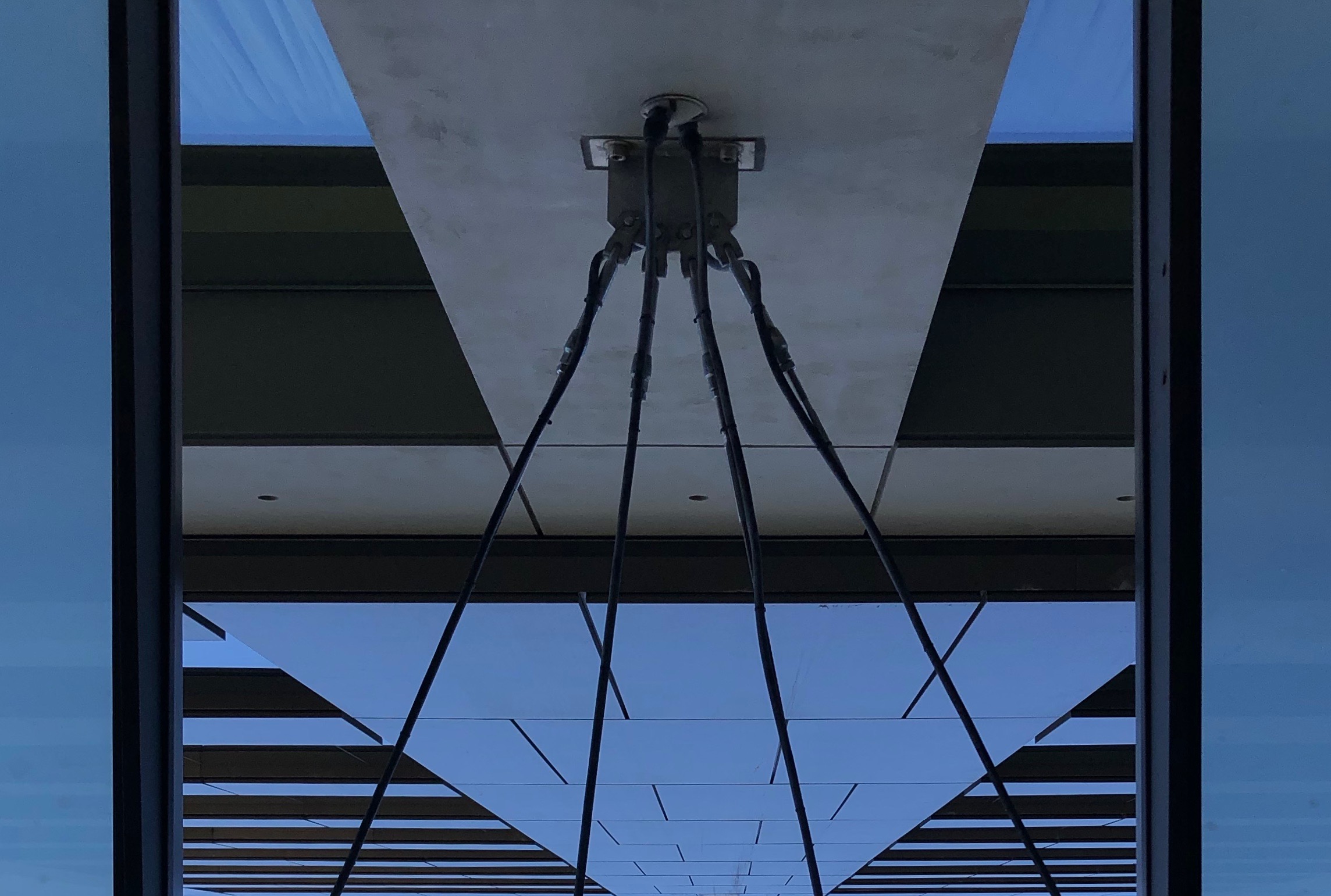
With not-so-great photos, I like to push the crop and zoom feature to its Earthly limits, until the photo ends up in the ‘abstract’ bin.
‘In Pink Study #3, the Photographer’s limited understanding and abilities are bypassed through daft use of a particular tool. Mediocrity is layered upon mediocrity, as your Eye passes briefly over the result.
-IPhone 8.
$6,000 USD
The title says it all.
Thanks for stopping by, and to everyone that has.
I like the term ‘citizen scientist,’ as it is flatters me. It keeps me pursuing goals. I’ll be that guy at the party who knows a little something. Let’s converse. Let’s look each other in the eyes for a moment.
I’m currently collecting rocks in local Seattle parks for an AI identification project.
We each have wells down which we can gaze. We know this. A smile is enough. The birds suddenly whirl-up and are gone. The conversation moves on. Tis better to have loved and lost, and all that.
Life is strange. Love is all?
You have a joy you keep close to your heart. Keep it there.
This one gets me: A man goes up to his attic to grab some things before a tornado arrives. He points the phone out, standing in place. Terrified? Mesmerized?
The monster approaches.
His life is engulfed, briefly, by Nature’s fury. His life must be engulfed, afterwards, in loss and despair.
With exponentially more computing power comes more input, and enough variables to recreate and predict actual tornadic conditions.
Step back from the terror; the place where death comes. Climb inside a supercell and see what might be going on. Supercells are rare. EF5 supercells are very, very rare.
Beautiful.
Storm-chasing attracts daredevils. I’ll bet there must be any number of douchebags on the circuit.
It takes courage. Some humility even. More video data and live, human experience can be collected into useful channels.
Better understanding can help save lives.
Sometimes, you take the wrong path, or make the wrong decision. You may not know it at the time, but you come to know it soon enough. An anti-cyclonic vortex bears down, roaring away at 200 mph.
This is it. Fuck. No. Please. Oh God.
No matter how much knowledge and experience you have, one wrong decision can cost you your life:
Keep looking up: Lightning can lead to the edges of our atmosphere, and into space.
What’s the weather like on Mars? Where’s all the water? Does it have conditions which still harbor life?