
Seattle Photo-Just A White Dog

—

—

Working on color, while there’s still sun.

—


—

I Saw
In a crow’s eye
cloud and sky
become memory


Thanks for looking.

—


My Favorite Prophet.
July is heating-up, and Aurora Avenue heats-up even more with three dead runaways in three weeks.
Another Ted Bundy?
Detective Harry Rama is out of incense, out of free sandwiches, and most importantly, out of time.
A Bellinger True Crime Series Classic.

—
Pop open a Willer.
Thanks for looking.

—

…and have some fun.

—

—

It’s unusual to see a religious revival in Seattle.
The first and last photos are of a man nearby.

—

—

—

—

VIII
I know noble accents
And lucid, inescapable rhythms;
But I know, too,
That the blackbird is involved
In what I know.

—


It’s all about perspective, man.

—

—

Not a favorite, but just playing around with design lately.

A late afternoon breeze blew, tumbling a ball of wrapping paper a few feet across the pavement; turning an empty plastic cup around on its lid.
A piece of dust lodged itself in Harry’s eye.
No one here was going anywhere…

—


—

What are you hoping for?

—


—
Old Age
The seas are quiet when the winds give o’er;
So calm are we when passions are no more.
For then we know how vain it was to boast
Of fleeting things, so certain to be lost.
Clouds of affection from our younger eyes
Conceal that emptiness which age descries.
The soul’s dark cottage, batter’d and decay’d,
Lets in new light through chinks that Time hath made:
Stronger by weakness, wiser men become
As they draw near to their eternal home.
Leaving the old, both worlds at once they view
That stand upon the threshold of the new.

—

—

Thanks for looking.

—


Alas, the city.

—


Just looking for some color out there.

—
Wistful melancholy.

What’s going on around here?

—
You called but I missed you…

Thanks for looking.

—


Sometimes you roam the streets of an industrial zone, hungering for the glittering city in your mind.


Is your duck too close?

The river rushes by. One current dies where ten others are born. Death waits in the shadows.


Thanks for looking.

Some people like this kind of thing. Most others think: ‘Focusing on color and light to the exclusion of content, gesture and anything meaningful isn’t for me.’
I get it. It’s practice, really. Thanks for looking.


—

—

The Grauballe Man
As if he had been poured
in tar, he lies
on a pillow of turf
and seems to weep
the black river of himself.
The grain of his wrists
is like bog oak,
the ball of his heel
like a basalt egg.
His instep has shrunk
cold as a swan’s foot
or a wet swamp root.
His hips are the ridge
and purse of a mussel,
his spine an eel arrested
under a glisten of mud.
The head lifts,
the chin is a visor
raised above the vent
of his slashed throat
that has tanned and toughened.
The cured wound
opens inwards to a dark
elderberry place.
Who will say ‘corpse’
to his vivid cast?
Who will say ‘body’
to his opaque repose?
And his rusted hair,
a mat unlikely
as a foetus’s.
I first saw his twisted face
in a photograph,
a head and shoulder
out of the peat,
bruised like a forceps baby,
but now he lies
perfected in my memory,
down to the red horn
of his nails,
hung in the scales
with beauty and atrocity:
with the Dying Gaul
too strictly compassed
on his shield,
with the actual weight
of each hooded victim,
slashed and dumped.
Digging through the past and digging at the thing, a body almost lovingly rendered, made alive on the tongue, looking inward and trying to look forward.
Wikipedia’s Grauballe Man page.
Happy Belated Easter!
I remain convinced that a blog/online presence is secondary to life. A way to document one’s experiences with the things that really matter (many ideas really matter).
Most social media doesn’t seem worth making one’s Self small to fit in the sewer pipes of online communication (a work in progress, these pipes).
Don’t get me wrong, we all gotta pay the rent. I have some admiration for the desire not to starve. God Bless the ones who make me laugh.
The most interesting writers of the day are usually idea merchants; spreading down their cloths upon the cobbles. I admire people gifted enough to display the thoughts of others as though their own.
Living takes it out of you. When you need ideas, may you find what you need. Most importantly, the thoughts you have become your habits, and your habits become your character.
No one gets out alive.
I think that’s why we have this old and important story about the Resurrection…


Gentlemans’ caps. Red, white and blue.

—

Thanks for looking.

Northwest crows live in territorial family groups; foraging constantly for food. From dawn to dusk, you can find the usual customers, at the usual places, at the usual times.
They are cautious, and like a high, safe perch from which to view the world. Upon discovery of a new food source, they scope out the scene carefully, swooping down to ground-level only after the coast is clear.

Not a composite. Just a guy in a bar.


Don’t be so serious all the time.


I understand this isn’t everyone’s cup of tea…

Do you guys remember the old Amtrak baggage car/American Airlines logos?
Engage your sense-memory. No one will find you here. No one.
***Except for the good folks at DataCorp Inc, specifically the Eye Tracking training-unit (shout out to Teddy). Also, I should advise that engagement metrics could be used to curate responsible citizenship through train-travel at Amtrak and the DOT, too (efficient and caring).
****Michael’s cousin Peter knows a guy, and some ‘Colombians?‘ are running terabytes of data in old Dell hard-drives (yes, really) around Cape Horn. Your data could be in there, too.
Thanks for looking.

Luna Girls is a new installation in West Seattle, looking East towards the city. There used to be ‘Luna Park‘ on the tip of Alki Point.

Sometimes you put ’em in pairs, because neither is good enough on its own. Thanks for looking.

—

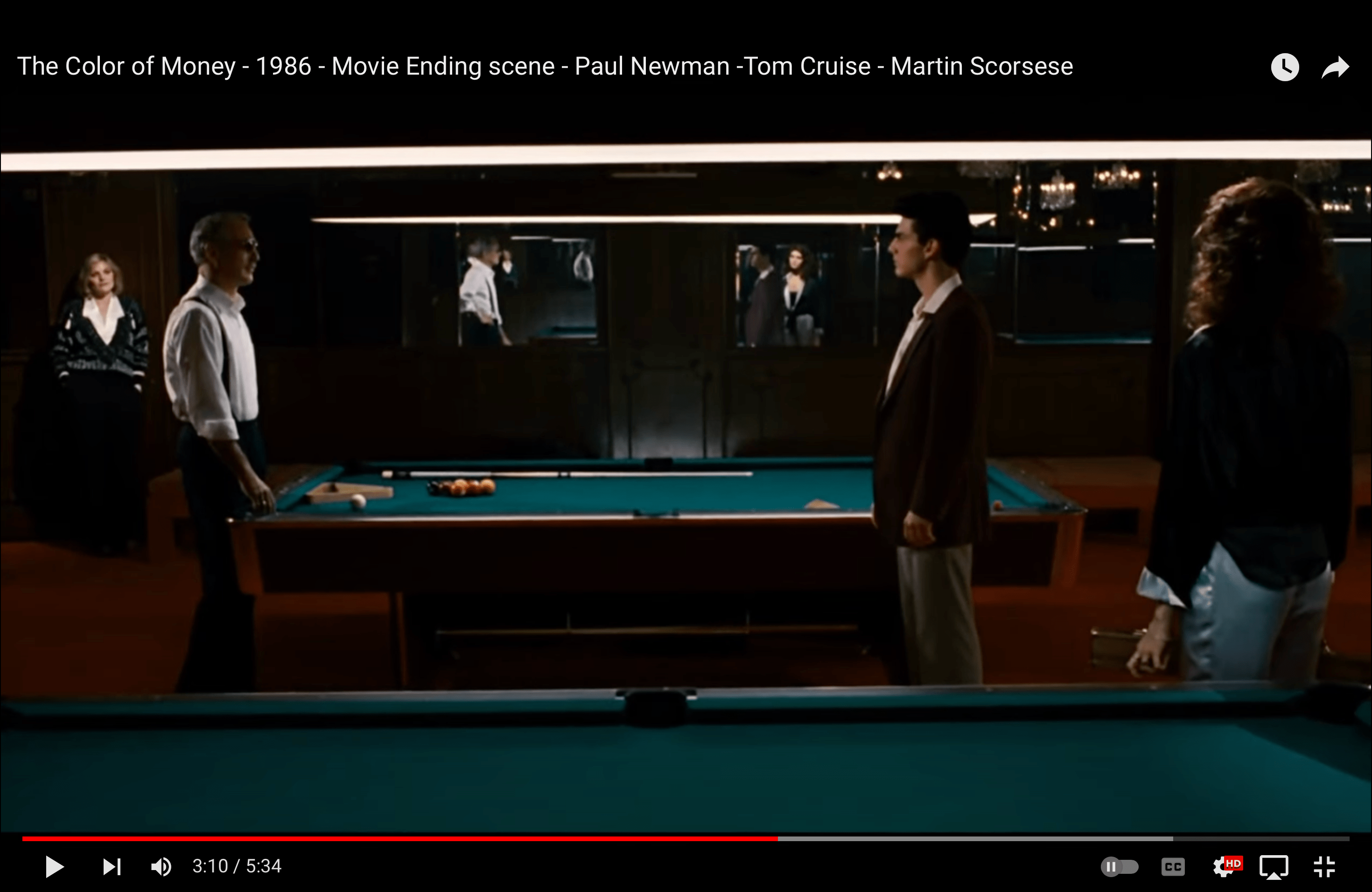
Movie Title: The Color Of Money (Director-Martin Scorsese). 1986.
What’s good and what’s genuine in characters who hustle for a living? Can the American pulp novella/novel be a source of both popular and high entertainment?
Visual Storytelling (end-scene pool showdown): The wiser and more experienced mentor, perhaps washed-up, is being pushed out of the business during his comeback, but he’s not going quietly (we need some dramatic tension). His lady waits for him near the edge of frame, while both of them only take about 1/5 of the frame (all four characters are on the diagonal).
Does he still have it?
—
Brash, untempered (arrogant), less experienced rising talent and his lady take about 1/3 of the frame, closer to the audience. They’ve been hustled; learning the art of the con pretty well.
Should he accept the challenge? Is this it?
Possible conclusions: Maybe that’s what we get in life, a view every now and again. At the height of our powers (or past our powers), we get a moment when the conception of the game and the game become one. In a tacky hall of mirrors, no less. I hope it’s not all a hall of mirrors.
Generations stuck in a stand-off…
My point: A good visual storyteller takes his craft seriously, associating the story and the images to push the story forward. He has an appreciation for beauty. I appreciate Scorsese for working hard because the harder he works, the more my intelligence is respected.
To be honest, the movie dragged on for me and is very much of its time (this is pool for Christ’s Sake, how much can you glamorize pool?). Mythos is tough to achieve.
That said, I appreciate a director practicing his craft and trying to provide some continuity in American life through the visual arts. I appreciate someone who understands that developed characters invite us to see something of ourselves in frame.
Thanks for that.
Open shutters and wet windows…thanks for looking. Most experiments don’t quite work out.

VIII
I know noble accents
And lucid, inescapable rhythms;
But I know, too,
That the blackbird is involved
In what I know.
Thanks for looking.


I like the colors. Something to work towards…thanks for looking

—


—
This was Harry at his most presentable: A shrewd cunning in stillness. Perhaps, he’d even brought me a question.
He was half-again as large as the other gulls near the Market. Not respected, maybe, but feared.
My mind would wander to thoughts of freedom, watching his wings dip and scissor, cutting the air. Sometimes I would watch his eyes, too, scouring the ground for food and the sky for other birds.
The constant shrieking and territorial displays were better than silence, Dear Reader, especially if thoughts of death crept in (how much I missed L).
—
Harry had other behaviors: Gobbling fish guts and slurping coffee directly from the street. One day, he’d snatched a french-fry mid-air from a child’s fingers. After the shock and a brief consolation, we smiled in mutual surprise.
Clever, I suppose.
In short, Harry didn’t give a shit.
In fact, the bird shit wherever he pleased.
This is where our story begins…


Just had a quick visit to family in the D.C. area, and Georgetown has a lot of high-end shops. A vague notion of London flashed through my mind. This is an area with appeal; where attractive women go to shop, see the sights, and be seen.
How does one capture the aesthetic (brick facades, colonial style, gothic script, ye ‘Olde English Shoppe’ vibe)?
The light was winter-light, mid-latitude, coming from over the left-shoulder/south/southwest. There were a lot of subjects, and lots of visual interest.
In photo number one, the reflection seems balanced, but the focus should probably be on one subject, preferably the guy (tough to manage if he’s only reflected). In number two, the umbrella on the right should probably in focus.
Neither are ‘winners’, really, but both have solid elements. They demonstrate that, over time, while taking photographs, you can continue to add judgment upon judgment, experience upon experience, into a ‘tool belt.’ You must make decisions, quick decisions on the street, regarding focus (what’s in focus?), light (shutter, how much to let in?), subject (what’s the story you want to tell?), and composition (what’s in frame, and what did you leave out?).
Each variable is crucial, and in this case, there are some focus and subject (static/boring) issues, to be sure.
Thanks for looking and reading.

—


—-
Dear Nestle, my father taught me the importance of chocolate. I’m submitting this entry to your Nestle Alpine White ‘Sweet Dreams’ campaign.
Better late than never.

The photo’s all real. Just playing around with some text.

—
Kojak’ll chase a perp down a garbage-strewn alley on the lower East Side. Right around minute fifty, just before the last ads for life insurance and Polident.
Someone’s gotta let the mother of another dead hooker taste a little justice.
Maybe a sharply-spoken word unloosens memory; a lost soul’s dreams, floating to some place in the sky.
Maybe amidst the stench of dopeheads and their dealers, greed and thoughtless action..a splash of Old Spice reminds us all of a little thing called hope.
—
This is my favorite:
