Bring your own meaning.

—

—

Bring your own meaning.
—
—
Musee des Beaux Arts
About suffering they were never wrong,
The old Masters: how well they understood
Its human position: how it takes place
While someone else is eating or opening a window or just walking dully along;
How, when the aged are reverently, passionately waiting
For the miraculous birth, there always must be
Children who did not specially want it to happen, skating
On a pond at the edge of the wood:
They never forgot
That even the dreadful martyrdom must run its course
Anyhow in a corner, some untidy spot
Where the dogs go on with their doggy life and the torturer’s horse
Scratches its innocent behind on a tree.
In Breughel’s Icarus, for instance: how everything turns away
Quite leisurely from the disaster; the ploughman may
Have heard the splash, the forsaken cry,
But for him it was not an important failure; the sun shone
As it had to on the white legs disappearing into the green
Water, and the expensive delicate ship that must have seen
Something amazing, a boy falling out of the sky,
Had somewhere to get to and sailed calmly on.
Thanks to reader, Robin Saika:
‘Here is an interesting piece on it: https://www.winchestercollege.org/stories/About_Suffering_They_Were_Never_Wrong
The author reminds us that Auden also refers to Brueghel’s Census in Bethlehem, as well as to Icarus.‘
Images 1 and 3 below, especially, read as illustrations to me, while image 2 acts as more of a bridge. As readers know, I tend towards quiet, observational photographs. There is a progression present moving outdoors-in, to a more intimate space.
Click through for more.

—

—

—
Edward Hopper practiced deep color complentarity in his paintings, balancing cool and warm. I first noticed his use of red here, and it got me thinking:
‘Red is powerful. Hopper’s using it with purpose.‘
This got me thinking a little further: ‘How much red is too much?‘
One ‘painterly’ problem: Red attracts the eye quickly, and William Eggleston went boldly red where other man had, perhaps, gone before.
Henri Matisse went full red one time, but there’s much more: Expert lines, curves, and composition (no focal point) make me feel at home. In fact, I think this domestically-minded Frenchman’s put most of his life’s purpose into his painting.
—
What’s the most aggressive, yet soothing, use of red I’ve seen consistently throughout my life?
Probably a Coke can, billboard, or truck. Check out this Arthur Meyerson photo with a Coke truck in context.
Another color problem: Color draws the eye quickly. Color is powerful. It snatches your eye and mind. The original black-and-white photographers thought color photography would distract, vulgarize, and commercialize; away from subject and composition, especially given the camera technology at the time.
It turns out the old guys weren’t entirely wrong, as many advertisers and fashion photographers barf color all over the place. Some expertly upchuck. Others, alas, puke like Brits on holiday in Ibiza.
Kids with crayons and iPads, shock and awe pop-artist and portraitists, movie directors, and even ideologues making their propaganda, use color freely. We’re all being gradually exposed to the newer synthetic AI stuff coming down the pike. We are living, I believe, amidst an information revolution (storage, access, process and attention). I mean, unless you’re color blind, you see the world in color.
Remember that one sunset and her makeup and the city behind her all blended together?
On that note, Dear Reader, this has been one of the best approaches I’ve found so far along my later, more limited, photographic journey in life:
‘Beware of color theories. Theories in color photography are dangerous. The plain fact that there are so many of them proves my point. A color philosophy comes much closer to the truth. Beware of scientific color tests. They are as quickly outdated as a timetable. Their truth is short lived. Most theories are the result of an attempt to bring one’s practical experiences into a formula. There is no formula. There are only confirmations to formulas which one has already discovered oneself. I myself love to read theories without ever using them when working.‘
Hopefully, I’ve jarred something loose inside your head.
You do the rest.
Harry Gruyaert’s celebrated, but I’d argue he’s still underrated for his mastery of color.
From Kenn Sava, Gruyaert’s not a portraitist, per se:
‘It’s not the person that interests me most. It’s the person in its environment. To me, all the elements are important. I don’t have any particular intention. It’s just what I see.
I think humans have such a great idea about ourselves, but nature is so much more powerful.’
—
According to the interview, American pop-art influenced Gruyaert, potentially freeing him from elements of European formalism (pushing him into some great color work). If you’re interested in seeing fine color, atmospheric and ‘lived-in’ photography, I’d recommend Rivages.
—
As for pop-art, it can often be colorful, innovative, intuitive and non-serious…on the surface.
Frank O’Hara’s mid-century American poems are surprisingly visual. The idea of a wild freedom wrapped within casual conversation; a moment to moment associative intensity is achieved through O’Hara’s form. This is often where we long to be, on the edges of possibilities, living intensely with others (even through memory, sometimes especially through nostalgia and memory).
Also, the poem suggests this freedom as a return to our animal natures; which involves a certain view of Nature, functioning as a Romantically primitive return to Nature. Frankly, it’s a pretty good love poem.
Have you forgotten what we were like then
when we were still first rate
and the day came fat with an apple in its mouth
it’s no use worrying about Time
but we did have a few tricks up our sleeves
and turned some sharp corners
the whole pasture looked like our meal
we didn’t need speedometers
we could manage cocktails out of ice and water
I wouldn’t want to be faster
or greener than now if you were with me O you
were the best of all my days.’
As for color, perhaps this also doesn’t mean color must be completely abstracted into the ambitious meaning-making mission of Mark Rothko. I mean, the sky is blue, the trees green, and the balloons red and yellow.
‘Mark Rothko sought to make paintings that would bring people to tears. “I’m interested only in expressing basic human emotions—tragedy, ecstasy, doom, and so on,” he declared. “And the fact that a lot of people break down and cry when confronted with my pictures shows that I can communicate those basic human emotions….If you…are moved only by their color relationships, then you miss the point.”
Seal the compound…I mean chapel. (come to Houston, land of little zoning, fair pilegrim).
—
Readers will know this blog maintains skepticism for pop-art Neo-dadaism and the consecration of ordinary objects along the Duchamp line (‘American Standard’?). Making Duchampian exceptions rules, even clever rules, can desecrate what’s important.
Everyday people, living right, must keep the important things in view, namely wife/husband/children/parents/death/taxes/health/time; not merely their own impulses nor artistic visions (artists remain acutely aware of such indifference). Meaning is usually to be found within love for another, and this usually means everyday people (& the everyday within us) lives between the sacred and profane: The 9-5 grind and the unexpected conversation about grandma’s death, the enveloping silence afterwards.
Artists, at their best, point towards wisdom, truth and beauty regarding everyday things. All the artists I’m linking to are doing so in one way or another, although ‘how’ and ‘how well’ are endlessly disputed.
I’ve already seen a thousand urinals in my life, Marcel, even a few in my dreams.
The triumph of the conceptual over the actual, the mass-produced over the created; perhaps these aren’t entirely healthy trends. The retreat into (S)elf, and the retreat into irony alongside (A)rt as commodity, perhaps these are dead-ends as much as they are freshly-paved streets. The lamentations of art as (R)eligion could be a leading indicator of a deeper hunger for meaning; a hunger with as many bad as good outcomes for artists and everyday people…
Some food for thought, Dear Reader.
As a contrast, here’s some American art that’s more grounded; some realism with psychological depth, albeit with impressionist influence.
Night Shadows by Edward Hopper:

The black and white was made in 1924.
I think Raymond Chandler’s High Window is among the best of the American detective novel.
Here are some quotations of his, if you’re interested.
“Los Angeles was just a big dry sunny place with ugly homes and no style, but good-hearted and peaceful. It had the climate they yap about now. People used to sleep out on porches. Little groups who thought they were intellectual used to call it the Athens of America.”
Here is the link. It’s been a long time since they just reviewed the book and not the author.
Boy, oh boy, James Ellroy: America’s best current historical crime fiction writer, showing up to entertain, shock and vulgarize:
The poem that most came to mind after looking at Hopper:
Acquainted with the Night
I have been one acquainted with the night.
I have walked out in rain—and back in rain.
I have outwalked the furthest city light.
I have looked down the saddest city lane.
I have passed by the watchman on his beat
And dropped my eyes, unwilling to explain.
I have stood still and stopped the sound of feet
When far away an interrupted cry
Came over houses from another street,
But not to call me back or say good-bye;
And further still at an unearthly height,
One luminary clock against the sky
Proclaimed the time was neither wrong nor right.
I have been one acquainted with the night.
The painting is Monet’s ‘Haystack, 1891‘ at the SAM. Full series here.
‘In a series comprised of over 20 paintings, Monet recreated haystacks during varying weather conditions and at different times of day. Here, a single stack of wheat sits in a sundrenched, late-summer field framed by poplars and rolling hills.’

—

The Great Figure
Among the rain
and lights
I saw the figure 5
in gold
on a red
firetruck
moving
tense
unheeded
to gong clangs
siren howls
and wheels rumbling
through the dark city.
I like Charles Demuth’s fidelity to the original, and use of imagist-imagination. The figure 5 comprises such an important part of the poem.

—
‘Imagism was a sub-genre of Modernism concerned with creating clear imagery with sharp language. The essential idea was to re-create the physical experience of an object through words. As with all of Modernism, Imagism implicitly rejected Victorian poetry, which tended toward narrative.‘
And:
‘The most exemplified phase of Modernism, referred to as “High Modernism,” occurred during the inter-war years (1918-1939). This was the time when writers synonymous with Modernism, such as Virginia Woolf, James Joyce, T.S. Eliot, and D.H. Lawrence, thrived. While Victorians typically concerned themselves with rendering reality as they understood it into fiction, Modernists recognized that reality was subjective, and instead strove to represent human psychology in fiction.‘
In response: I don’t believe reality to be subjective, though I’ve met a lot of people who seem to.
Where’s the proof for such a claim?
For my part, I believe reality is there, and that my senses are giving me evidence and essential elements of reality. One of the strengths of the camera is the ability to move faster than the eye and brain (stuff I’m too slow to notice and process…lots of randomness).
While I’m inspired deeply by much modern art, and was raised in a postmodern milieu, I’ve not been persuaded by postmodern truth and knowledge claims. Postmodernism seems like a game with unclear rules, a few admirable people, and a lot of weirdos answering to Nehru-jacket-wearing authorities spewing gobbledy-gook.
During the post-war years, the confessional poets, with a fair amount of free and blank verse became dominant, with a kind of feelings-first, psychological exploration of the (S)elf. We’re now seeing many downstream effects in our culture (I’ll leave this to your imagination…for good and ill).
The Straussian truth and knowledge claims, as one example, pushes back to a kind of classicist revival, an embrace of tradition, and rejection of much modern and postmodern thinking.
And now for something…somewhat related…
What I’ve Seen Lately In The Lonely Parts Of Town. I like abstraction, and certain shapes I see. I like arranging photos in series/sequences to highlight certain shared variables (color, light, shape etc.). This attraction starts with my senses out in the world, but ultimately must answer to my physical limitations, limitations of my technique/skill and limitations of the camera. It must answer to limitations of time, weather and light conditions, and the wishes of other people.
I’m usually behind reality, or in the wrong position, or I just missed what was a lovely, serendipitous moment. There are the known knowns I missed, the known unknowns, and also the unknown unknowns (stuff I’ll never see, but for example, I can admire in the work of other photographers).
Anyways, what a long-winded ass I’ve become. I hope you find something of value in this short four-photo-sequence.

—

—

—

From our rather reasonable AI overlords: ‘Common skepticism is a healthy critical attitude towards dubious claims, while philosophical skepticism challenges foundational knowledge and the justification for belief itself, demanding proof for everything, a stance few people adopt in daily life.’
I knew a philosophic skeptic, he was smarter than me & fun, but, man…what an asshole.
Commoners have good reasons to be skeptical when it comes to modern art:
Bananas duct-taped to walls seems like bullshit.
‘Titled Comedian, the humoristic piece can be considered a challenge to the sometimes-absurdist nature of the art market and the art collecting world. “To me, Comedian was not a joke; it was a sincere commentary and a reflection on what we value,” said the artist in an interview at the time. “At art fairs, speed and business reign, so I saw it like this: if I had to be at a fair, I could sell a banana like others sell their paintings. I could play within the system, but with my rules.”’
Who can forget the transcendent darkness of this photo (the shock-concept and the celebrity overshadowing the skill/visual impact).
‘He immersed a crucifix he bought in an antique shop in his own urine.‘
Fellow commoners, we have as a counterpoint, rather beautiful, innovative classics like Falling Water, by Frank Lloyd Wright. A pain in the ass to maintain, but still a place for the genuine:
As I see the world: We have beliefs, and we’ve usually locked them away beyond critique. So has most everyone else. Some beliefs have more truth in them than others.
We use shared beliefs to form and maintain relationships. We use them to get stuff and give other people stuff. We rely on shared beliefs to organize events/clubs, workplaces, and hierarchies of judgment and knowledge, without killing each other. Shared beliefs regulate and help us navigate our emotions, as well as our personal, interpersonal and social behavior. We outsource much of our thinking to shared beliefs, while forgetting they’re even there. We’re often proudest of passing our beliefs on if we think they’re true, lasting and important.
The rub is the relationship these beliefs have with truth, and knowledge. A modern rationalist might say something like: ‘We have access to enough scientific and economic knowledge to run the government, and effectively plan your life. (M)an is something holy, and we’ve only just begun perfecting (M)an. Go ahead be creative and vote for the $1 billion arts package or else.‘
A typical Catholic might say something like: ‘Let’s check in with Canon Law. The Pope is closest to God, then the Cardinals, then the Archbishops etc.’ We’re only redeemed through Christ. So….that’s what art should be doing. Capiche?
What if a radical questioning of belief becomes the norm, around which people are…still believing?
What, then, do people actually believe?
What do artists, often radically questioning belief while making stuff, actually believe?
Those increasingly ridiculous artist statements? Some curious mix of irony, doom and nihilism all the way down? Modern mysticism?
A digression: Let’s say a kid in bad neighborhood, at a vulnerable age, joins a gang. He gets protection, savage discipline and access to stuff. The gang serves dark masters of the soul of course (in our case: How to rob specific makes/models of cars and sell them for parts, leaving a trail of harm, making the kid violent and dangerous).
Let’s also say the same kid in a bad neighborhood, on weekends, hangs with his uncle. His uncle fixes cars. Our kid learns to honor something within himself, other people, and the world. Like his time with the gang, life unfolds as a series of challenges, struggles and possibilities. Yet, his lifespan probability opens from twenty-two to sixty-four. Much better of parts of the kid’s nature come forwards. People drive their cars away, grumbling over the price and the delays…but, still.
Clearly, one path is better for the kid, the neighborhood and the rest of us?
Surely?
Now, what if, at school, that same kid is particularly talented, smart and sensitive? What if he is guided by someone towards personal self-expression, and even the eventual self-doubt, poverty and emotional rollercoaster of a typical artist’s life?
Shouldn’t the kid at least be taught how to notice things? how to describe how a good painting looks? how to draw? how to draft? how to mix paint?
Surely?
These days, it seems we find ourselves in a ‘post, postmodern landscape.’
What is this curious, Western belief to ‘blank-slate’ everything? How can it be true that the kid’s emotions are a reservoir and his reason a man-made, oppressive dam? That he just needs to make a dark, mixed-media video collage and he’s arrived?
It seems making simple moral judgments in real-world scenarios raises serious questions about the Romantic/Modern/Postmodern projects.
The case for the visual art over the primacy of concept/idea: Lets say you’re looking at John Singer Sargent’s ‘Lady Agnew Of Lochnaw‘ (somewhere between realism/impressionism). You’re not looking at merely the idea of painting (good paintings already have ideas in them).

—
Maybe you want to touch her skin? How did he paint like that? Look at the color and light. What is the artist saying? This painting took six sittings, but, arguably, a lifetime and maybe the better elements of a civilization to achieve.
A simple case: The Duchamp/Warhol line (concept/idea over visual communication/technical skill) warrants tremendous common-sense skepticism (I’ve gone a little deeper…but you get the point). Enough already.
Bananas duct-taped to walls and crucifixes dunked in piss are not just wasting our time, perhaps they’re harming our imaginations.
There are so many reasons to doubt so much bullshit within modern/postmodern thinking, while at the same time learning from the good.
—
Tom Wolfe went on the T.V. with William F Buckley (too political for my taste) to discuss his book: ‘The Painted Word.’
At min 5:39 Wolfe argues the following (one part of the art/money/celebrity feedback loop):
‘It’s really a religious thing. One thing I didn’t say in The Painted Word, that I should have said, is that art today, is the religion of the educated classes. I don’t mean that by analogy, it isn’t like being a Baptist in 1870, it is being a Baptist in 1870.’
—
From Art vs Machine: Here is a video making the case that Jackson Pollock achieved something, but it wasn’t really the innovative use of drip-paint.
Maybe it was kinda beautiful in its own way? Romantically Primitive?
—
Also, are Robert Hughes criticisms’ of Andy Warhol’s art really blocked by YouTube?
Making a hero of the androgynous anti-hero is orthodoxy these days, but also pretty tired (the Warhol to Bowie line seems over-rated):
—
What came before modernism/postmodernism? Why the below video might be worth listening to (min 34:22):
‘There was a great turn towards emotionalism. There was a sudden interest in the primitive and remote; the remote in time and the remote in place. There was a outbreak of craving for the infinite’
A movement emerged, about 1760–1840, which has deeply affected our conceptions of the Self, Art, heroes and villains, and most importantly, what makes life worth living.
Isaiah Berlin’s take on Romanticism:
—
I’m getting some photos available as prints, mostly by request.
Imagine you’re in a hotel lobby; your flight boards in two hours. Your pre-brain-chip gaze comes to rest upon this beauty.
‘I never look around. This was a good trip.’ ‘Nice design.’
‘Wait a minute…is that…? Oh yes…I SEE NOW. Yes…oh no…I…..I must change my life.’
‘At least it’s not shit.’
Foreground: Bus-stop etching on dirty glass. Background: Hand-painted cafe wall in early-morning light.

I’ve always been fascinated by light. Whenever I can, I read up and try to understand Feynman diagrams or George Gamow’s ‘The Birth & Death Of The Sun.’ Long ago, we bought laser-pointers and played around with the angle of incidence and the angle of refraction.
Weird.
Painters have to represent light on a 2D surface with geometry, materials and technique. It takes years of experimenting with colors and color-mixing. Most of all, artists have to have some kind of vision.
It can take months to make a single painting…
Photographers ‘find’ instead of ‘make,’ deciding where to stand, and when to click the shutter. If you can’t see it in your mind’s eye, you probably won’t ‘see’ a good photograph.
But, you can always get lucky.
Luck helps.

—

Full piece here (behind a wall)
Logan takes a look at one of the most important modern poems:
In a Station of the Metro
The apparition of these faces in the crowd;
Petals on a wet, black bough.
Logan:
‘The minor vogue and rapid extinction of Imagism, a movement whose influence we still feel, has been hashed over by literary critics for a century. Its rehearsal here is merely to bring the poem into focus within the slow progress toward the densities of language, the images like copperplate engraving, that made Pound Pound’
Thorough and well done.
The result would echo back to the States years later:
The Great Figure
Among the rain
and lights
I saw the figure 5
in gold
on a red
firetruck
moving
tense
unheeded
to gong clangs
siren howls
and wheels rumbling
through the dark city.
…
This blog tends to look cautiously at many of the ideas of the Romantic poets, and the break to modernism, but not necessarily the poems themselves. The echo ripples outwards:
…
Mid-August at Sourdough Mountain Lookout
Down valley a smoke haze
Three days heat, after five days rain
Pitch glows on the fir-cones
Across rocks and meadows
Swarms of new flies.
I cannot remember things I once read
A few friends, but they are in cities.
Drinking cold snow-water from a tin cup
Looking down for miles
Through high still air.
Once we start arriving at ‘ecological’ appreciations of nature, and the postmodern, confessional altar of Self and the turn inwards to the Self a subject for the art, and the desperate search for meaning, I get more and more turned off, for my own reasons. Such good poems will carry on.
Any thoughts and comments are welcome.
Thanks to a reader, more on Barzun here.
I read ‘From Dawn To Decadence‘ not long after it came out.
As posted, Barzun at The American Scholar-‘The Cradle Of Modernism‘:
‘For yet another cause of unhappiness was the encroachment of machine industry and its attendant uglification of town and country. The Romanticists had sung in an agrarian civilization; towns were for handiwork and commerce. Industry brought in not factories only, and railroads, but also the city — slums, crowds, a new type of filth, and shoddy goods, commonly known as “cheap and nasty.” And when free public schools were forced on the nation by the needs of industry, a further curse was added: the daily paper, also cheap.’
Via C-SPAN-The Historical Context Of Allan Bloom…From Humanities: Why Nabokov’s ‘Speak, Memory’ Still Speaks To Us
A few decades ago, while visiting D.C., I saw Thomas Cole’s ‘The Voyage Of Life:‘
It’s a four-part series: Childhood, Youth, Manhood, Old Age.
One person’s life, and all of our lives, can be broken-down into four allegorical stages, pregnant with visual and universal symbols.
From Cole’s bio:
‘Although Cole had ample commissions in the late 1820s to paint pictures of American scenery, his ambition was to create a “higher style of landscape” that could express moral or religious meanings.’
From this more interactive page:
‘In the late 1830s, Cole was intent on advancing the genre of landscape painting in a way that conveyed universal truths about human existence, religious faith, and the natural world. First conceived in 1836, the four pictures comprising The Voyage of Life: Childhood, Youth, Manhood, and Old Age fulfilled that aspiration.’
These scenes in the Romantic style can have an emotional pull for me, as generally does the work of the Hudson River School. Such allegory certainly tends to function as a vehicle into memory (Cole’s work has really stuck with me…in a sort of haunting way, mixed with some thought of how I’m supposed to live and what might be coming next).
Also, the wild, untamed nature we Americans have often faced is perhaps requiring of a spirited and grand attempt at putting our experiences within Nature into some context: To soar as high as our hopes often do.
Or at least, to find in paintings: Familiarity. I like to see the roll of a hill like I’ve seen, or an opening of clouds, sky and light like I’ve seen.
Perhaps Wild Nature can be ordered in a Romantic, neo-classical or more modern way. Perhaps Nature can be made, with the tools at our disposal, to conform to some of our deeper ideas about Nature, mirroring our hopes in some recognizable fashion; giving some basic comfort and meaning.
Maybe, after all, we can find a home here.
On the other hand, allegory with overt moral/religious meaning can also come across as heavy-handed, sentimental, and moralistic. Too lush and pretentious; perhaps a bit anachronistic.
Do I really have to hunt for all the symbols and put the puzzle together?
‘So, you’re going to reveal universal truths, eh?’
—
This can seem distant from the experiences of the modern viewer, often finding himself a little further down the modern/postmodern ‘river’, where such attempts at universality might seem a wash.
Much more common these days are the very personal shards and glimpses of the inner life of an artist, attached to high ambition and great talent surely in some cases; as well to form and tradition, but generally making less bold claims to knowledge than ‘The Voyage Of Life‘.
In painting, I’m reminded of the abstract expressionist movement seeking meaning in reducing experience to the abstract in order to reveal something essential within Nature, or essential about our relationship to Nature: A transcendent place where shape, form and color can be isolated from anything immediately recognizable in the world.
Or maybe, I’m being too generous?
‘The movement’s name is derived from the combination of the emotional intensity and self-denial of the German Expressionists with the anti-figurative aesthetic of the European abstract schools such as Futurism, the Bauhaus, and Synthetic Cubism. Additionally, it has an image of being rebellious, anarchic, highly idiosyncratic and, some feel, nihilistic.[5] In practice, the term is applied to any number of artists working (mostly) in New York who had quite different styles, and even to work that is neither especially abstract nor expressionist.’
The exploration of the Self is often pursued, as well as that of Nature, but the general hope that it might all make sense (life, death, Nature, purpose etc) in many more modern movements is often left abandoned.
Or so often, as we’ve seen in the past few generations: The pursuit of The Self can easily become subsumed to the pursuit of fame, celebrity, and money.
***
Towards a theme: Perhaps you’ve also heard of the Rothko chapel, in Houston, Texas.
Mark Rothko undertook the idea that within the modern context, one could create temples of universal meaning through aesthetics, art, and beauty:
‘The Rothko Chapel, founded by Houston philanthropists John and Dominique de Menil, was dedicated in 1971 as an intimate sanctuary available to people of every belief. A tranquil meditative environment inspired by the mural canvases of Russian born American painter Mark Rothko (1903-1970), the Chapel welcomes over 60,000 visitors each year, people of every faith and from all parts of the world.’
See Also On This Site: Trying to stick something against his poems: Wednesday Poem: Wallace Stevens-Anecdote of The Jar…Wednesday Poem: Wallace Stevens, The Snow Man…Friday Poem: Wallace Stevens And A Quote By David Hume
Some Updated Links On Postmodernism
Some Sunday Songs-Metal, Myth, American Romanticism And The Civil War
Within A Bank Of Modern Fog-Another Link To Robert Hughes On Jeff Koons
Morning At The Window
They are rattling breakfast plates in basement kitchens,
And along the trampled edges of the street
I am aware of the damp souls of housemaids
Sprouting despondently at area gates.
The brown waves of fog toss up to me
Twisted faces from the bottom of the street,
And tear from a passer-by with muddy skirts
An aimless smile that hovers in the air
And vanishes along the level of the roofs.
Early Eliot. The most distressed Eliot, trying to build up new forms. Is this English poetry, or American poetry?
From The City Journal: ‘American Architecture’s Classical Revival:’
Well, trying to suffuse an architectural movement with an entire political philosophy might be a little much, but more ‘local’ would be nice. Also, The Northeast has lost population, while many cities and the Southwest have gained.
‘Classical architecture is not just about history; it’s also about light, color, and human proportions, all of which help us understand it and relate to it so naturally. “People will not look forward to prosperity,” Edmund Burke once said, “who never look backwards to their ancestors.” In politics, as in architecture, tastes evolve. But lasting institutions can be built only on strong foundations.’
Some cool photos at the link.
As previously posted on this site. When the Romantic became the Modern, and a great American poet tried to find place in the world, something that would carry from generation to generation.
Postcard From The Volcano
Children picking up our bones
Will never know that these were once
As quick as foxes on the hill;
And that in autumn, when the grapes
Made sharp air sharper by their smell
These had a being, breathing frost;
And least will guess that with our bones
We left much more, left what still is
The look of things, left what we felt
At what we saw. The spring clouds blow
Above the shuttered mansion-house,
Beyond our gate and the windy sky
Cries out a literate despair.
We knew for long the mansion’s look
And what we said of it became
A part of what it is . . . Children,
Still weaving budded aureoles,
Will speak our speech and never know,
Will say of the mansion that it seems
As if he that lived there left behind
A spirit storming in blank walls,
A dirty house in a gutted world,
A tatter of shadows peaked to white,
Smeared with the gold of the opulent sun.
Related On This Site: They designed a city in the heart of Brazil that really doesn’t work for people: Brasilia: A Planned City
No thanks to living in planned communities upon someone else’s overall vision.: Roger Scruton In The City Journal: Cities For Living–Is Modernism Dead?…Repost-Via Reason: ‘Salvador Allende’s Cybersocialist Command Center’…From Grist.Org Via The New Republic Via The A & L Daily: ‘Getting Past “Ruin Porn” In Detroit’…
A structure in the desert…not even a city Update On LACMA, Michael Heizer And The ‘Levitated Mass’-Modern Art And The Public;..where is modernism headed? Via Youtube: Justin, The Horse That Could Paint…
Denis Dutton suggested art could head towards Darwin (and may offer new direction from the troubles of the modern art aimlessness and shallow depth…the money and the fame) Review of Denis Dutton’s ‘The Art Instinct’
Roger Scruton In The American Spectator: The New Humanism…From Nigel Warburton’s Site: A Definition of Humanism?…From The City Journal Via Arts And Letters Daily: Andre Glucksman On “The Postmodern Financial Crisis”
Night Shadows by Edward Hopper.
The black and white was made in 1924, and is probably most evocative of noir.
I think Raymond Chandler’s High Window is the best of the detective novel.
Here are some quotations of his, if you’re interested.
“Los Angeles was just a big dry sunny place with ugly homes and no style, but good-hearted and peaceful. It had the climate they yap about now. People used to sleep out on porches. Little groups who thought they were intellectual used to call it the Athens of America.”
Here is the link. It’s been a long time since they just reviewed the book and not the author.
The poem that most came to mind:
Acquainted with the Night
I have been one acquainted with the night.
I have walked out in rain—and back in rain.
I have outwalked the furthest city light.
I have looked down the saddest city lane.
I have passed by the watchman on his beat
And dropped my eyes, unwilling to explain.
I have stood still and stopped the sound of feet
When far away an interrupted cry
Came over houses from another street,
But not to call me back or say good-bye;
And further still at an unearthly height,
One luminary clock against the sky
Proclaimed the time was neither wrong nor right.
I have been one acquainted with the night.
If you were a kid at the right time, you caught snatches of detective shows on T.V; maybe without having ever watched a full episode.
Columbo seemed rumpled but classy, deceptively ensnaring his prey. Magnum P.I. drove a Ferrari and had a friend with a helicopter. Matlock was clearly for the Olds.
One night, we caught an episode of Stacy Keach as Mike Hammer. The intro screen advertised ‘Mickey Spillane’s’ Mike Hammer.‘
Intrigued by a rumor filtered down from the adults, my brother grabbed a phone book. Mickey Spillane’s listed. He lives nearby.
‘It’s ringing.‘ He says.
‘Mr Spillane? I just wanted to say we’re here watching Mike Hammer and we’re nearby and we really like it.’
‘Yes.‘ my brother says. ‘Sure.’
‘Thank you Mr. Spillane.‘
—
The photo below reminds me of a poster for a knock-off T.V. detective.
I’m strolling by and see a single shaft of weak light falling though a Pioneer square bar. It’s falling right on this gentleman on the corner seat. He sees me seeing him.
Should I take the shot?
I raise my camera and start snapping away as I walk towards the entrance (me and God/the Gods are working this behavior out).

—
There’s absolutely nothing funny about Telly Savalas playing Kojak as reported by Norm MacDonald to Jerry Seinfeld, shattering naive fictions in solving a T.V. crime-drama:
Paul Wood discusses the works of Robert Smithson (Broken Circle, Spiral Hill) and Richard Serra (Fulcrum, Spin Out):
Land-art pieces are site-specific. They require you to be there and experience them, designed as they are to be within the specific spaces they occupy.
In so doing, they break from previous modernist ‘Readymades‘ and reproduced images (I don’t know about you, but I’m tiring of so many commentaries on consumerism, the desire for craft over mass production, a certain collective vagueness against such disposability…the dream of unique Selfhood, celebrity even, amidst a thousand urinals).
As a viewer, you’re supposed to interact with these pieces and start feeling and thinking differently than perhaps you might have otherwise. Walk around, through, and over them. View one hillock from another. Walk back over to the first hillock and look from whence you came. The view is never quite what you were imagining.
Time is clearly intended to be an element, here; the long sweep of geologic and/or historical time as the artist understands it, as well as the relative brevity of personal time during just a 10-minute visit.
These pieces can act as signposts towards Nature and what we can begin to observe of our specific natural environments (steel rusts in unique, but perhaps underlying, patterns…winds blow at different angles and around different obstacles in one grove as opposed to another, these lichens are growing here…other lichens over there, are they the same species?).
If you pull the piece out of its specific environment, it may just wither and die, looking out-of-place as many other products of civilization do amidst natural settings (a jar in Tennessee). Perhaps, though, they won’t look quite so out-of-place as mass-produced objects because of such careful design and attention to detail.
That said, these pieces will eventually look quite awkward undergoing the changes they will undergo if Nature’s Laws are any guide (Romantic/Modernist recreations of Nature can promise the comforts of Home).
Here’s Wikipedia, keeping it simple:
‘Land art, earthworks (coined by Robert Smithson), or Earth art is an art movement in which landscape and the work of art are inextricably linked.’
From the video description:
‘Robert Smithson and Richard Serra both believed that sculpture should have a dialog with its environment. This program explores the challenging dialectic of the site-specific sculpture of Smithson and Serra through examples of their work. In an interview, Serra discusses the aspects of time and context in relation to his art as well as the influence of Smithson.’
Maybe it’s worth pointing out that Serra seems interested in symmetry, visualizing and realizing abstract shapes with the help of some mathematics and the practice of drawing/drafting. Interesting problems can arise from tooling around with shapes on paper (a practice of Serra’s), the kind I’m guessing folks fascinated by puzzles and software and math love to solve.
But Serra’s not a mathematician nor an engineer nor an architect. He’s not writing a proof for its own sake nor building bridges nor houses for practical use.
Rather, the intuitive and creative impulses of the artist take over in his work, a kind of creative exploration, as well as the dialog between fellow artists, living and dead.
Much (A)rt, of course, is useless for most, if not all, purposes. It’s one of the things that can make it meaningful for people. There can be a significant gap between what the artist may have felt, thought and realized, and which emotions, thoughts and experiences any viewer/listener might have in interacting with a particular piece.
Serra, in his work, wants to alter the thinking of anyone moving through the space he creates by manipulating specific substances like steel (he has a facility with the material), and by getting viewers to a point of reorientation of spatial and temporal awareness.
Of course, this involves reorientation towards certain ideas as he understands them, and by promising people a return to themselves, or a state of experience and creative play perhaps similar to that of the artist.
Here’s a Charlie Rose interview:
More about Land Artists:
Any thoughts and comments are welcome. Feel free to highlight my ignorance…
Related On This Site:A structure in the desert…not even a city Update On LACMA, Michael Heizer And The ‘Levitated Mass’-Modern Art And The Public
Denis Dutton suggested art could head towards Darwin (and may offer new direction from the troubles of the modern art aimlessness and shallow depth…the money and the fame) Review of Denis Dutton’s ‘The Art Instinct’
No thanks to living in planned communities upon someone else’s overall vision.: Roger Scruton In The City Journal: Cities For Living–Is Modernism Dead?…
Modern Art For Sale In The Middle-East-From The New Yorker: ‘Richard Serra In the Qatari Desert’
‘Detroit Nocturne‘ found here. Via Mick Hartley.
I’m partial to ‘Joey’s Meatcutter Inn, Bar & Grill 2017‘:
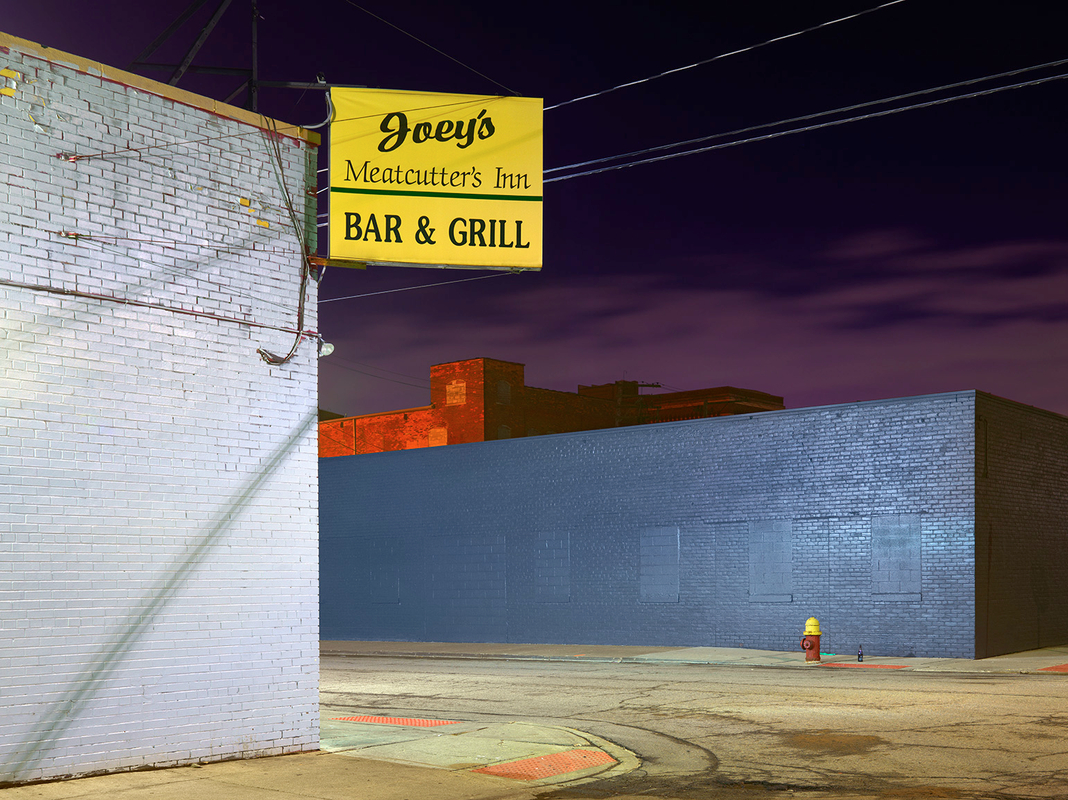
Immediately, I think of Edward Hopper: The lonely cityscape at night or the familiar glow of gas station lights cast into the American wilderness. The eye might want to linger among the colors, shapes and clouds even though the mind knows this is pretty much an empty street in a ‘post-industrial’ zone.
Perhaps it has do with another strand of expression: The break into free verse from past forms. The move from American Romanticism to Modernism which occurred this early past century. William Carlos Williams produced many good poems from a process of earnest, scrapbook-style intensity in trying to discover, redefine, and order a new poetic form within a modern ‘urban landscape.’
The individual artist is quite alone in the task he’s set before himself, and like much of modernism, it’s a rather big task.
Pastoral
When I was younger
it was plain to me
I must make something of myself.
Older now
I walk back streets
admiring the houses
of the very poor:
roof out of line with sides
the yards cluttered
with old chicken wire, ashes,
furniture gone wrong;
the fences and outhouses
built of barrel staves
and parts of boxes, all,
if I am fortunate,
smeared a bluish green
that properly weathered
pleases me best of all colors.
No one
will believe this
of vast import to the nation
Do you believe any of that to be of vast import to the nation? Are you no one?
Another one of Jordano’s photos which stuck out was: ‘Church Rectory With Lightning, Eastside, Detroit, 2016

Perhaps I’m not wrong in having called Halloween horror stills and movie images to mind (it’s my mind, after all, so maybe I’m just thinking of Devil’s Night). I really enjoy the light on the dumpster and the side-front rectory wall. There seems to be a little more mood here, more drama, so maybe Edgar Allan Poe’s ‘psychological intensity,’ his surrealism, and terror are more appropriate for comparison.
Poe was a bit mad, after all, despite his fascinatingly untamed and powerful imagination. He achieved a uniqueness and completeness of vision few artists do. Maybe there’s a bit of the sullen, self-aggrandizing earnestness in him of the teenager (J.D. Salinger); the desire to shock, delight and terrify.
The mind is as though a chamber, the horror rises to fever pitch, the lush rhyme matches an increasingly desperate search for truth and beauty in the world (Poe had very much his own Romantically inspired metaphysics).
Alone
From childhood’s hour I have not been
As others were—I have not seen
As others saw—I could not bring
My passions from a common spring—
From the same source I have not taken
My sorrow—I could not awaken
My heart to joy at the same tone—
And all I lov’d—I lov’d alone—
Then—in my childhood—in the dawn
Of a most stormy life—was drawn
From ev’ry depth of good and ill
The mystery which binds me still—
From the torrent, or the fountain—
From the red cliff of the mountain—
From the sun that ’round me roll’d
In its autumn tint of gold—
From the lightning in the sky
As it pass’d me flying by—
From the thunder, and the storm—
And the cloud that took the form
(When the rest of Heaven was blue)
Of a demon in my view—
Nice photos, Dave. Thank you.
As previously posted:
Via Curbed Detroit. (via David Thompson)
70 photos of the abandoned, foreboding Temple. Mysterious symbols and a certain sad grandeur that’s come to represent Detroit these days.
-Photographer Ben Marcin has a series called ‘Last House Standing.’ Solitary row-homes…the only ones left on the block.
From Buzzfeed: ‘Why I Bought A House in Detroit For $500:’
How did Detroit get here? Very comprehensive and easy to navigate.
More from Megan McArdle on the behavior that comes with pension bonuses.Charlie LeDuff, Detroit’s populist, citizen journalist’s youtube channel here. At least he’s sticking around.
Are you looking at beautiful photos and feeling sorry for Detroit, and yourself? See Time Magazine’s photo essay by Yves Marchand and Romain Meffre (less porn-like, more thoughtful).
Hipster hope, artists, collectivists and small business types can’t save it either: A Short Culture Wars Essay-Two Links On Detroit & ‘Ruin Porn’
GM is not a municipality, but good money got put in, probably after bad and it reeks of politics: From The Detroit News: ‘How The Treasury, GM Stock Deal Got Done’
You Can Have It
My brother comes home from work
and climbs the stairs to our room.
I can hear the bed groan and his shoes drop
one by one. You can have it, he says.
The moonlight streams in the window
and his unshaven face is whitened
like the face of the moon. He will sleep
long after noon and waken to find me gone.
Thirty years will pass before I remember
that moment when suddenly I knew each man
has one brother who dies when he sleeps
and sleeps when he rises to face this life,
and that together they are only one man
sharing a heart that always labours, hands
yellowed and cracked, a mouth that gasps
for breath and asks, Am I gonna make it?
All night at the ice plant he had fed
the chute its silvery blocks, and then I
stacked cases of orange soda for the children
of Kentucky, one gray boxcar at a time
with always two more waiting. We were twenty
for such a short time and always in
the wrong clothes, crusted with dirt
and sweat. I think now we were never twenty.
In 1948 the city of Detroit, founded
by de la Mothe Cadillac for the distant purposes
of Henry Ford, no one wakened or died,
no one walked the streets or stoked a furnace,
for there was no such year, and now
that year has fallen off all the old newspapers,
calendars, doctors’ appointments, bonds
wedding certificates, drivers licenses.
The city slept. The snow turned to ice.
The ice to standing pools or rivers
racing in the gutters. Then the bright grass rose
between the thousands of cracked squares,
and that grass died. I give you back 1948.
I give you all the years from then
to the coming one. Give me back the moon
with its frail light falling across a face.
Give me back my young brother, hard
and furious, with wide shoulders and a curse
for God and burning eyes that look upon
all creation and say, You can have it.
Repost-A Reaction To Jeff Koons-For Commerce Or Contemplation?
Denis Dutton suggests art could head towards Darwin (and may offer new direction from the troubles of the modern art aimlessness and shallow depth) Review of Denis Dutton’s ‘The Art Instinct’
Two ways around postmodernism, nihilism?: Through postmodernism? One is Allan Bloom Update And Repost: ‘A Few Thoughts On Allan Bloom–The Nietzsche / Strauss Connection’…A structure in the desert…not even a city Update On LACMA, Michael Heizer And The ‘Levitated Mass’-Modern Art And The Public;.
I
Black brushstrokes
within yellow-gold grasses
become breeze-shaken
shadows; a wild
stillness in motion.
The moon curls
in aquamarine; above
pink, gray and blue-white swirls
of cloud. The eye catches
a few bright patches
within the dark-leafed cypress.
Two pillars; as one would bless
each breath with starlight.

—
Beauty, ugliness, youth, strength, and decay: Via Mick Hartley Bruce Davidson at Magnum’s ‘Subway‘.
Many of the images in Subway are sensual, dangerous and raw, but then again, so was the NYC subway in about 1979 or 1980. Davidson plays with different exposures, techniques and settings, eventually deciding on using color to depict what he saw. He also reportedly toned-up physically, geared-up, and mentally prepared himself to get off and on those subway cars during the project. He had some undercover city cops with him a few times.
Imagine how conspicuous a new Nikon/Canon DSLR and a flash would make you in one of those cars at night (he, in fact, had one camera stolen).
Come for the raw, dangerous subject matter and the vicarious risk (oh yeah, it can happen again…just stay tuned). Stay for Davidson’s compositions, subtle use of light and color, and the genuine humanity he found within his larger vision.
Is a certain dangerous, glamorous adventure beneath you?
What about in your prime?
What can the ‘rebellious’ artists overlook in their search for ‘humanity’? What can they see pretty clearly through the lens?
—
It’s not like these problems haven’t been with us for a while. Without police protection, you’ll probably get worse outcomes and more retributive violence. A reader sends a link to The Confessions Of Bernhard Goetz, subway vigilante:
There’s a lot here: Genuine threat (thugs), fear, real victimization (previous muggings and a likely soon-to-be mugging), but also serious ignorance and over-reaction.
I imagine Goetz was a bit like a feral animal fleeing out of that subway car, up the station stairs and into the night.
From min 33:40:
The question to be litigated was whether the community would make a judgment about his (Goetz) own good faith belief….are we in a position to condemn him for over-reacting?
—
Great interview on matters of NYC crime from a reporter and a cop active at the time. From Jeffrey Epstein to the Bernie Goetz backstory (starts at min 26:00):
NYC couldn’t protect Goetz from a robbery 6 months before (permanent trauma and kneecap damage), and wouldn’t let him get a gun. He likely saw his assailant likely get out of the precinct before he did that time around.
So, a law-abiding equipment-tester gets and muggable-looking guy gets a gun, ready for the eventual ‘give me five-dollars’ subway fun.
And…he overreacts…but…can you blame him?
—
From The Warriors to Dirty Harry to Death Wish, a certain gritty, pulpy style was born. One of the main desires of men, especially, is to quash injustice and heroically protect that which falls under their honor. When the authorities can’t combat crime in public transport, or choose to enforce the law selectively, then the desire for vengeance, punishment and order finds outlets.
Some photos by Vermeer and Johns at the link:
‘My college art history course conveyed the Modernist Establishment party line that the practice of painting was teleological, that its ordained end was the Platonic ideal manifested by the New York School of Abstract Expressionist art. That’s the message I got by the end of the school year. And it was confirmed by the many examples of that style displayed on the pages of Time magazine in the late 1950s.’
and:
‘One such painter was Jasper Johns (b. 1930) who chose to paint objects that were already flat…’
As for the Abstract Expressionists, my grandfather was friends with Eddie Dugmore, and we had a painting of his up on the wall. I remember that it was abstract, and dark, and kind of raw.
Here’s a video on an exhibition of his:
Related On This Site: In The Mail: Vivian Maier…From Vanity Fair: ‘Reverse-Engineering A Genius (Has A Vermeer Mystery Been Solved?)
Goya, that modern, had to make a living from the royal family: Goya’s Colossus…Goya’s Fight With Cudgels…Goethe’s Color Theory: Artists And Thinkers…NASA Composite Image Of The Earth At Night…Beauty?…Garrett Mattingly On Machiavelli-The Prince: Political Science Or Political Satire?
DDiD, dawg (screaming ((not yawping) like little German crybabies, these days).
Dirda reviews this biography of Julian Hawthorne.
Did you know Hawthorne had a son who wrote for Hearst and rubbed shoulders with Twain?:
‘Over the course of his long life, Julian Hawthorne seems to have met every major literary and public figure of his time. As a child, he sometimes listened in as his father conversed with Emerson, Thoreau and Melville. At birthday parties, he played games with little Louisa May Alcott.’
Also from Michael Dirda, check out his visit to ‘Mencken Day’ in Baltimore:
‘We stayed for the afternoon talk-in which Richard Schrader revealed how slanted and inaccurate Mencken’s account of the Scopes evolution trial had been…’
The business of monkeys…
I’m often returned to the simple pleasures of bookishness while reading Dirda.
From a previous piece at the Times Literary Supplement (subscription required):
“As a student of his native literature, Mencken favours writers with the authentic American yawp – Walt Whitman and Mark Twain, the humorists George Ade and Ring Lardner. Huckleberry Finn is the novel he loves most (followed, somewhat surprisingly, by Joseph Conrad’s Lord Jim). He judges Emerson to be overrated – “an importer of stale German elixirs, sometimes direct and sometimes through the Carlylean branch house”. He can’t bear the circumlocutions of Henry James and the gentility of William Dean Howells”
See Also: How To Study Literature: M.H. Abrams In The Chronicle Of Higher Ed…
Elixirs and ideas Roger Scruton At The New Atlantis: ‘Scientism In The Arts & Humanities’ From Scientific Blogging: ‘The Humanities Are In Crisis-Science Is Not’ Repost-Adam Kirsch At The New Republic: ‘Art Over Biology’…Repost-Stanley Fish At The NY Times Blog: ‘The Last Professors: The Corporate Professors And The Fate Of The Humanities’
Menand wonders in his new book, why it often can take 9 years for a humanities PhD to get their doctorate. He suggests part of the answer lies in the numbers: fewer opportunities and fewer university programs since 1970. Overtrained and underpaid.
Andrew Ferguson on Andrew Wyeth: ‘Terror In The Abstract:’
Andrew Wyeth homepage here with some images included.
There are definitely interesting things going on with light in Wyeth’s work. It fills his paintings. I also find my eye and mind hovering between realist depiction and abstract arrangement of objects on the canvas.
Ferguson:
‘Beneath the frequent prettiness, most of the pictures are just this side of harrowing, not just lonesome and melancholy but portraits of life as it seeps inevitably away. The wind that lifts the lace curtain in Wind from the Sea makes the hair on your arms stand up. Jamie Wyeth, Andrew’s son and a celebrated artist himself, confesses to being puzzled by the benign view of Wyeth’s work. “My father’s work is terrifying,” he said. It’s not sentimental. It’s luminous! But in a creepy way.’
Wyeth reached a level of popular appreciation few artists ever receive in their lifetimes.
Like many Americans, I find myself drawn to what I would call a New England plainness and Yankee work ethic and aesthetic, which is evident is some of Wyeth’s landscapes, at least. Long winters and deep woods. Shorter distances and stonier soil in the meadows. Perhaps a Puritan, high-minded spiritual reserve.
Robert Frost, Emily Dickinson and Nathaniel Hawthorne spring immediately to mind, but, I confess so did that gothic Mainer and fiction horror-writer Stephen King.
Or perhaps the Shaker work song ‘Simple Gifts’ adapted by Aaron Copland might be a good example of what I’m trying to get at.
————————————–
So, is this representative of Wyeth? Perhaps. He did much of his work in Chadds Ford, Pennsylvania and Maine, but according to Wikipedia there may be other influences as well:
‘N.C. also fostered an inner self-confidence to follow one’s own talents without thought of how the work is received. N.C. wrote in a letter to Wyeth in 1944:[8]
“The great men [ Thoreau, Goethe, Emerson, Tolstoy] forever radiate a sharp sense of that profound requirement of an artist, to fully understand that consequences of what he creates are unimportant. Let the motive for action be in the action itself and not in the event. I know from my own experience that when I create with any degree of strength and beauty I have no thought of consequences. Anyone who creates for effect — to score a hit — does not know what he is missing!”‘
So, I’m speculating. Addition: There’s also a strong modernist-influenced creative imagination at work here too, and like Hopper, the American question of what to do with all that space and wilderness.
Yet, a man able to walk familiar land, seeing it anew with keen eyes, hoping his senses pick up more than he knows, having a medium with which to express his thoughts seems a man who’s had some success in life, regardless of popular appreciation.
Of course, a concupiscent eye must come into tension with other parts of a man’s character.
Or at least when there was a tittering about his ‘Helga‘ paintings a while back.
Ferguson:
‘Stopping to rest near a group of European spring beauties, he saw on a trail above him a young woman on a walk. Assuming she was alone, she moved off the trail, lifted her skirt, and defecated in the grass. Wyeth was charmed. “The white curve of her bottom was amazing,” he told Meryman. The little lumps she left tumbled downhill and stopped in the patch of spring beauties.’
Well, there you go, America.
————————
Repost-A Reaction To Jeff Koons-For Commerce Or Contemplation?
Roger Scruton says keep politics out of the arts, and political judgment apart from aesthetic judgment…this includes race studies/feminist departments/gay studies etc.: Roger Scruton In The American Spectator Via A & L Daily: Farewell To Judgment
Goya’s Fight With Cudgels and Goya’s Colossus. A very good Goya page here.
Joan Miro: Woman… Goethe’s Color Theory: Artists And Thinkers…Some Quotes From Kant And A Visual Exercise
A Reaction To Jeff Koons ‘St John The Baptist’
Denis Dutton suggests art could head towards Darwin (and may offer new direction from the troubles of the modern art aimlessness and shallow depth) Review of Denis Dutton’s ‘The Art Instinct’
I
Black brushstrokes
within yellow-gold grasses
become breeze-shaken
shadows; a wild
stillness in motion.
The moon curls
in aquamarine; above
pink, gray and blue-white swirls
of cloud. The eye catches
a few bright patches
within the dark-leafed cypress.
Two pillars; as one would bless
each breath with starlight.
—
Painting here. Thanks for reading and looking. I still aspire to be a middling poet.
‘It is only shallow people who do not judge by appearances. The true mystery of the world is the visible, not the invisible…’
Logan takes a look at one of the most important modern poems:
In a Station of the Metro
The apparition of these faces in the crowd;
Petals on a wet, black bough.
Logan:
‘The minor vogue and rapid extinction of Imagism, a movement whose influence we still feel, has been hashed over by literary critics for a century. Its rehearsal here is merely to bring the poem into focus within the slow progress toward the densities of language, the images like copperplate engraving, that made Pound Pound.’
Thorough and well done.
The result would echo back to the States years later:
The Great Figure
Among the rain
and lights
I saw the figure 5
in gold
on a red
firetruck
moving
tense
unheeded
to gong clangs
siren howls
and wheels rumbling
through the dark city.
…
…
This blog tends to look cautiously at many of the ideas of the Romantic poets, and the break to modernism, but not necessarily the poems themselves. The echo ripples outwards:
…
Mid-August at Sourdough Mountain Lookout
Down valley a smoke haze
Three days heat, after five days rain
Pitch glows on the fir-cones
Across rocks and meadows
Swarms of new flies.
I cannot remember things I once read
A few friends, but they are in cities.
Drinking cold snow-water from a tin cup
Looking down for miles
Through high still air.
Once we start arriving at ‘ecological’ appreciations of nature, and the postmodern, confessional altar of Self and the turn inwards to the Self a subject for the art, and the desperate search for meaning, I get more and more turned off, for my own reasons. Such good poems will carry on.
Any thoughts and comments are welcome.
Night Shadows by Edward Hopper.
The black and white was made in 1924, and is probably most evocative of noir.
I think Raymond Chandler’s High Window is the best of the detective novel.
Here are some quotations of his, if you’re interested.
“Los Angeles was just a big dry sunny place with ugly homes and no style, but good-hearted and peaceful. It had the climate they yap about now. People used to sleep out on porches. Little groups who thought they were intellectual used to call it the Athens of America.”
Here is the link. It’s been a long time since they just reviewed the book and not the author.
The poem that most came to mind:
Acquainted with the Night
I have been one acquainted with the night.
I have walked out in rain—and back in rain.
I have outwalked the furthest city light.
I have looked down the saddest city lane.
I have passed by the watchman on his beat
And dropped my eyes, unwilling to explain.
I have stood still and stopped the sound of feet
When far away an interrupted cry
Came over houses from another street,
But not to call me back or say good-bye;
And further still at an unearthly height,
One luminary clock against the sky
Proclaimed the time was neither wrong nor right.
I have been one acquainted with the night.
—
As posted:
‘Detroit Nocturne‘ found here. Via Mick Hartley.
I’m partial to ‘Joey’s Meatcutter Inn, Bar & Grill 2017‘:
The lonely cityscape at night or the familiar glow of gas station lights cast into the American wilderness. The eye might want to linger among the colors, shapes and clouds even though the mind knows this is pretty much an empty street in a ‘post-industrial’ zone.
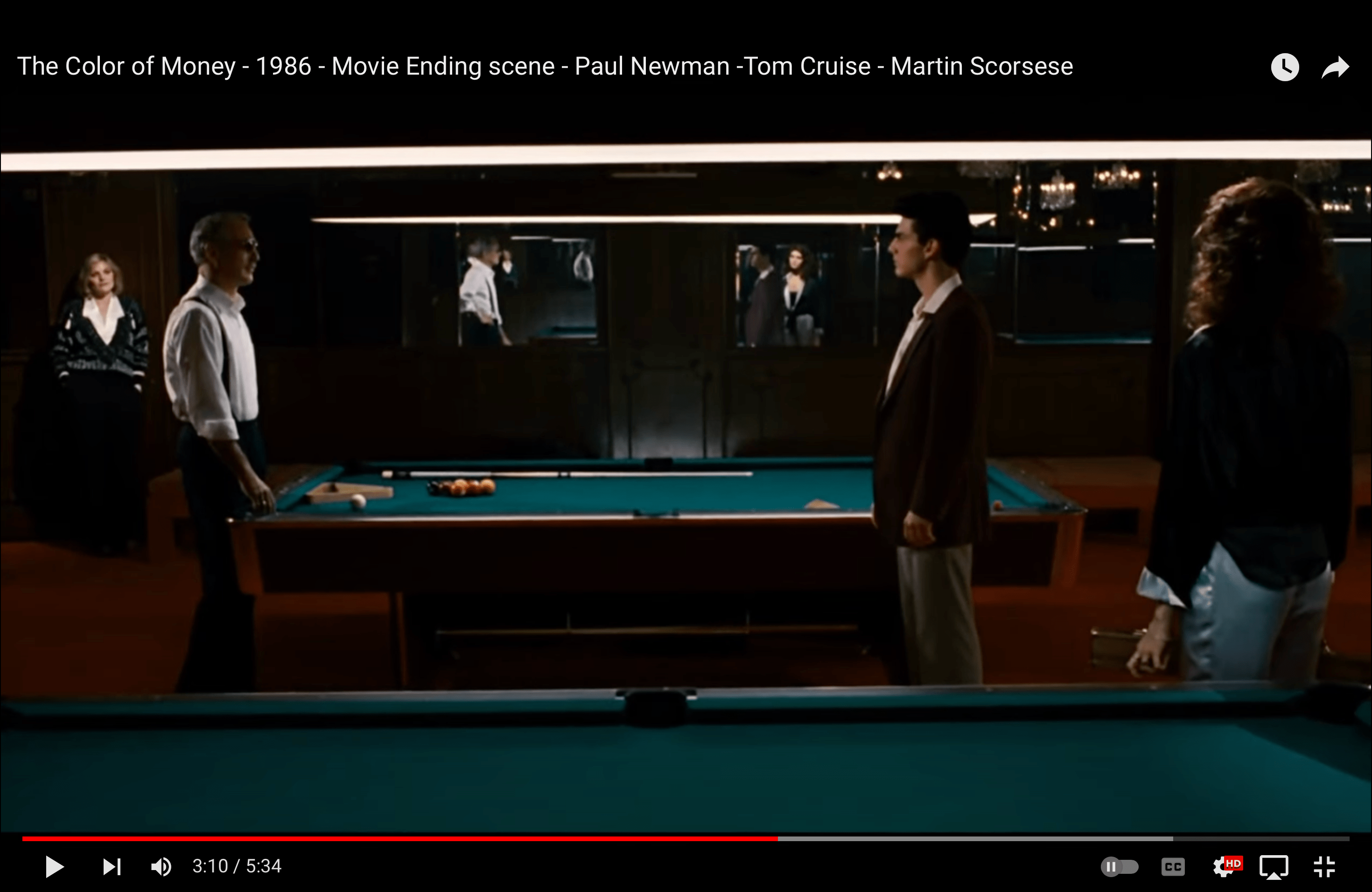
Movie Title: The Color Of Money (Director-Martin Scorsese). 1986.
What’s good and what’s genuine in characters who hustle for a living? Can the American pulp novella/novel be a source of both popular and high entertainment?
Visual Storytelling (end-scene pool showdown): The wiser and more experienced mentor, perhaps washed-up, is being pushed out of the business during his comeback, but he’s not going quietly (we need some dramatic tension). His lady waits for him near the edge of frame, while both of them only take about 1/5 of the frame (all four characters are on the diagonal).
Does he still have it?
—
Brash, untempered (arrogant), less experienced rising talent and his lady take about 1/3 of the frame, closer to the audience. They’ve been hustled; learning the art of the con pretty well.
Should he accept the challenge? Is this it?
Possible conclusions: Maybe that’s what we get in life, a view every now and again. At the height of our powers (or past our powers), we get a moment when the conception of the game and the game become one. In a tacky hall of mirrors, no less. I hope it’s not all a hall of mirrors.
Generations stuck in a stand-off…
My point: A good visual storyteller takes his craft seriously, associating the story and the images to push the story forward. He has an appreciation for beauty. I appreciate Scorsese for working hard because the harder he works, the more my intelligence is respected.
To be honest, the movie dragged on for me and is very much of its time (this is pool for Christ’s Sake, how much can you glamorize pool?). Mythos is tough to achieve.
That said, I appreciate a director practicing his craft and trying to provide some continuity in American life through the visual arts. I appreciate someone who understands that developed characters invite us to see something of ourselves in frame.
Thanks for that.
The Wood-Pile
Out walking in the frozen swamp one gray day
I paused and said, ‘I will turn back from here.
No, I will go on farther – and we shall see’.
The hard snow held me, save where now and then
One foot went through. The view was all in lines
Straight up and down of tall slim trees
Too much alike to mark or name a place by
So as to say for certain I was here
Or somewhere else: I was just far from home.
A small bird flew before me. He was careful
To put a tree between us when he lighted,
And say no word to tell me who he was
Who was so foolish as to think what he thought.
He thought that I was after him for a feather—
The white one in his tail; like one who takes
Everything said as personal to himself.
One flight out sideways would have undeceived him.
And then there was a pile of wood for which
I forgot him and let his little fear
Carry him off the way I might have gone,
Without so much as wishing him good-night.
He went behind it to make his last stand.
It was a cord of maple, cut and split
And piled and measured, four by four by eight.
And not another like it could I see.
No runner tracks in this year’s snow looped near it.
And it was older sure than this year’s cutting,
Or even last year’s or the year’s before.
The wood was gray and the bark warping off it
And the pile somewhat sunken. Clematis
Had wound strings round and round it like a bundle.
What held it though on one side was a tree
Still growing, and on one a stake and prop,
These latter about to fall. I thought that only
Someone who lived in turning to fresh tasks
Could so forget his handiwork on which
He spent himself the labour of his axe,
And leave it there far from a useful fireplace
To warm the frozen swamp as best it could
With the slow smokeless burning of decay.
‘Steelers lost again.’
‘Jess is going to help you move. She’ll be a few miles down the road’
‘I know how this works.‘
‘I talked to the guys from the bank again today’

Via Mick Hartley, Steve Fitch Photography has neon motel signs glowing into the Western night.
He also has a book simply titled ‘Motel Signs:’
“To me, neon really figured in the migration movement on Route 66. The farther you go out West, the more neon you’d see, especially as a presence on motels. You can see towns like Tucumcari, New Mexico, coming from 20 miles away.”
I may harbor skepticism regarding a more anthropological, back-to-Earth Romantic primitivism found in certain quarters (Berkeley, especially), but I certainly appreciate good composition. Click through for more photos and less pre-judgment.
—
As posted, what’s more American than an exiled member of the Russian aristocracy intimately making his way into the English language and peering out from a thousand Motor Lodges?
Nabokov in America: On The Road To Lolita.
Michael Dirda review of the review here.
“Nabokov in America” is rewarding on all counts, as biography, as photo album (there are many pictures of people, Western landscapes and motels) and as appreciative criticism. Not least, Roper even avoids the arch style so often adopted by critics faintly trying to emulate their inimitable subject.’
—
Well, there’s Donald Judd and Marfa, Texas, which looks interesting:
As previously posted, The Critic Laughs, by Hamilton:
Do you long for the days of unabashed American consumerism? Are you nostalgic for nights lit only by a soft, neon glow on the underbellies of clouds? Return to a time when America broadcast its brash, unironic call to the heavens.
But it can be empty, and lonely, and full of hard work and suffering:

Montana Pastoral
I am no shepherd of a child’s surmises.
I have seen fear where the coiled serpent rises,
Thirst where the grasses burn in early May
And thistle, mustard and the wild oat stay.
There is dust in this air. I saw in the heat
Grasshoppers busy in the threshing wheat.
So to this hour. Through the warm dusk I drove
To blizzards sifting on the hissing stove,
And found no images of pastoral will,
But fear, thirst, hunger, and this huddled chill.
And because this blog likes to keep things a bit mysterious, I think ‘New Slang’ by the Shins (James Mercer) captures three strands I can identify: Western U.S. cowboy folk (Home On The Range), English (England) folk, and Pacific NW hipsterdom, which is interesting to me, and because in the arts, I like to like a song, and think about what’s going on afterwards:
That hipsterdom part likely connects with a lot of powerful modern and postmodern strands which could be affecting all of our institutions sooner or later, but, you know…it’s also just a song.
Click here.
Is that a real tower against a painted sky?
Go West.
Postcard From The Volcano
Children picking up our bones
Will never know that these were once
As quick as foxes on the hill;
And that in autumn, when the grapes
Made sharp air sharper by their smell
These had a being, breathing frost;
And least will guess that with our bones
We left much more, left what still is
The look of things, left what we felt
At what we saw. The spring clouds blow
Above the shuttered mansion-house,
Beyond our gate and the windy sky
Cries out a literate despair.
We knew for long the mansion’s look
And what we said of it became
A part of what it is . . . Children,
Still weaving budded aureoles,
Will speak our speech and never know,
Will say of the mansion that it seems
As if he that lived there left behind
A spirit storming in blank walls,
A dirty house in a gutted world,
A tatter of shadows peaked to white,
Smeared with the gold of the opulent sun.
A little authoritative and paternal, but a Romantic poet. A modernist, brilliant with language but precise in meaning, abstract, somewhat philosophical. They say he had a deathbed conversion. Here’s another line of his:
“The poem must resist the intelligence / Almost successfully.“
And then just to frustrate matters more:
Beauty is no quality in things themselves, it exists merely in the mind which contemplates them; and each mind perceives a different beauty.
See Also: Wednesday Poem: Wallace Stevens-Anecdote of The Jar…and while I may not agree with his conclusions, Denis Dutton knows aesthetics pretty well and philosophy too: Review of Denis Dutton’s ‘The Art Instinct’…Bryan Magee Via Youtube: ‘John Passmore on Hume: Section 1′

The Great Figure
Among the rain
and lights
I saw the figure 5
in gold
on a red
firetruck
moving
tense
unheeded
to gong clangs
siren howls
and wheels rumbling
through the dark city.
I like Charles Demuth’s fidelity to the original, and use of imagist-imagination. The figure 5 comprises such an important part of the poem.
‘Imagism was a sub-genre of Modernism concerned with creating clear imagery with sharp language. The essential idea was to re-create the physical experience of an object through words. As with all of Modernism, Imagism implicitly rejected Victorian poetry, which tended toward narrative.‘
And:
‘The most exemplified phase of Modernism, referred to as “High Modernism,” occurred during the inter-war years (1918-1939). This was the time when writers synonymous with Modernism, such as Virginia Woolf, James Joyce, T.S. Eliot, and D.H. Lawrence, thrived. While Victorians typically concerned themselves with rendering reality as they understood it into fiction, Modernists recognized that reality was subjective, and instead strove to represent human psychology in fiction.‘
During the post-war years, the confessionals, with a fair amount of free and blank verse became dominant, with a kind of feelings-first, psychological exploration of the (S)elf.
Dear Reader, this photograph represents the closest I’ve gotten to elements of the modernist imagination so far. I hope you enjoy. The Straussian movement pushes back to a kind of classicist revival, an embrace of tradition, and rejection of much modernity.
***On second-thought, the photo of these parts of very real thing is abstracted into a kind of modernesque design.
Fire Truck Mirrors & A Bit Of Sky

A few decades ago, while visiting D.C., I saw Thomas Cole’s ‘The Voyage Of Life:‘
It’s a four-part series: Childhood, Youth, Manhood, Old Age.
One person’s life, and all of our lives, can be broken-down into four allegorical stages, pregnant with visual and universal symbols.
From Cole’s bio:
‘Although Cole had ample commissions in the late 1820s to paint pictures of American scenery, his ambition was to create a “higher style of landscape” that could express moral or religious meanings.’
From this more interactive page:
‘In the late 1830s, Cole was intent on advancing the genre of landscape painting in a way that conveyed universal truths about human existence, religious faith, and the natural world. First conceived in 1836, the four pictures comprising The Voyage of Life: Childhood, Youth, Manhood, and Old Age fulfilled that aspiration.’
These scenes in the Romantic style can have an emotional pull for me, as generally does the work of the Hudson River School. Such allegory certainly tends to function as a vehicle into memory (Cole’s work has really stuck with me…in a sort of haunting way, mixed with some thought of how I’m supposed to live and what might be coming next).
Also, the wild, untamed nature we Americans have often faced is perhaps requiring of a spirited and grand attempt at putting our experiences within Nature into some context: To soar as high as our hopes often do.
Or at least, to find in paintings: Familiarity. I like to see the roll of a hill like I’ve seen, or an opening of clouds, sky and light like I’ve seen.
Perhaps Wild Nature can be ordered in a Romantic, neo-classical or more modern way. Perhaps Nature can be made, with the tools at our disposal, to conform to some of our deeper ideas about Nature, mirroring our hopes in some recognizable fashion; giving some basic comfort and meaning.
Maybe, after all, we can find a home here.
On the other hand, allegory with overt moral/religious meaning can also come across as heavy-handed, sentimental, and moralistic. Too lush and pretentious; perhaps a bit anachronistic.
Do I really have to hunt for all the symbols and put the puzzle together?
‘So, you’re going to reveal universal truths, eh?’
—
This can seem distant from the experiences of the modern viewer, often finding himself a little further down the modern/postmodern ‘river’, where such attempts at universality might seem a wash.
Much more common these days are the very personal shards and glimpses of the inner life of an artist, attached to high ambition and great talent surely in some cases; as well to form and tradition, but generally making less bold claims to knowledge than ‘The Voyage Of Life‘.
In painting, I’m reminded of the abstract expressionist movement seeking meaning in reducing experience to the abstract in order to reveal something essential within Nature, or essential about our relationship to Nature: A transcendent place where shape, form and color can be isolated from anything immediately recognizable in the world.
Or maybe, I’m being too generous?
‘The movement’s name is derived from the combination of the emotional intensity and self-denial of the German Expressionists with the anti-figurative aesthetic of the European abstract schools such as Futurism, the Bauhaus, and Synthetic Cubism. Additionally, it has an image of being rebellious, anarchic, highly idiosyncratic and, some feel, nihilistic.[5] In practice, the term is applied to any number of artists working (mostly) in New York who had quite different styles, and even to work that is neither especially abstract nor expressionist.’
The exploration of the Self is often pursued, as well as that of Nature, but the general hope that it might all make sense (life, death, Nature, purpose etc) in many more modern movements is often left abandoned.
Or so often, as we’ve seen in the past few generations: The pursuit of The Self can easily become subsumed to the pursuit of fame, celebrity, and money.
***
Towards a theme: Perhaps you’ve also heard of the Rothko chapel, in Houston, Texas.
Mark Rothko undertook the idea that within the modern context, one could create temples of universal meaning through aesthetics, art, and beauty:
‘The Rothko Chapel, founded by Houston philanthropists John and Dominique de Menil, was dedicated in 1971 as an intimate sanctuary available to people of every belief. A tranquil meditative environment inspired by the mural canvases of Russian born American painter Mark Rothko (1903-1970), the Chapel welcomes over 60,000 visitors each year, people of every faith and from all parts of the world.’
See Also On This Site: Trying to stick something against his poems: Wednesday Poem: Wallace Stevens-Anecdote of The Jar…Wednesday Poem: Wallace Stevens, The Snow Man…Friday Poem: Wallace Stevens And A Quote By David Hume
Some Updated Links On Postmodernism
Some Sunday Songs-Metal, Myth, American Romanticism And The Civil War
Within A Bank Of Modern Fog-Another Link To Robert Hughes On Jeff Koons
Sonnet XIV
Not from the stars do I my judgment pluck;
And yet methinks I have astronomy,
But not to tell of good or evil luck,
Of plagues, of dearths, or seasons’ quality;
Nor can I fortune to brief minutes tell,
Pointing to each his thunder, rain and wind,
Or say with princes if it shall go well,
By oft predict that I in heaven find:
But from thine eyes my knowledge I derive,
And, constant stars, in them I read such art
As truth and beauty shall together thrive,
If from thyself to store thou wouldst convert;
Or else of thee this I prognosticate:
Thy end is truth’s and beauty’s doom and date.
—
When You Are Old
When you are old and gray and full of sleep,
And nodding by the fire, take down this book,
And slowly read, and dream of the soft look
Your eyes had once, and of their shadows deep;
How many loved your moments of glad grace,
And loved your beauty with love false or true,
But one man loved the pilgrim soul in you,
And loved the sorrows of your changing face;
And bending down beside the glowing bars,
Murmur, a little sadly, how Love fled
And paced upon the mountains overhead
And hid his face among a crowd of stars.
—
I Knew A Woman
I knew a woman, lovely in her bones,
When small birds sighed, she would sigh back at them;
Ah, when she moved, she moved more ways than one:
The shapes a bright container can contain!
Of her choice virtues only gods should speak,
Or English poets who grew up on Greek
(I’d have them sing in chorus, cheek to cheek).
How well her wishes went! She stroked my chin,
She taught me Turn, and Counter-turn, and Stand;
She taught me Touch, that undulant white skin;
I nibbled meekly from her proffered hand;
She was the sickle; I, poor I, the rake,
Coming behind her for her pretty sake
(But what prodigious mowing we did make).
Love likes a gander, and adores a goose:
Her full lips pursed, the errant note to seize;
She played it quick, she played it light and loose;
My eyes, they dazzled at her flowing knees;
Her several parts could keep a pure repose,
Or one hip quiver with a mobile nose
(She moved in circles, and those circles moved).
Let seed be grass, and grass turn into hay:
I’m martyr to a motion not my own;
What’s freedom for? To know eternity.
I swear she cast a shadow white as stone.
But who would count eternity in days?
These old bones live to learn her wanton ways:
(I measure time by how a body sways).
In a naturally-induced, mildly Romantic dream-state, I learned Seattle and Tacoma combined comprise the 4th-largest container gateway in North America.
Like a cloud myself, and like a bird below the clouds, I moved through hanging gardens of rain. I landed on a ledge to warm my wings. I shook and cried and became the building, expanding as the sun warmed each stone.

—
Partly because of death, love and taxes, partly because some people are forever beating themselves, others, and a confession from the English language, I went looking for the most blue-green grove of late summer I could find.
Somewhere where they just say the sounds of words, and words mean things. Things like deep sorrow and joy, car and ship and tooth. Words full of wisdom and words tied to memory and words seeking each moment as it passes, welcoming truth.
Well…
I’ll take the West African blue note, and this green, green English. Follow the link to YouTube, alas.
As for 80’s pop, and the New-Romantic synth sound, it’s got an older groove:
Looking for ye Olde English Shoppe:
he Definition Of Gardening
Jim just loves to garden, yes he does.
He likes nothing better than to put on
his little overalls and his straw hat.
He says, “Let’s go get those tools, Jim.”
But then doubt begins to set in.
He says, “What is a garden, anyway?”
And thoughts about a “modernistic” garden
begin to trouble him, eat away at his resolve.
He stands in the driveway a long time.
“Horticulture is a groping in the dark
into the obscure and unfamiliar,
kneeling before a disinterested secret,
slapping it, punching it like a Chinese puzzle,
birdbrained, babbling gibberish, dig and
destroy, pull out and apply salt,
hoe and spray, before it spreads, burn roots,
where not desired, with gloved hands, poisonous,
the self-sacrifice of it, the self-love,
into the interior, thunderclap, excruciating,
through the nose, the earsplitting necrology
of it, the withering, shriveling,
the handy hose holder and Persian insect powder
and smut fungi, the enemies of the iris,
wireworms are worse than their parents,
there is no way out, flowers as big as heads,
pock-marked, disfigured, blinking insolently
at me, the me who so loves to garden
because it prevents the heaving of the ground
and the untimely death of porch furniture,
and dark, murky days in a large city
and the dream home under a permanent storm
is also a factor to keep in mind.”
For a reader…
As previously posted, The Critic Laughs, by Hamilton:
The modern doubt, ironic detachment and profound unease:
Beauty is no quality in things themselves, it exists merely in the mind which contemplates them; and each mind perceives a different beauty.
Brutalist architecture flourished from the 1950s to the mid-1970s, having descended from the modernist architectural movement of the early 20th century. The term originates from the French word for “raw”, as Le Corbusier described his choice of material béton brut, meaning raw concrete in French.’
Our local host and local guest pick favorite (unfavorite) examples of ‘raw concrete’ buildings in NYC and alternately discuss some facts about each one.
Some buildings mentioned: 375 Pearl Street is being worked on. The ‘Krull‘ Long Lines building is not for use.
—
As posted
Some people who commissioned Boston’s City Hall were probably thinking they were bringing something new and wonderful into the world: Inspiring, modern, transformative.
The folks at bureaucratic levels up-top would steer this concrete ship, scanning the Horizon for The Future. The People down below, justly and benevolently guided, would feel welcome and do people-y, citizen-y things as though in a terrarium.
Maybe that’s why it’s not so popular.
Well, at least it isn’t Buzludzha, The Communist Spaceship plopped down as though from a world of Pure Ideology, Nature properly subdued:
As previously posted:
–Visit Lileks.com. A fine humorist with a sharp pen and a keen eye.
Here’s Australian art critic Robert Hughes discussing the Albany plaza, and almost hyperbolically criticizing the aims of modernist architecture.
***Fun fact, he pronounces the “Boogie Woogie” the “Boo-gie Woo-gie.”
Some pictures at the link.
There’s mention of the Mt. Rushmore house at the end of North By Northwest. I suspect some among us have wanted to live in a modernist lair.
From an article in Der Spiegel on the Bauhaus, where modernism got its start:
‘The real feat achieved by Gropius and his cohorts was to have recognized and exposed the sociopolitical and moral power of architecture and design. They wanted to exert “effective influence” on “general conditions,” fashion a more just world and turn all of this into a “vital concern of the entire people.”‘
See Also: They designed a city in the heart of Brazil that really doesn’t work for people: Brasilia: A Planned City
No thanks to living in planned communities upon someone else’s overall vision.: Roger Scruton In The City Journal: Cities For Living–Is Modernism Dead?…Repost-Via Reason: ‘Salvador Allende’s Cybersocialist Command Center’…Cities should be magnets for creativity and culture? –From The Atlantic: Richard Florida On The Decline Of The Blue-Collar Man…From Grist.Org Via The New Republic Via The A & L Daily: ‘Getting Past “Ruin Porn” In Detroit’… some people don’t want you to have the economic freedom to live in the suburbs: From Foreign Policy: ‘Urban Legends, Why Suburbs, Not Cities, Are The Answer’
A structure in the desert…not even a city Update On LACMA, Michael Heizer And The ‘Levitated Mass’-Modern Art And The Public;..where is modernism headed? Via Youtube: Justin, The Horse That Could Paint…
Denis Dutton suggested art could head towards Darwin (and may offer new direction from the troubles of the modern art aimlessness and shallow depth…the money and the fame) Review of Denis Dutton’s ‘The Art Instinct’
The Short, Happy Life Of Francis Macomber, by Ernest Hemingway:
‘Francis Macomber had, half an hour before, been carried to his tent from the edge of the camp in triumph on the arms and shoulders of the cook, the personal boys, the skinner and the porters. The gun-bearers had taken no part in the demonstration. When the native boys put him down at the door of his tent, he had shaken all their hands, received their congratulations, and then gone into the tent and sat on the bed until his wife came in.‘
Honor matters…but:
—
Catch-up with Turkey, Nippers, and Ginger Nut; their daily routines at the office.
Our narrator:
‘I am one of those unambitious lawyers who never addresses a jury, or in any way draws down public applause; but in the cool tranquillity of a snug retreat, do a snug business among rich men’s bonds and mortgages and title-deeds. All who know me consider me an eminently safe man. The late John Jacob Astor, a personage little given to poetic enthusiasm, had no hesitation in pronouncing my first grand point to be prudence; my next, method.’
We all want to be alone, and to be with others, and Bartleby…Bartleby would just prefer not to:
‘Ah Bartleby! Ah humanity! ‘
—
Old Playboy MLK Jr interview here.
Worth a read:
‘That night will never leave my memory. It was the angriest I have ever been in my life.’
—————–
A short story by Flannery O’Connor, as sent in by a reader:
‘He had not walked five hundred yards down the road when he saw, within reach of him, the plaster figure of a Negro sitting bent over on a low yellow brick fence that curved around a wide lawn. The Negro was about Nelson’s size and he was pitched forward at an unsteady angle because the putty that held him to the wall had cracked. One of his eyes was entirely white and he held a piece of brown watermelon.’
Redemption, mercy, original sin, and a decent short-story leaving you not knowing what to think, exactly.
‘The most useful definition of modernist fiction I’ve encountered comes from Brian McHale’s Postmodernist Fiction. He says modernist fiction tends to “foreground epistemological questions” such as “How can I interpret the world I’m part of? What is there to be known? Who knows it? What are the limits of that knowledge?” In contrast, postmodernist fiction tends to “foreground ontological questions” such as “What is a world? What kinds of worlds are there and how are they constituted? What happens when…boundaries between worlds are violated?’
In addition to the move away from traditional Romantic rhyme and meter towards modern blank verse, there’s also a certain conception of the Self rendered in them; a presentation of our natures that might be worth examining in some detail.
I believe we can see clearly a move away from tradition towards the Self, the Poet isolated, the poem itself as a means of communication, and an anxiety so common within the 20th century.
I should note that a friend points out Harold Bloom does it much better (well, yes…obviously). From this blurb:
‘At the heart of Bloom’s project is the ancient quarrel between “poetry” and “philosophy.” In Bloom’s opinion, we ought not have to choose between Homer and Plato; we can have both, as long as we recognize that poetry is superior.’
Says the guy who writes about poetry…
What does one find within, as one looks without, waking from sleep and dream?
What kind of world is this, and can the poet actually help us know it?
T.S. Eliot (Preludes: Stanza 3)
3.
You tossed a blanket from the bed
You lay upon your back, and waited;
You dozed, and watched the night revealing
The thousand sordid images
Of which your soul was constituted;
They flickered against the ceiling.
And when all the world came back
And the light crept up between the shutters
And you heard the sparrows in the gutters,
You had such a vision of the street
As the street hardly understands;
Sitting along the bed’s edge, where
You curled the papers from your hair,
Or clasped the yellow soles of feet
In the palms of both soiled hands.
—
The world will stain you, and it is a fallen, modern world, rendered profoundly and exquisitely.
As consciousness creeps in, building a bridge to the day, to the world, to the facts left as though they were the first facts, the light as though it were the first light, what one finds is distressing, both within and without.
That distress must be ‘made new,’ which is to say, the suffering (original?) in which we all sometimes find ourselves must match our experiences within the modern city and world, at least, the world created within Eliot’s lyrical verse.
Of the four poems, only the first and last have a 3rd-person subject.
—
Wallace Stevens‘ ‘I’ is in a more contemplative state, but it’s an ‘I’ exploring similar themes, and experiencing some distress in trying to know how the world actually is, and what might lie within.
The journey to The Self may not be a journey for the faint of heart.
The Poems Of Our Climate (stanzas II and III)
II
Say even that this complete simplicity
Stripped one of all one’s torments, concealed
The evilly compounded, vital I
And made it fresh in a world of white,
A world of clear water, brilliant-edged,
Still one would want more, one would need more,
More than a world of white and snowy scents.
III
There would still remain the never-resting mind,
So that one would want to escape, come back
To what had been so long composed.
The imperfect is our paradise.
Note that, in this bitterness, delight,
Since the imperfect is so hot in us,
Lies in flawed words and stubborn sounds.
—
Even if the verse can describe a perfected world, delivering us, perhaps, a little closer to perfection, our poet is still not free from the impulses and desires which simply never cease.
Interestingly, we end-up not with a discussion of the heart, the spirit, libido etc. as a source for those desires (for Plato, the irrational), but rather, for Stevens, just a mind.
We also find more Romantic elements of language and an almost baroque/rococo arrangement of words and ideas, dandyish even, yet combined with an intense effort to abstract, define, and clarify. From here, the poet may proceed on his task of flawed words and stubborn sounds.
***I find myself thinking of elements of modern architecture and abstract-expressionist painting. The meaning, or at least some delivery from our restless existences, can be found within the abstract itself. Or at least within a retreat to the abstract for its own sake, away from the world.
The modernist, glass-walled house on the hill will exist in its own space, offering and defying meaning. The structure’s own shapes will be stripped down to often mathematically precise forms interacting with Nature. These shall guide Man, or at least offer individual men a little refuge.
It is perhaps in Stevens’ poem we can see the questions of knowledge about the world suggesting questions about whether there is a world at all, or, at least, what kind of worlds each Self might be able to inhabit.
—
Here’s one of Robert Lowell’s poems, occurring a generation later, in the mid 20th-century, as part of the confessionals.
The Self is extremely isolated. In fact, Lowell went more than a little crazy. Unlike the known nervous breakdown of Eliot from which Eliot recovered, Lowell’s life was essentially one long breakdown from which he never recovered.
Here he is, looking back:
Epilogue
Those blessed structures plot and rhyme-
why are they no help to me now
i want to make
something imagined not recalled?
I hear the noise of my own voice:
The painter’s vision is not a lens
it trembles to caress the light.
But sometimes everything i write
With the threadbare art of my eye
seems a snapshot
lurid rapid garish grouped
heightened from life
yet paralyzed by fact.
All’s misalliance.
Yet why not say what happened?
Pray for the grace of accuracy
Vermeer gave to the sun’s illumination
stealing like the tide across a map
to his girl solid with yearning.
We are poor passing facts.
warned by that to give
each figure in the photograph
his living name.
—
The weight of having to make that meaning, for yourself, and by yourself, is a horrible weight indeed. One can glorify one’s Self and family, but that, alas, only goes so far. Rhyme and form still carry one’s living name, as far as they do.
Of course, there’s still wonderful rhythm and form here (this is excellent verse), but blanker now, with a relentless focus on the ‘I.’ The poet is perhaps talking a little more to himself, and the poem keeps self-consciously calling attention to itself.
—
In fact, it reminded me of the poem below, by Robert Creeley, which was published a few years afterwards.
From this page:
‘Creeley was a leader in the generational shift that veered away from history and tradition as primary poetic sources and gave new prominence to the ongoing experiences of an individual’s life. Because of this emphasis, the major events of his life loom large in his literary work.’
There’s Nothing but the Self and the Eye seeking and making meaning, by itself within a void of emotionally compact and precise language (of course there’s still form and other things besides).
Can the poet fit inside the little abstract chapel of words he’s building for himself (let alone the world, tradition etc.)?
For all the talk about ‘space,’ there seems very little.
The Window
Position is where you
put it, where it is,
did you, for example, that
large tank there, silvered,
with the white church along-
side, lift
all that, to what
purpose? How
heavy the slow
world is with
everything put
in place. Some
man walks by, a
car beside him on
the dropped
road, a leaf of
yellow color is
going to
fall. It
all drops into
place. My
face is heavy
with the sight. I can
feel my eye breaking.
—
The distress is still there…but I’d argue that we are now a good distance away from the grandness of Eliot’s vision, his religiosity and virtuosity with form and meter at the dawn of Modernism. Very few people can/could do what Eliot did (addition: even if he can help us gain knowledge of our Selves or the world).
That said, it’s unclear there’s enough tradition and confidence to even undertake such a project, now, even as such talents come along. The state of things is more scattered. We’re in a very different place of selves and artists isolated, of anxiety and post-anxiety.
Aside from the very accomplished poets above, in terms of both knowledge (epistemology) and being (ontology), we often have writers feeling pressure to weigh-in on such questions without even being about to write that well; artists who can’t draw or paint that well, and frankly, quite a bit of bullshit besides.
So, where are we headed? Who’s ‘we’ exactly?
Predictions are hard, especially about the future.
As previously posted:
Why not just put a few algorithms to work in writing those artist statements?
Bathe in the bathos of a warming world:
A reader sends a link to a SF Gate review of poet Jorie Graham’s ‘Sea Change:‘
‘In “Sea Change,” Graham becomes Prospero, casting spells by spelling out her thoughts to merge with ours, and with the voices of the elements. The result is a mingling of perceptions rather than a broadcasting of opinions. Instead of analysis, the poems encourage emotional involvement with the drastic changes overwhelming us, overwhelm- ing the planet.’
and:
‘Strengths and weaknesses, flows and ebbs, yet every poem in “Sea Change” bears memorable lines, with almost haunting (if we truly have but 10 years to “fix” global warming) images of flora and fauna under siege. Jorie Graham has composed a swan song for Earth.’
Oh boy.
What are these poems being asked to do?
And moving away from poetry into the realm of ‘performance art,’
Denis Dutton suggests art could head towards Darwin (and may offer new direction from the troubles of the modern art aimlessness and shallow depth) Review of Denis Dutton’s ‘The Art Instinct’
Roger Scruton says keep politics out of the arts, and political judgment apart from aesthetic judgment…this includes race studies/feminist departments/gay studies etc.: Roger Scruton In The American Spectator Via A & L Daily: Farewell To Judgment
Ah, Look At All The Lonely People-‘Jeff Koons Is Back’ Via Vanity Fair
‘By the time “Paralyzed: 50 Floors” earned wide release, Bellagamba’s unique blend of post-war Italian neorealism, sci-fi surrealism, and giallo was no longer finding an audience.
Bellagamba died penniless in his native Abruzzo in 1999, interred within a bowl of Diavolicchio (red chili) inside the stomach of a white dove. ‘
Still from the set of “Paralyzed: 50 floors:’. Antonio Stagglione (sp) plays the protagonist as child and future child within the then-longest-recorded Italian sci-fi action dream sequence.
‘We look inside the shards of the past to discover a future that lies stranded in the present.‘
-Giacomo Bellagamba. R.I.P.
***Addendum: Hey, I’d just like to help prepare us all for a world with the coming AI assistive technology. Easily manipulable images and standardized, formalized text are happening right now. Keep your bullshit detectors finely-tuned.

Southern Gothic
Something of how the homing bee at dusk
Seems to inquire, perplexed, how there can be
No flowers here, not even withered stalks of flowers,
Conjures a garden where no garden is
And trellises too frail almost to bear
The memory of a rose, much less a rose.
Great oaks more monumentally great oaks now
Than ever when the living rose was new
Cast shade that is the more completely shade
Upon a house of broken windows merely
And empty nests up under broken eaves
No damask any more prevents the moon,
But it unravels, peeling from a wall,
Red roses within roses within roses.
Interesting written interview on Southern Stoicism, with mention of Walker Percy.
Flannery O’Connor’s Southern Gothic style often flirts with the grotesque, and can traffic in the macabre, but there’s reason behind it, and a brilliantly skeptical, humane eye.
The world is changing, and so is the South.
Julian’s mother is living in the past in
‘They had reached the bus stop. There was no bus in sight and Julian, his hands still jammed in his pockets and his head thrust forward, scowled down the empty street. The frustration of having to wait on the bus as well as ride on it began to creep up his neck like a hot hand. The presence of his mother was borne in upon him as she gave a pained sigh. He looked at her bleakly. She was holding herself very erect under the preposterous hat, wearing it like a banner of her imaginary dignity. There was in him an evil urge to break her spirit. He suddenly unloosened his tie and pulled it off and put it in his pocket’
Well, that’s a story:
Nelson, composing his expression under the shadow of his hat brim, watched
him with a mixture of fatigue and suspicion, but as the train glided past them and disappeared like a frightened serpent into the woods, even his face lightened and he muttered, “I’m glad I’ve went once, but I’ll never go back again!”
A little bit about politics and also the politics amidst fellow writers and critics:
‘…when in doubt, I always follow the simple method of choosing that line of conduct which may be the most displeasing to the Reds and the Russells.’
and:
‘Who’s in, who’s out, and where are the snows of yesteryear. All very amusing. I am a little sorry to be left out. Nobody can decide if I am a middle-aged American writer or an old Russian writer—or an ageless international freak.’
On his professional collection of butterflies:
‘The pleasures and rewards of literary inspiration are nothing beside the rapture of discovering a new organ under the microscope or an undescribed species on a mountainside in Iran or Peru. It is not improbable that had there been no revolution in Russia, I would have devoted myself entirely to lepidopterology and never written any novels at all.’
Via Youtube: An interviewer, Nabokov and Lionel Trilling discuss ‘Lolita:’
David Hockney ‘On Secret Knowledge: On Rediscovering The Lost Secrets Of The Old Masters’:
——————
Optical devices were likely common practice more than is commonly known these days, way before the camera, the television etc.
As previously posted:
Just as optics revolutionized the sciences and the boundaries of human knowledge, from Galileo to Newton and onwards, Tim Jenison wonders if optics may have revolutionized the arts as well.
‘But still, exactly how did Vermeer do it? One day, in the bathtub, Jenison had a eureka moment: a mirror. If the lens focused its image onto a small, angled mirror, and the mirror was placed just between the painter’s eye and the canvas, by glancing back and forth he could copy that bit of image until the color and tone precisely matched the reflected bit of reality.’
Good Vermeer page here for a refresher on the Dutch master.
Penn & Teller helped make a documentary which has gotten good reviews, entitled ‘Tim’s Vermeer.‘
Perhaps only the Girl With The Pearl Earring knows for sure if the painter used such a technique:
—————–
Interesting quotation from Quora, on Richard Feynman’s discussion of light in ‘QED: The Strange Theory Of Light And Matter’:
‘Mirrors and pools of water work pretty much the same way. Light interacts with electrons on the surface. Under the laws of quantum mechanics, each photon interacts with ALL of the electrons on the surface, and the net result is the sum of all possible pathways. If the surface is perfectly smooth, then most of the pathways cancel each other out, except for the one where the angle of incidence equals the angle of reflection. ‘
Click through for the illustrations to help explain Feynman’s theory, which fascinated me when I first came across it; much as I understand of it.
Have you ever seen sunlight reflecting off a body of water from a few thousand feet up in a plane? A rainbow in a puddle with some oil in it? A laser reflecting off a smooth surface like a mirror?
Related On This Site: In The Mail: Vivian Maier
Goya, that modern, had to make a living from the royal family: Goya’s Colossus…Goya’s Fight With Cudgels…Goethe’s Color Theory: Artists And Thinkers…NASA Composite Image Of The Earth At Night…Beauty?…Garrett Mattingly On Machiavelli-The Prince: Political Science Or Political Satire?
I prefer ‘Silent Night’ to be pure, and simple, and clear. I imagine drifts of snow frozen and crusted over, everything still, under a starry sky.
A bit of a prayer, really, but one of warmth:
It reminded me of this:
IV
My fiftieth year had come and gone,
I sat, a solitary man,
In a crowded London shop,
An open book and empty cup
On the marble table-top.
While on the shop and street I gazed
My body of a sudden blazed;
And twenty minutes more or less
It seemed, so great my happiness,
That I was blessed and could bless.
Whole poem here.
Not exactly Christmas…
Become a gentlemen, and recover your nobility, honor, and dignity, but with twinges of nostalgia, melancholy and loss.
Please don’t think of windmills, but there’s a lot of Spain in this one:
And if you’re tired of Christmas music, have some metal. Give this one a chance. It’s exquisitely played and thoughtfully arranged:
Delight In Disorder
A sweet disorder in the dress
Kindles in clothes a wantonness;
A lawn about the shoulders thrown
Into a fine distraction;
An erring lace, which here and there
Enthrals the crimson stomacher;
A cuff neglectful, and thereby
Ribands to flow confusedly;
A winning wave, deserving note,
In the tempestuous petticoat;
A careless shoe-string, in whose tie
I see a wild civility:
Do more bewitch me, than when art
Is too precise in every part.
Eternity
He who binds to himself a joy
Does the winged life destroy;
But he who kisses the joy as it flies
Lives in eternity’s sun rise.

***Updated to just the one. I was emotionally attached to the experience of the 2nd, and it didn’t work as well.
Michael Dirda at The Washington Post (DDiD, man…DDiD):
In his youth, Auden planned to become a mining engineer, and he’s always terrific at depicting industrial landscapes — he gravitates to tram lines and slag heaps — but he can also survey rough terrain through the eyes of a secret agent: “Control of the passes was, he saw, the key” or “Watching with binoculars the movement of the grass for an ambush,/ The pistol cocked, the code-word committed to memory …”
Atlantis
Being set on the idea
Of getting to Atlantis,
You have discovered of course
Only the Ship of Fools is
Making the voyage this year,
As gales of abnormal force
Are predicted, and that you
Must therefore be ready to
Behave absurdly enough
To pass for one of The Boys,
At least appearing to love
Hard liquor, horseplay and noise.
Should storms, as may well happen,
Drive you to anchor a week
In some old harbour-city
Of Ionia, then speak
With her witty scholars, men
Who have proved there cannot be
Such a place as Atlantis:
Learn their logic, but notice
How its subtlety betrays
Their enormous simple grief;
Thus they shall teach you the ways
To doubt that you may believe.
If, later, you run aground
Among the headlands of Thrace,
Where with torches all night long
A naked barbaric race
Leaps frenziedly to the sound
Of conch and dissonant gong:
On that stony savage shore
Strip off your clothes and dance, for
Unless you are capable
Of forgetting completely
About Atlantis, you will
Never finish your journey.
Again, should you come to gay
Carthage or Corinth, take part
In their endless gaiety;
And if in some bar a tart,
As she strokes your hair, should say
“This is Atlantis, dearie,”
Listen with attentiveness
To her life-story: unless
You become acquainted now
With each refuge that tries to
Counterfeit Atlantis, how
Will you recognise the true?
Assuming you beach at last
Near Atlantis, and begin
That terrible trek inland
Through squalid woods and frozen
Thundras where all are soon lost;
If, forsaken then, you stand,
Dismissal everywhere,
Stone and now, silence and air,
O remember the great dead
And honour the fate you are,
Travelling and tormented,
Dialectic and bizarre.
Stagger onward rejoicing;
And even then if, perhaps
Having actually got
To the last col, you collapse
With all Atlantis shining
Below you yet you cannot
Descend, you should still be proud
Even to have been allowed
Just to peep at Atlantis
In a poetic vision:
Give thanks and lie down in peace,
Having seen your salvation.
All the little household gods
Have started crying, but say
Good-bye now, and put to sea.
Farewell, my dear, farewell: may
Hermes, master of the roads,
And the four dwarf Kabiri,
Protect and serve you always;
And may the Ancient of Days
Provide for all you must do
His invisible guidance,
Lifting up, dear, upon you
The light of His countenance.
The Waking 1948
I strolled across
An open field;
The sun was out;
Heat was happy.
This way! This way!
The wren’s throat shimmered,
Either to other,
The blossoms sang.
The stones sang,
The little ones did,
And flowers jumped
Like small goats.
A ragged fringe
Of daisies waved;
I wasn’t alone
In a grove of apples.
Far in the wood
A nestling sighed;
The dew loosened
Its morning smells.
I came where the river
Ran over stones:
My ears knew
An early joy.
And all the waters
Of all the streams
Sang in my veins
That summer day.
‘Life is not a walk across an open field‘ or something like that.
Beauty, ugliness, youth, strength, and decay: Via Mick Hartley Bruce Davidson at Magnum’s ‘Subway‘.
Many of the images in Subway are sensual, dangerous and raw, but then again, so was the NYC subway in about 1979 or 1980. Davidson plays with different exposures, techniques and settings, eventually deciding on using color to depict what he saw. He also reportedly toned-up physically, geared-up, and mentally prepared himself to get off and on those subway cars during the project. He had some undercover city cops with him a few times.
Imagine how conspicuous a new Nikon/Canon DSLR and a flash would make you in one of those cars at night (he, in fact, had one camera stolen).
Come for the raw, dangerous subject matter and the vicarious risk (oh yeah, it can happen again…just stay tuned). Stay for Davidson’s compositions, subtle use of light and color, and the genuine humanity he found within his larger vision.
Is a certain dangerous, glamorous adventure beneath you?
What about in your prime?
—
It’s not like these problems haven’t been with us for a while. Without police protection, you’ll probably get worse outcomes and more retributive violence. A reader sends a link to The Confessions Of Bernhard Goetz, subway vigilante:
There’s a lot here: Genuine threat (thugs), fear, real victimization (previous muggings and a likely soon-to-be mugging), but also serious ignorance and over-reaction.
I imagine Goetz was a bit like a feral animal fleeing out of that subway car, up the station stairs and into the night.
From min 33:40:
The question to be litigated was whether the community would make a judgment about his (Goetz) own good faith belief….are we in a position to condemn him for over-reacting?
—
From The Warriors to Dirty Harry to Death Wish, a certain gritty, pulpy style was born. One of the main desires of men, especially, is to quash injustice and heroically protect that which falls under their honor. When the authorities can’t combat crime in public transport, or choose to enforce the law selectively, then the desire for vengeance, punishment and order finds outlets.

Digging
Between my finger and my thumb
The squat pen rests; snug as a gun.
Under my window, a clean rasping sound
When the spade sinks into gravelly ground:
My father, digging. I look down
Till his straining rump among the flowerbeds
Bends low, comes up twenty years away
Stooping in rhythm through potato drills
Where he was digging.
The coarse boot nestled on the lug, the shaft
Against the inside knee was levered firmly.
He rooted out tall tops, buried the bright edge deep
To scatter new potatoes that we picked,
Loving their cool hardness in our hands.
By God, the old man could handle a spade.
Just like his old man.
My grandfather cut more turf in a day
Than any other man on Toner’s bog.
Once I carried him milk in a bottle
Corked sloppily with paper. He straightened up
To drink it, then fell to right away
Nicking and slicing neatly, heaving sods
Over his shoulder, going down and down
For the good turf. Digging.
The cold smell of potato mould, the squelch and slap
Of soggy peat, the curt cuts of an edge
Through living roots awaken in my head.
But I’ve no spade to follow men like them.
Between my finger and my thumb
The squat pen rests.
I’ll dig with it.
Luck is not chance (1350)
Luck is not chance—
It’s Toil—
Fortune’s expensive smile
Is earned—
The Father of the Mine
Is that old-fashioned Coin
We spurned—
To A High-Toned Old Christian Woman
Poetry is the supreme fiction, madame.
Take the moral law and make a nave of it
And from the nave build haunted heaven. Thus,
The conscience is converted into palms,
Like windy citherns hankering for hymns.
We agree in principle. That’s clear. But take
The opposing law and make a peristyle,
And from the peristyle project a masque
Beyond the planets. Thus, our bawdiness,
Unpurged by epitaph, indulged at last,
Is equally converted into palms,
Squiggling like saxophones. And palm for palm,
Madame, we are where we began. Allow,
Therefore, that in the planetary scene
Your disaffected flagellants, well-stuffed,
Smacking their muzzy bellies in parade,
Proud of such novelties of the sublime,
Such tink and tank and tunk-a-tunk-tunk,
May, merely may, madame, whip from themselves
A jovial hullabaloo among the spheres.
This will make widows wince. But fictive things
Wink as they will. Wink most when widows wince.
Design
I found a dimpled spider, fat and white,
On a white heal-all, holding up a moth
Like a white piece of rigid satin cloth–
Assorted characters of death and blight
Mixed ready to begin the morning right,
Like the ingredients of a witches’ broth–
A snow-drop spider, a flower like a froth,
And dead wings carried like a paper kite.
What had that flower to do with being white,
The wayside blue and innocent heal-all?
What brought the kindred spider to that height,
Then steered the white moth thither in the night?
What but design of darkness to appall?–
If design govern in a thing so small.
Night Shadows by Edward Hopper.
The black and white was made in 1924, and is probably most evocative of noir.
I think Raymond Chandler’s High Window is the best of the detective novel.
Here are some quotations of his, if you’re interested.
“Los Angeles was just a big dry sunny place with ugly homes and no style, but good-hearted and peaceful. It had the climate they yap about now. People used to sleep out on porches. Little groups who thought they were intellectual used to call it the Athens of America.”
Here is the link. It’s been a long time since they just reviewed the book and not the author.
The poem that most came to mind:
Acquainted with the Night
I have been one acquainted with the night.
I have walked out in rain—and back in rain.
I have outwalked the furthest city light.
I have looked down the saddest city lane.
I have passed by the watchman on his beat
And dropped my eyes, unwilling to explain.
I have stood still and stopped the sound of feet
When far away an interrupted cry
Came over houses from another street,
But not to call me back or say good-bye;
And further still at an unearthly height,
One luminary clock against the sky
Proclaimed the time was neither wrong nor right.
I have been one acquainted with the night.
—
As posted:
‘Detroit Nocturne‘ found here. Via Mick Hartley.
I’m partial to ‘Joey’s Meatcutter Inn, Bar & Grill 2017‘:
The lonely cityscape at night or the familiar glow of gas station lights cast into the American wilderness. The eye might want to linger among the colors, shapes and clouds even though the mind knows this is pretty much an empty street in a ‘post-industrial’ zone.
The Merry Month of May
O the month of May, the merry month of May,
So frolic, so gay, and so green, so green, so green!
O, and then did I unto my true love say:
“Sweet Peg, thou shalt be my summer’s queen!
Now the nightingale, the pretty nightingale,
The sweetest singer in all the forest’s choir,
Entreats thee, sweet Peggy, to hear thy true love’s tale;
Lo, yonder she sitteth, her breast against a brier.
But O, I spy the cuckoo, the cuckoo, the cuckoo;
See where she sitteth: come away, my joy;
Come away, I prithee: I do not like the cuckoo
Should sing where my Peggy and I kiss and toy.”
O the month of May, the merry month of May,
So frolic, so gay, and so green, so green, so green!
And then did I unto my true love say:
“Sweet Peg, thou shalt be my summer’s queen!”
Did you fall in love with this green, green English?
Maybe it all comes back around:
A Postcard From The Volcano
Children picking up our bones
Will never know that these were once
As quick as foxes on the hill;
And that in autumn, when the grapes
Made sharp air sharper by their smell
These had a being, breathing frost;
And least will guess that with our bones
We left much more, left what still is
The look of things, left what we felt
At what we saw. The spring clouds blow
Above the shuttered mansion-house,
Beyond our gate and the windy sky
Cries out a literate despair.
We knew for long the mansion’s look
And what we said of it became
A part of what it is . . . Children,
Still weaving budded aureoles,
Will speak our speech and never know,
Will say of the mansion that it seems
As if he that lived there left behind
A spirit storming in blank walls,
A dirty house in a gutted world,
A tatter of shadows peaked to white,
Smeared with the gold of the opulent sun.
Maybe it’s Pilgrim’s pride, or perhaps the Puritan pursuit of image-less purity, or the Colonialists ecumenical style, or maybe even some Shaker weirdness that finds itself up for analysis.
Perhaps somewhere there’s a spare, Yankee work ethic resting on a simple, wooden shelf in the ‘American mind.’
Could such a thing be discovered within mid 20th-century modernism?
Robert Hughes takes a look at Donald Judd’s ‘Temple Of Aesthetic Fanaticism,’ and Richard Serra’s nod to Jackson Pollack and abstract expressionism in the rawness of material sculpture. You know, making stuff (a potentially sensitive subject with so many technological changes going on right now).
(link may not last):
As for Land Art, Michael Heizer’s life’s-work land-art project is apparently complete, if such a thing can be complete:
There’s a good piece in the New Yorker here.
There is an air of secrecy about the whole thing.
You can’t even visit?
Apparently, Heizer’s been working since 1972 on this sculpture in the Eastern Nevada desert, which was originally called ‘Complex One.’ It’s morphed into his life’s work, called City. It’s very large. It can’t be moved. You can’t reproduce it. It represents a break from traditional sculpture. It can’t be put in a museum and it’s not clear that it has a function.
In Brasil, they just started from the top-down and built a city that doesn’t work that well for people: Brasilia: A Planned City
——————
I have to confess that seeing that structure upon the wide open emptiness of Eastern Nevada is comforting for the familiarity it brings. It’s a little bit of order upon the unknown, and the design, or lack thereof (about which a man may wonder), within Nature herself. I think this is why a military installation out in the desert can captivate the imagination as it’s been known to in Hollywood and in the public mind (dreaming of aliens and conspiracies).
To expand on that theme, Wallace Stevens might shed some light. He was an American poet on the hinge between romanticism and modernism:
Anecdote of the Jar
I placed a jar in Tennessee,
And round it was, upon a hill.
It made the slovenly wilderness
Surround that hill.
The wilderness rose up to it,
And sprawled around, no longer wild.
The jar was round upon the ground
And tall and of a port in air.
It took dominion every where.
The jar was gray and bare.
It did not give of bird or bush,
Like nothing else in Tennessee.
You’ve changed all of nature with just one jar.
What do you do with an uncivilized, wild land? Import European learning and literature “atop” it? Christian tradition and the Natural Law? Import the triumph of the Western mathematical sciences and technology? Import its movements of the arts and the individual artist?
You can’t help but do this.
Related On This Site: L.A.’s New Public Art Piece ‘The Levitated Mass,’ Or As The American Interest Puts It: ‘A Moving Rock’
Denis Dutton suggested art could head towards Darwin (and may offer new direction from the troubles of the modern art aimlessness and shallow depth…the money and the fame) Review of Denis Dutton’s ‘The Art Instinct’
Denver’s Devil Horse may be flirting with kitsch: From The Wall Street Journal: Denver’s Mustang Or ‘Devil Horse’…and I like his work:…Joan Miro: Woman
From Grist.Org Via The New Republic Via The A & L Daily: ‘Getting Past “Ruin Porn” In Detroit’…Marketplace aesthetics in service of “women”: Dove’s Campaign For Real Beauty: Pascal Dangin And Aesthetics… Roger Scruton In The City Journal: Cities For Living–Is Modernism Dead?…Brasilia: A Planned City
David Hockney ‘On Secret Knowledge: On Rediscovering The Lost Secrets Of The Old Masters’:
——————
Optical devices were likely common practice more than is commonly known these days, way before the camera, the television etc.
As previously posted:
Just as optics revolutionized the sciences and the boundaries of human knowledge, from Galileo to Newton and onwards, Tim Jenison wonders if optics may have revolutionized the arts as well.
‘But still, exactly how did Vermeer do it? One day, in the bathtub, Jenison had a eureka moment: a mirror. If the lens focused its image onto a small, angled mirror, and the mirror was placed just between the painter’s eye and the canvas, by glancing back and forth he could copy that bit of image until the color and tone precisely matched the reflected bit of reality.’
Good Vermeer page here for a refresher on the Dutch master.
Penn & Teller helped make a documentary which has gotten good reviews, entitled ‘Tim’s Vermeer.‘
Perhaps only the Girl With The Pearl Earring knows for sure if the painter used such a technique:
—————–
Interesting quotation from Quora, on Richard Feynman’s discussion of light in ‘QED: The Strange Theory Of Light And Matter’:
‘Mirrors and pools of water work pretty much the same way. Light interacts with electrons on the surface. Under the laws of quantum mechanics, each photon interacts with ALL of the electrons on the surface, and the net result is the sum of all possible pathways. If the surface is perfectly smooth, then most of the pathways cancel each other out, except for the one where the angle of incidence equals the angle of reflection. ‘
Click through for the illustrations to help explain Feynman’s theory, which fascinated me when I first came across it; much as I understand of it.
Have you ever seen sunlight reflecting off a body of water from a few thousand feet up in a plane? A rainbow in a puddle with some oil in it? A laser reflecting off a smooth surface like a mirror?
Related On This Site: In The Mail: Vivian Maier
Goya, that modern, had to make a living from the royal family: Goya’s Colossus…Goya’s Fight With Cudgels…Goethe’s Color Theory: Artists And Thinkers…NASA Composite Image Of The Earth At Night…Beauty?…Garrett Mattingly On Machiavelli-The Prince: Political Science Or Political Satire?
Somewhere up in the clouds of Venus, there’s Phosphine [possibly]. So far, there’s no known naturally occurring reason for this, but that doesn’t mean there isn’t one. On Earth, when bacteria farts in our guts and in swamps, that’s when you get Phosphine. I’ll bet it smells nice.
Maybe in those clouds of sulfuric acid, racing above surface temperatures high-enough to melt lead, there’s some ammonia? Maybe this ammonia is neutralizing the cloud PH balance enough for some kind of bacteria to survive?
These are questions to which a little exploration can provide answers.
—
You know the moment you notice that the world has fallen away for awhile? You’re leisurely enjoying a photograph, or a painting, or a poem…
…and there’s a passage like this:
‘In the critical terminology of the time, Ghirri’s close-up photographs of the details of atlases and other maps question the link between signifier and signified, referring to a supposedly ‘natural’ environment that has long since become a simulacrum, and revealing the specific aesthetics harboured within ‘objective’ representation.’
The NIGHT of the BLURB! It’s postmodern, it’s (S)elf referential, it’s….alive. It’s dead. It’s…subjectivity and objectivity combined!
—
And now for a ‘modern’ poem.
The Snow Man
One must have a mind of winter
To regard the frost and the boughs
Of the pine-trees crusted with snow;
And have been cold a long time
To behold the junipers shagged with ice,
The spruces rough in the distant glitter
Of the January sun; and not to think
Of any misery in the sound of the wind,
In the sound of a few leaves,
Which is the sound of the land
Full of the same wind
That is blowing in the same bare place
For the listener, who listens in the snow,
And, nothing himself, beholds
Nothing that is not there and the nothing that is.
Let confusion be the design
and all my thoughts go,
swallowed by desire: recess
from promises in
the November of your arms.
Release from the rose: broken
reeds, strawpale,
through which, from easy
branches that mock the blood
a few leaves fall. There
the mind is cradled,
stripped also and returned
to the ground, a trivial
and momentary clatter. Sleep
and be brought down, and so
condone the world, eased of
the jagged sky and all
its petty imageries, flying
birds, its fogs and windy
phalanxes . . .

Lament Of The Middle Man
In late October in the park
the autumn’s faults begin to show:
the houses suddenly go stark
beyond a thinning poplar row;
the edges of the leaves go brown
on every chestnut tree in town.
The honking birds go south again
where I have gone in better times;
the hardy ones, perhaps, remain
to nestle in the snowy pines.
I think of one bold, raucous bird
whose wintry song I’ve often heard.
I live among so many things
that flash and fade, that come and go.
One never knows what season brings
relief and which will merely show
how difficult it is to span
a life, given the Fall of Man.
The old ones dawdle on a bench,
and young ones drool into their bibs;
an idle boffer, quite a mensch,
moves fast among the crowd with fibs.
A painted lady hangs upon
his word as if his sword was drawn.
Among so many falling fast
I sometimes wonder why I care;
the first, as ever, shall be last;
the last are always hard to bear.
I never know if I should stay
to see what ails the livelong day.
I never quite know how to ask
why some men wear bright, silver wings
while others, equal to the task,
must play the role of underlings.
“It’s what you know, not who,” they swore.
I should have known what to ignore.
I started early, did my bit
for freedom and the right to pray.
I leaned a little on my wit,
and learned the sort of thing to say,
yet here I am, unsatisfied
and certain all my elders lied.
A middle man in middle way
between the darkness and the dark,
the seasons have tremendous sway:
I change like chestnuts in the park.
Come winter, I’ll be branches, bones;
come spring, a wetness over stones.
A Larkinesque quality?
For Eleanor Boylan Talking With God
God has a brown voice,
as soft and full as beer.
Eleanor, who is more beautiful than my mother,
is standing in her kitchen talking
and I am breathing in my cigarettes like poison.
She stands in her lemon-colored sun dress
motioning to God with her wet hands
glossy from the washing of egg plates.
She tells him! She tells him like a drunk
who doesn’t need to see to talk.
It’s casual but friendly.
God is as close as the ceiling.
Though no one can ever know,
I don’t think he has a face.
He had a face when I was six and a half.
Now he is large, covering up the sky
like a great resting jellyfish.
When I was eight I thought the dead people
stayed up there like blimps.
Now my chair is as hard as a scarecrow
and outside the summer flies sing like a choir.
Eleanor, before he leaves tell him
Oh Eleanor, Eleanor,
tell him before death uses you up.
**The confessional and often psychiatric despair of many mid-20th century poets can grow tiresome; solipsistic and gauche much of this subject matter can be. It can also fuel some pretty good poems.
Here’s a mildly creepy photo I took, which brought the poem to mind:

The Wild Swans At Coole
The trees are in their autumn beauty,
The woodland paths are dry,
Under the October twilight the water
Mirrors a still sky;
Upon the brimming water among the stones
Are nine-and-fifty swans.
The nineteenth autumn has come upon me
Since I first made my count;
I saw, before I had well finished,
All suddenly mount
And scatter wheeling in great broken rings
Upon their clamorous wings.
I have looked upon those brilliant creatures,
And now my heart is sore.
All’s changed since I, hearing at twilight,
The first time on this shore,
The bell-beat of their wings above my head,
Trod with a lighter tread.
Unwearied still, lover by lover,
They paddle in the cold
Companionable streams or climb the air;
Their hearts have not grown old;
Passion or conquest, wander where they will,
Attend upon them still.
But now they drift on the still water,
Mysterious, beautiful;
Among what rushes will they build,
By what lake’s edge or pool
Delight men’s eyes when I awake some day
To find they have flown away?
A return to Nature? To origins of faith? To a simple freedom in a wild land, and new understandings, with death in view? To visions of Romantic Primitivism becoming modern?:
VII
Supple and turbulent, a ring of men
Shall chant in orgy on a summer morn
Their boisterous devotion to the sun,
Not as a god, but as a god might be,
Naked among them, like a savage source.
Their chant shall be a chant of paradise,
Out of their blood, returning to the sky;
And in their chant shall enter, voice by voice,
The windy lake wherein their lord delights,
The trees, like serafin, and echoing hills,
That choir among themselves long afterward.
They shall know well the heavenly fellowship
Of men that perish and of summer morn.
And whence they came and whither they shall go
The dew upon their feet shall manifest.
Read it aloud, for God’s sake, as the meaning lies in the experience of saying.
Dirda reviews this biography of Julian Hawthorne.
Did you know Hawthorne had a son who wrote for Hearst and rubbed shoulders with Twain?:
‘Over the course of his long life, Julian Hawthorne seems to have met every major literary and public figure of his time. As a child, he sometimes listened in as his father conversed with Emerson, Thoreau and Melville. At birthday parties, he played games with little Louisa May Alcott.’
Also from Michael Dirda, check out his visit to ‘Mencken Day’ in Baltimore:
‘We stayed for the afternoon talk-in which Richard Schrader revealed how slanted and inaccurate Mencken’s account of the Scopes evolution trial had been…’
The business of monkeys…
I’m often returned to the simple pleasures of bookishness while reading Dirda.
From a previous piece at the Times Literary Supplement (subscription required):
“As a student of his native literature, Mencken favours writers with the authentic American yawp – Walt Whitman and Mark Twain, the humorists George Ade and Ring Lardner. Huckleberry Finn is the novel he loves most (followed, somewhat surprisingly, by Joseph Conrad’s Lord Jim). He judges Emerson to be overrated – “an importer of stale German elixirs, sometimes direct and sometimes through the Carlylean branch house”. He can’t bear the circumlocutions of Henry James and the gentility of William Dean Howells”
See Also: How To Study Literature: M.H. Abrams In The Chronicle Of Higher Ed…
Elixirs and ideas Roger Scruton At The New Atlantis: ‘Scientism In The Arts & Humanities’ From Scientific Blogging: ‘The Humanities Are In Crisis-Science Is Not’ Repost-Adam Kirsch At The New Republic: ‘Art Over Biology’…Repost-Stanley Fish At The NY Times Blog: ‘The Last Professors: The Corporate Professors And The Fate Of The Humanities’
Menand wonders in his new book, why it often can take 9 years for a humanities PhD to get their doctorate. He suggests part of the answer lies in the numbers: fewer opportunities and fewer university programs since 1970. Overtrained and underpaid.
Ernst Haas-Western Skies Motel, Colorado, 1977. It’s a wonderful use of color, along with those clouds and that light. A mood is created, and not much extra visual information is provided.
Ernst Haas-There’s so much visual information, but is there? What is communicated through your eye and to your brain? Route 66 Albuquerque, New Mexico, 1969
—
As posted:
Via Mick Hartley, British photographer Mark Power’s Good Morning, America, vols. 1 (mostly Arkansas) & 2 (mostly across the South).
Power:
‘I keep a physical and metaphorical distance between myself and the subject. It’s a way of delineating my ‘foreignness’ and is a similar stance to the one I took while working in Poland making The Sound of Two Songs (2004-09). It’s comes very naturally to me; I’ve always felt I’m better at observing than participating, so to stand back and watch from afar suits me very well.’
I often find myself drawn to photos with some distance.
As posted:
Via Mick Hartley, Steve Fitch Photography has neon motel signs glowing into the Western night.
He also has a book simply titled ‘Motel Signs:’
What’s more American than an exiled member of the Russian aristocracy intimately making his way into the English language and peering out from a thousand Motor Lodges?
Nabokov in America: On The Road To Lolita.
Michael Dirda review of the review here.
“Nabokov in America” is rewarding on all counts, as biography, as photo album (there are many pictures of people, Western landscapes and motels) and as appreciative criticism. Not least, Roper even avoids the arch style so often adopted by critics faintly trying to emulate their inimitable subject.’
—
Well, there’s Donald Judd and Marfa, Texas, which looks interesting:
As previously posted, The Critic Laughs, by Hamilton:
Do you long for the days of unabashed American consumerism? Are you nostalgic for nights lit only by a soft, neon glow on the underbellies of clouds? Return to a time when America broadcast its brash, unironic call to the heavens.
But it can be empty, and lonely, and full of hard work and suffering:
Montana Pastoral
I am no shepherd of a child’s surmises.
I have seen fear where the coiled serpent rises,
Thirst where the grasses burn in early May
And thistle, mustard and the wild oat stay.
There is dust in this air. I saw in the heat
Grasshoppers busy in the threshing wheat.
So to this hour. Through the warm dusk I drove
To blizzards sifting on the hissing stove,
And found no images of pastoral will,
But fear, thirst, hunger, and this huddled chill.
‘Detroit Nocturne‘ found here. Via Mick Hartley.
I’m partial to ‘Joey’s Meatcutter Inn, Bar & Grill 2017‘:
Immediately, I think of Edward Hopper: The lonely cityscape at night or the familiar glow of gas station lights cast into the American wilderness. The eye might want to linger among the colors, shapes and clouds even though the mind knows this is pretty much an empty street in a ‘post-industrial’ zone.
Perhaps it has do with another strand of expression: The break into free verse from past forms. The move from American Romanticism to Modernism which occurred this early past century. William Carlos Williams produced many good poems from a process of earnest, scrapbook-style intensity in trying to discover, redefine, and order a new poetic form within a modern ‘urban landscape.’
The individual artist is quite alone in the task he’s set before himself, and like much of modernism, it’s a rather big task.
Pastoral
When I was younger
it was plain to me
I must make something of myself.
Older now
I walk back streets
admiring the houses
of the very poor:
roof out of line with sides
the yards cluttered
with old chicken wire, ashes,
furniture gone wrong;
the fences and outhouses
built of barrel staves
and parts of boxes, all,
if I am fortunate,
smeared a bluish green
that properly weathered
pleases me best of all colors.
No one
will believe this
of vast import to the nation
Do you believe any of that to be of vast import to the nation? Are you no one?
Well, that’s a story:
Nelson, composing his expression under the shadow of his hat brim, watched
him with a mixture of fatigue and suspicion, but as the train glided past them and disappeared like a frightened serpent into the woods, even his face lightened and he muttered, “I’m glad I’ve went once, but I’ll never go back again!”
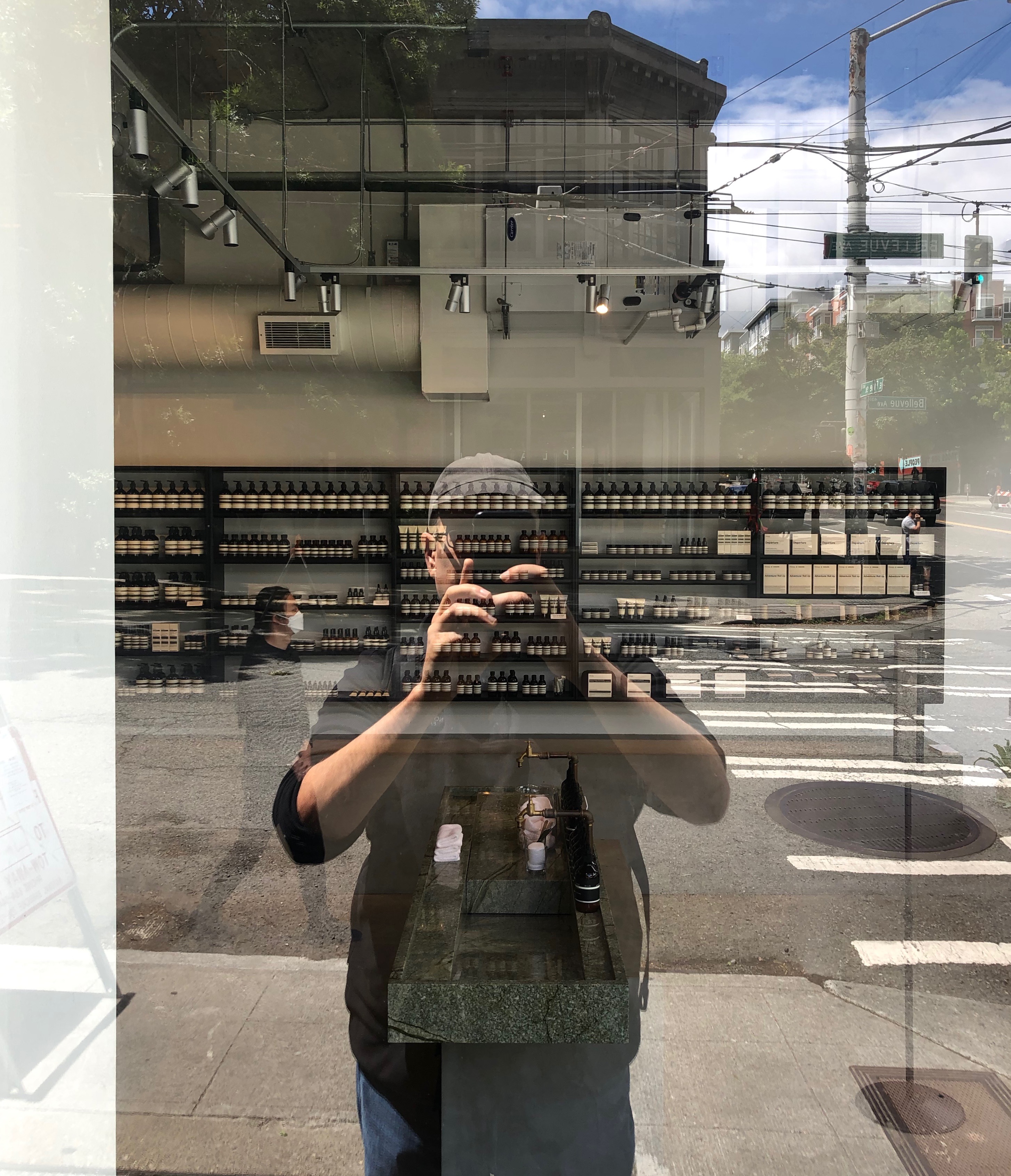
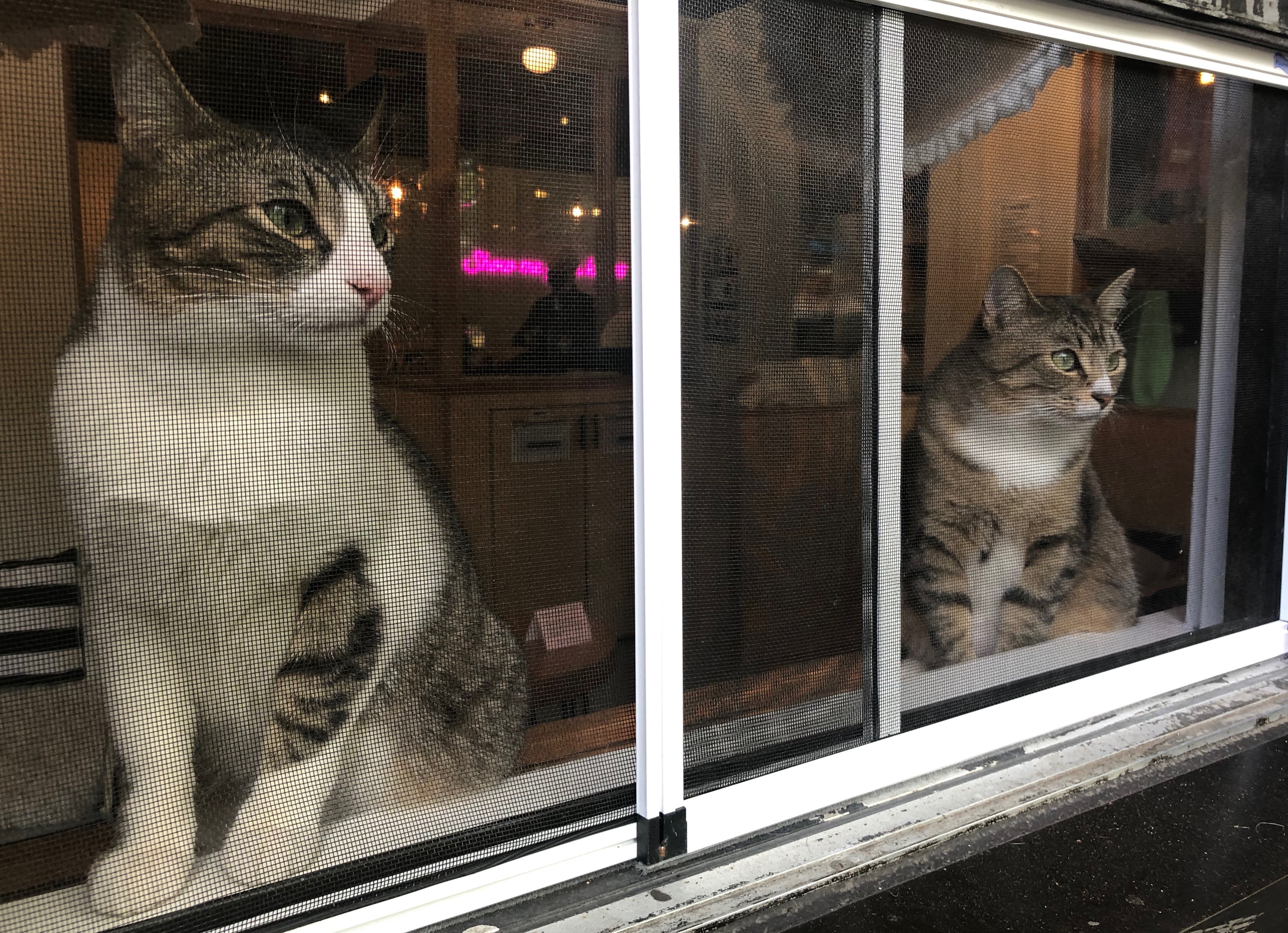
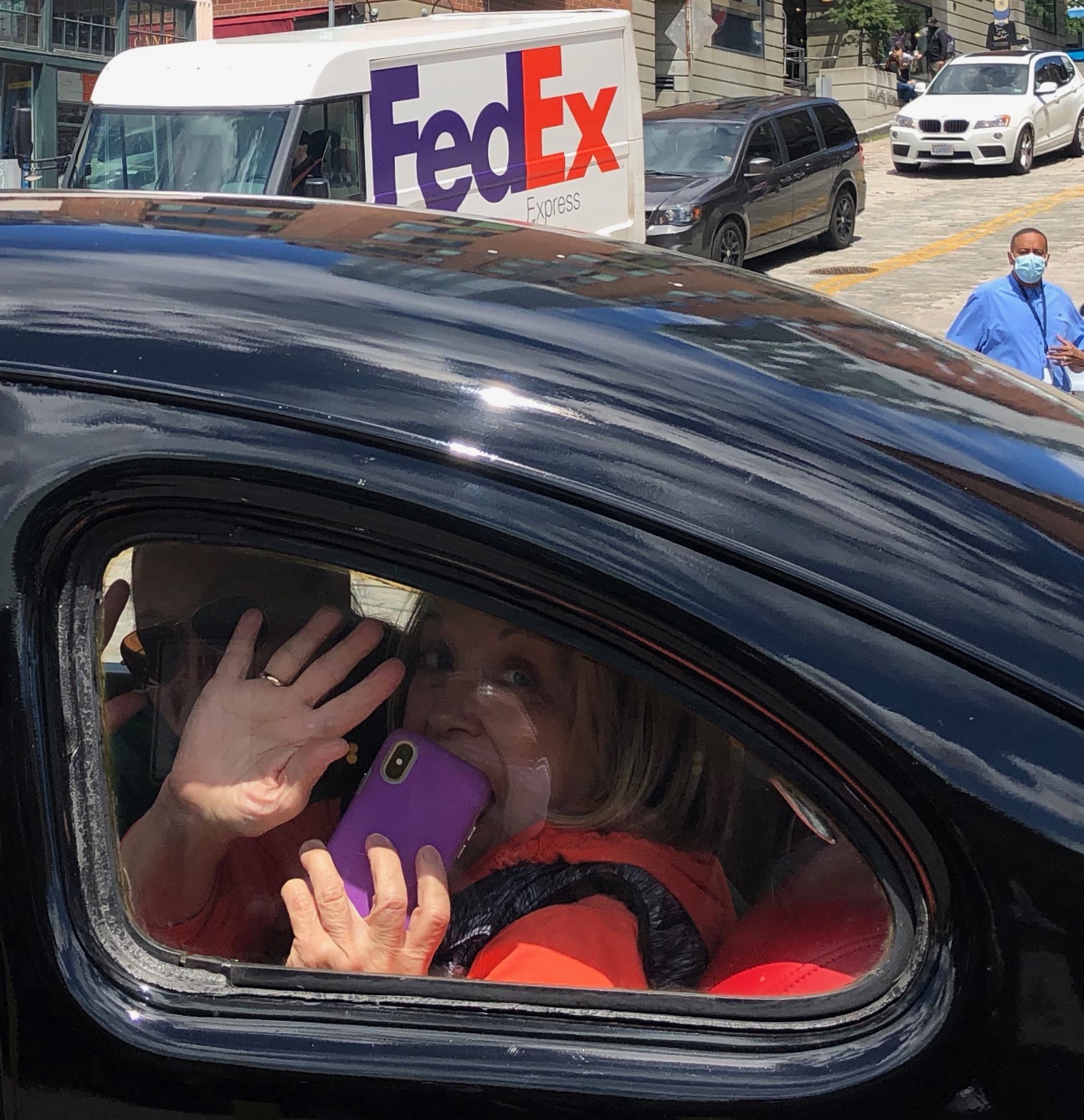
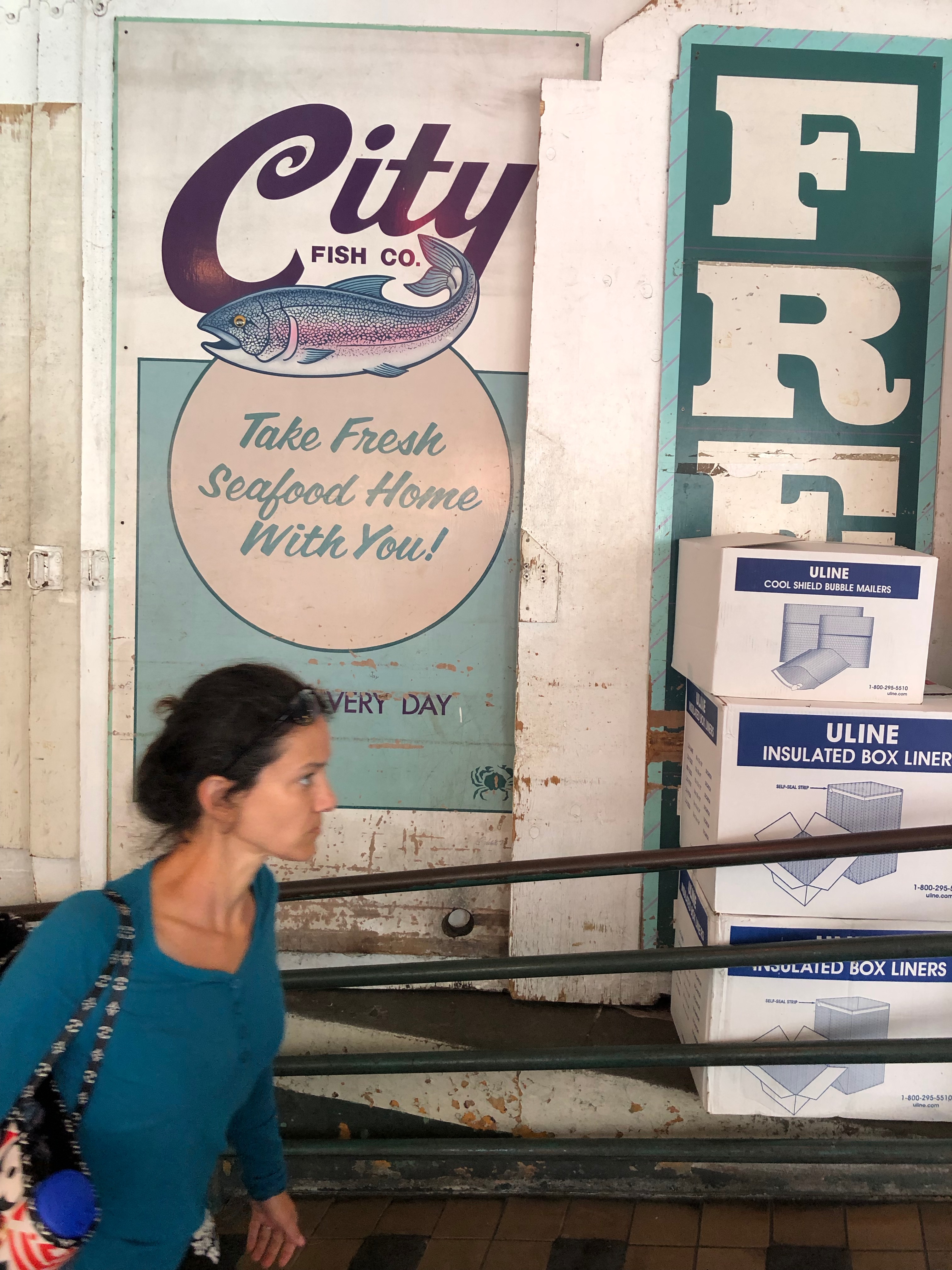
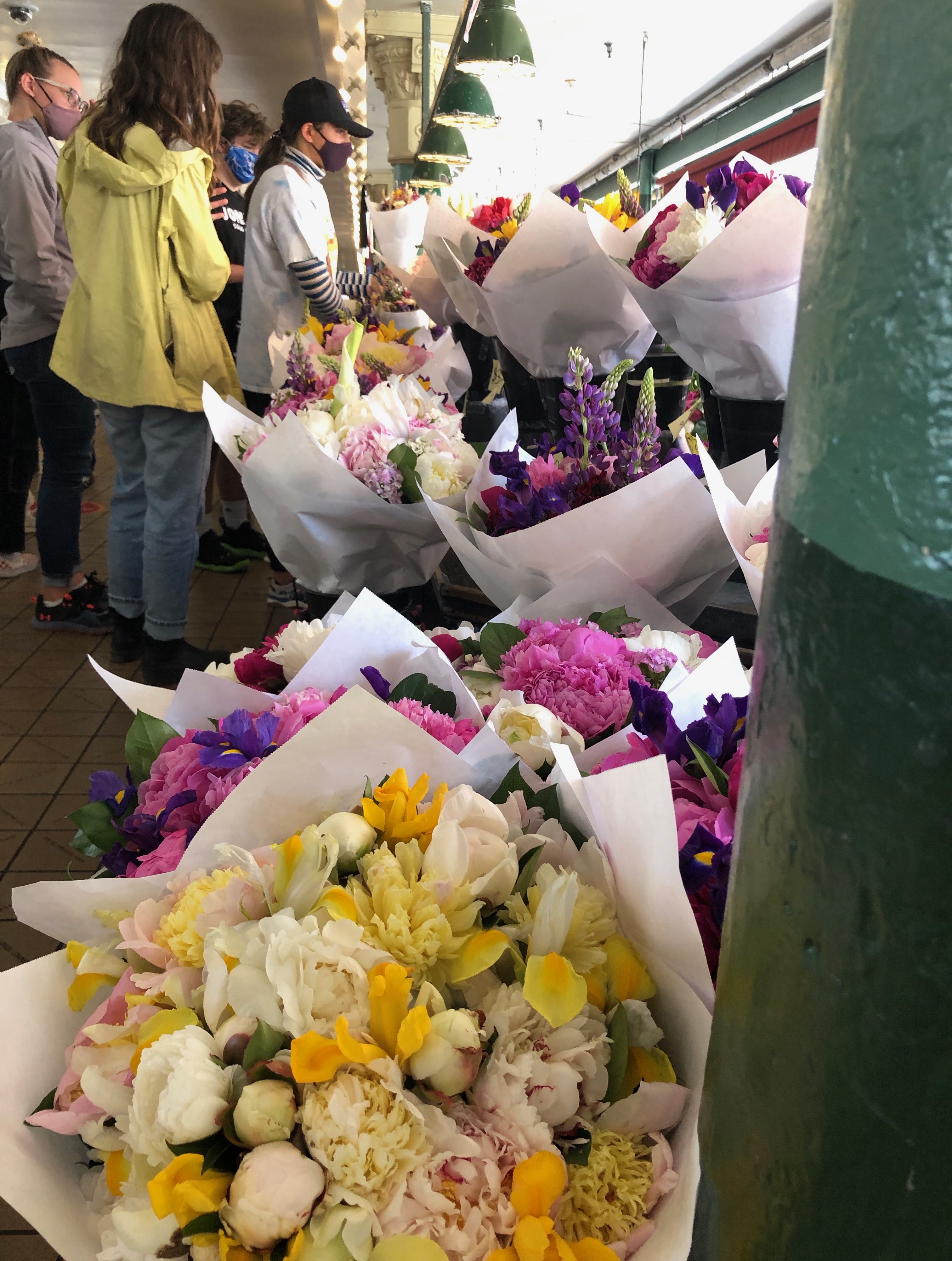
The Groundhog
In June, amid the golden fields,
I saw a groundhog lying dead.
Dead lay he; my senses shook,
And mind outshot our naked frailty.
There lowly in the vigorous summer
His form began its senseless change,
And made my senses waver dim
Seeing nature ferocious in him.
Inspecting close his maggots’ might
And seething cauldron of his being,
Half with loathing, half with a strange love,
I poked him with an angry stick.
The fever arose, became a flame
And Vigour circumscribed the skies,
Immense energy in the sun,
And through my frame a sunless trembling.
My stick had done nor good nor harm.
Then stood I silent in the day
Watching the object, as before;
And kept my reverence for knowledge
Trying for control, to be still,
To quell the passion of the blood;
Until I had bent down on my knees
Praying for joy in the sight of decay.
And so I left; and I returned
In Autumn strict of eye, to see
The sap gone out of the groundhog,
But the bony sodden hulk remained.
But the year had lost its meaning,
And in intellectual chains
I lost both love and loathing,
Mured up in the wall of wisdom.
Another summer took the fields again
Massive and burning, full of life,
But when I chanced upon the spot
There was only a little hair left,
And bones bleaching in the sunlight
Beautiful as architecture;
I watched them like a geometer,
And cut a walking stick from a birch.
It has been three years, now.
There is no sign of the groundhog.
I stood there in the whirling summer,
My hand capped a withered heart,
And thought of China and of Greece,
Of Alexander in his tent;
Of Montaigne in his tower,
Of Saint Theresa in her wild lament.
May
When I looked down from the bridge
Trout were flipping the sky
Into smithereens, the stones
Of the wall warmed me.
Wading green stems, lugs of leaf
That untangle and bruise
(Their tiny gushers of juice)
My toecaps sparkle now
Over the soft fontanel
Of Ireland. I should wear
Hide shoes, the hair next my skin,
For walking this ground:
Wasn’t there a spa-well,
Its coping grassy, pendent?
And then the spring issuing
Right across the tarmac.
I’m out to find that village,
Its low sills fragrant
With ladysmock and celandine,
Marshlights in the summer dark.