From The New Scientist: ‘Giant Crack Formed In Just Days’

Full article here.

Thought this might be of some interest:

“The crack is the surface component of a continental rift forming as the Arabian and African plates drift away from one another. It began to open up in September 2005, when a volcano at the northern end of the rift, called Dabbahu, erupted.”

And it happened in a few days, apparently.

“…Ebinger says it could continue to widen and lengthen. “As the plates keep spreading apart, it will end up looking like the Red Sea,”‘

Possibly in 4 million years.

Add to Technorati Favorites

From The Telegraph Via A & L Daily: ‘The Lost Symbol And The Da Vinci Code Author Dan Brown’s 20 Worst Sentences’

Full article here.

Many of the commenters seem to think that whatever pleasure Dan Brown gives them, it’s perhaps worth more than this little bit of criticism.

Related On This Site:  More Stanley Fish At The NY Times Blog: ‘What Should Colleges Teach-Part 3′  Gore Vidal’s power as an essayist can almost convince one of the rightness of his assertions:  Vidal/Buckley Debate, 1968

Camille Paglia At Arion: Why Break, Blow, Burn Was Successful

Add to Technorati Favorites

From The NY Times Via A & L Daily: Helen Vendler On Wallace Stevens ‘The Plain Sense Of Things’

Full review here.

Vendler reviewed John Serio’s new “Selected Poems”  of Wallace Stevens.

“Stevens’s conscience made him confront the chief issues of his era: the waning of religion, the indifferent nature of the physical universe, the theories of Marxism and socialist realism, the effects of the Depression, the uncertainties of philosophical knowledge, and the possibility of a profound American culture, present and future.”

and

“Stevens’s poetry oscillates, throughout his life, between verbal ebullience and New England spareness, between the high rhetoric of England (and of religion) and the “plain sense of things” that he sometimes felt to be more American…”

See Also On This Site:  Trying to stick something against his poems: Wednesday Poem: Wallace Stevens-Anecdote of The JarWednesday Poem: Wallace Stevens, The Snow ManFriday Poem: Wallace Stevens And A Quote By David Hume

Add to Technorati Favorites

A Reaction To Jeff Koons ‘St John The Baptist’


Modern Art by gps1941.

Excellent photo found here…gps1941 photostream here.

I’m not really one for the shock of pop-art, nor do I find the idea of high and low mixed entirely compelling (too easy a novelty idea itself, moralistic and confining), but when I went to the Seattle Art Museum this past weekend, I started laughing out loud.  

It was something in the familiarity of the figures and their blank stares (this is a kitsch trinket par excellence, I remember thinking Bob’s Big Boy,) and the obvious juxtaposition with deep religious and Christian themes that had me for a moment.  The craftsmanship is excellent (porcelin) yet it still maintains a vaguely repulsive air about it as many tchotchkes do (a whiff of emotional desperation that comes from clinging to such items?) which can’t be easy to achieve.

Anyways, maybe it was St. John causally pointing upstairs to “the big guy”  that made me laugh, or that smiling little pig.

Addition:  An emailer suggests that my post reeks of snobbery and too-rigid boundaries of what good art ought to be, and that’s what Koons is trying to address, mainly with the quality of his work.  Oh well.

More On Koons and his work here.

Robert Hughes wrote a review for Time entitled the “Princeling Of Kitsch.”

Also On This Site:  Denis Dutton suggests art could head towards Darwin (and may offer new direction from the troubles of the modern art aimlessness and shallow depth) Review of Denis Dutton’s ‘The Art Instinct’

Denver’s Devil Horse may be flirting with kitsch: From The Wall Street Journal: Denver’s Mustang Or ‘Devil Horse’

and I like his work:…Joan Miro: Woman

Add to Technorati Favorites

From Strange Maps: America’s Mean Streak

Full post here.

You can plot Americans’ move westward.

“The mean centre of US population is “the point at which an imaginary, flat, weightless and rigid map of the US would balance perfectly if weights of identical value were placed on it so that each weight represented the location of one person on the date of the census”, in the definition of the US Census Bureau itself.”

See Also:  From Strange Maps: The Sweet Tea Line In Virginia…Edward Hopper: Railroad Sunset

Add to Technorati Favorites

From Bloggingheads: Tamar Szabo Gendler On Philosophy and Cognitive Science

Discussion here.

Szabo-Gendler aims to bring a deeper philosophical understanding to the cognitive sciences and neuroscience (popular neuroscience especially) by bringing up an important argument that philosophers from Aristotle to Hume have consistently made:

 “life goes very well when one’s reasoned commitments and one’s habits are in line with one another”

In other words, one’s relationship between the reason and the passions can potentially get you out of whack (addiction would be a good example).  Also, the depths of moral philosophy can help to deepen cognitive science. 

Perhaps it can even guard against excessive idealism (we’re seeking the holy grail of human knowledge kind of thinking) that could be best avoided when thinking about the limits of neuroscience.  Perhaps, as one commenter points out, such idealism is an inevitable product of popularization (and writing) as found in the works of Jonah Lehrer and Jonathan Haidt.  They’re not the first to write books about the pursuit of happiness:

“It’s really irritating to read, for example, Haidt’s book on happiness or Jonah Lehrer’s introduction to _How We Decide_ where Plato and Aristotle (because they regarded man as “rational” in some sense) are presented as having held the ridiculous belief that all or most of our actions must be the direct result of conscious, plodding deliberation.”

I’d also offer that some people who are attracted to and develop skills in music, poetry, literature often find some of their skills transferable in psychology and the social sciences (mutual fear of mathematics? a specific kind of habitual development of the passions?  would Nietzsche be an extreme example?).

Something to think about.

Also On This Site:  Jesse Prinz argues that neuroscience and the cognitive sciences should move back toward British empiricism and David Hume…yet…with a defense of multiculturalism and Nietzsche thrown in:  Another Note On Jesse Prinz’s “Constructive Sentimentalism”

Was Nietzsche really a philosopher?: A Few Thoughts On The Stanford Encyclopedia Of Philosophy Entry: Nietzsche’s Moral And Political Philosophy…A Few Thoughts On Allan Bloom–The Nietzsche Connection

From The Washington Post: A Few Thoughts On Jonah Lehrer’s Review Of Denis Dutton’s ‘The Art Instinct’

Add to Technorati Favorites

From Climate Audit: Baby Whirls-Improved Detection Of Marginal Tropical Storms

Full post here.

“With the North Atlantic hurricane season officially starting in a couple weeks (June 1), but possibly getting a head start with a developing low-pressure system in the Bahamas, considerable attention will be paid by the media to each and every storm that gets a name.”

Like swine flu scaremongering, it’s perhaps for the best.

As for the global warming science, it’s complicated.  I’m a generalist and would like to work against the tide of those who insist action must not only be taken by individuals to reduce their contribution to the excess carbon in earth’s atmosphere, but by governments, mostly through regulation of economic activity.  Those are two different issues.

Related On This Site:  Hurricanes By Popular Demand

Andrew Revkin In The NY Times: Global Warming Moderation From Bloggingheads: On Freeman Dyson’s Global Warming Heresy…From The WSJ-A Heated Exchange: Al Gore Confronts His Critics…From The Literary Review–Weather Channel Green Ideology: Founder John Coleman Upset.

Add to Technorati Favorites

From The Wall Street Journal Via AL Daily: Buckminster Fuller’s World

Full article here.

Terry Teachout takes notice of the traveling exhibit:  Buckminster Fuller:  Starting With The Universe (at the Whitney in late June).  So was Fuller comparable to Frank Lloyd Wright?:

“…Fuller was a Wright-like figure, a high-octane utopian who believed in the life-enhancing potential of modern technology. The difference was that Fuller lacked Wright’s ruthless determination.”

Both have their followers and left some interesting work behind.  The discussion also reminds me of the explosion of science fiction this past century, and some of its darker mystic, utopian…and even religious (cultlike-this is alleged of course) tendencies that can make for good reading. 

This is one point Teachout wants to address when such ideas are pulled into the political realm:

“Was modernism totalitarian? That’s coming at it a bit high, but it’s true that more than a few top-tier modernists were also one-size-fits-all system-mongers who thought the world would be improved if it were rebuilt from top to bottom — so long as they got to draw up the plans.”

I first came across that argument here.  Do such visions have potentially harmful consequences in the political arena?

Perhaps, but in the meantime Fuller’s geodisic dome (platonic solids, ever-existing?) is still pretty interesting.

See Also On This Site:  Roger Scruton In The City Journal: Cities For Living–Is Modernism Dead?..Jonathan Meades On Le Corbusier At The New Statesman

Add to Technorati Favorites

Some Differences Between Newton And Goethe: Theories Of Light

“My Design in this Book is not to explain the Properties of Light by Hypotheses, but to propose and prove them by Reason and Experiments…”

Sir Isaac Newton, Opticks.

Here’s a brief visual (scroll to the bottom of the page) of 2 of his experiments.  

From A Wolfram biography of Newton:

“Newton invented a scientific method which was truly universal in its scope. Newton presented his methodology as a set of four rules for scientific reasoning. These rules were stated in the Principia and proposed that (1) we are to admit no more causes of natural things such as are both true and sufficient to explain their appearances, (2) the same natural effects must be assigned to the same causes, (3) qualities of bodies are to be esteemed as universal, and (4) propositions deduced from observation of phenomena should be viewed as accurate until other phenomena contradict them.”

An artist can transport you to a vast imaginative world of profound insight and profound truth.  Anyone who’s experienced great art can attest to that.  Yet, part of the rigor of science is in its painstaking correspondence to observable phenomenae, to measurement (and a capacity for nimble and accurate estimation), and to a set of laws often derived from mathematics which as far as we know, have not yet been proven wrong when applied to nature.

Many artists seem to take much freer license with their imaginations, and despite their own rigors which are rarely appreciated by the audience, seem to differ in many important ways from such a standard.

——————–Here’s a repost I put up about Goethe:

Johann Wolfgang Von Goethe is perhaps Germany’s greatest poet and writer, best known for Faust.  Not so well known is Goethe’s theory of color (which claimed insights that could refute Newton).  Like many artists, Goethe isolated the effect color has in terms of experience, making profound observations on refraction…for example…but for which he didn’t have a workable theoretical framework.  To this, a certain type of philosopher might say:  he ignored the fact that his thoughts and his senses combine to form experience.  

Goethe from Steiner, from wikipedia:

The colours therefore, to begin with, make their appearance purely and simply as phenomena at the border between light and dark…”

Colours arise at the borders, where light and dark flow together.

Click here for a visual representation.

Goethe seems to have thought of light and dark in terms of a metaphysical dualism, from whose interaction color is born. 

Newton held that white light passing through a prism is diffused into its various wavelengths.  He also may have steered the discussion into wave-particle duality.

See Also: Wikipedia’s article, Physics Today article on his experiments, Goethe’s color triangle.

It seems like this debate (art/science) is a product of the times.  I don’t think I’ve offered too much in the way of real insight.

See Also:  Review of Denis Dutton’s ‘The Art Instinct’


Add to Technorati Favorites

Repost: From MIT OpenCourseWare: Walter Lewin’s Lecture On Lightning

Full lecture here.

My brief summary:

So at room temperature, the electrical breakdown of dry air at 1 meter of distance is 3 million volts (at which point you have discharge sparks, visible light and heat, and moving air). 

Go and shuffle your feet on the carpet and touch the doorknob and if you see a spark of 3 mm it’s around 10,000 volts on average according to this calculation (a little prickle on the fingertip, maybe through your hand).

In the very large electrical field generated during a thunderstorm (400,000 storms every day on earth) you can get up to 300 million volts and more, blinding light and up to 50,000 degree F superheated air rushing outward in waves, or thunder.  The current should it ground itself through your body, can clearly kill you:

(Language)

Through induction the stepped leader has made contact with the earth, and the return strokes travelling back up to the cloud are visible and audible.

**Of course, if you go and look at the nearest light bulb, the current passing through the resistive filament also produces light and some heat. 

That’s my oversimplification.  Listen to the lecture, it’s worth it.  A whole semester’s worth of his lectures are available for free at that link.

Add to Technorati Favorites

From NOAA: Tornado Safety Guide

Full post here.

We’ll be hearing about tornadoes in the news in the next month or so, so I thought I’d post a link to a safety preparedness page (if you live in a tornado prone area).

Here’s a video from Tornado videos of a huge wedge tornado in Manitoba:

Notice how at 1:30 or so the pressure is so low around vehicle (getting sucked into the vortex) that the gentleman riding shotgun can’t open the door against it.  That’s pretty close.

See Also On This Site: The Greensburg Tornado on Doppler Radar… Tornadoes! Some Links…Tornadoes In Major Cities: Atlanta

Add to Technorati Favorites

From Strange Maps: It’s All Greek To Me

Full post here.

The map itself isn’t so impressive, but it’s an interesting thought.  Someone made a cartogram of many different languages’ point of reference to other languages as ones that seem unintelligible.  

“Mutual incomprehension results from the right mixture of inter-lingual proximity and unintelligibility. In the Middle Ages, for example, when the monks’ knowledge of Greek was waning, they would write in the margin of texts they could not translate, in Latin: “Graecum est, non legitur” (”This is Greek to me, I can’t read it”).”

Add to Technorati Favorites

From Scientific American: Was Einstein Wrong?

Full article here.

Can philosophy/metaphysics effectively help to deepen physics…or will it always be a way of attaching particulary deep thought (if done well) to even deeper thought?

———————————————————————————————

The authors, philosopher trained in physics David Albert and writer Rivka Galchen point out a problem they think ought to be focused on:

“-In the universe as we experience it, we can directly affect only objects we can touch; thus, the world seems local.

-Quantum mechanics, however, embraces action at a distance with a property called entanglement, in which two particles behave synchronously with no intermediary; it is nonlocal.

-This nonlocal effect is not merely counterintuitive: it presents a serious problem to Einstein’s special theory of relativity, thus shaking the foundations of physics.”

I’m pretty sure I’m not qualified to answer…

———————————————————————————————

See AlsoDavid Albert’s turn on bloggingheads with Sean Carroll.

Also, maybe it’s a trend (writers moving directly to science)?  Writer Louisa Gilder has a book out called “The Age Of Entanglement” on much the same subject, which she discusses here too on bloggingheads.

———————————————————————————————

Further:  The enlightenment happened, so if you’re going to make a successful metaphysical theory, it’s good to try and understand the mathematical sciences of the day and go from there (Newtonian mechanics for Kant), like Kant did: 

Michael Friedman’s Kant And The Exact Sciences tackles the subject ( I know him not and of course this too is more metaphysics and certainly not the mathematics of today…but if you’re going to be carrying Kant around …it’s good too understand how deep he went, what he seemed to understand and what he may have not understood at all about the Enlightenment explosion around him).

Add to Technorati Favorites

From The Washington Post: A Mission To Europa?

Full post here.

“But now scientists believe there may be environments well outside that zone that could potentially harbor life, an idea that Green called “tremendously exciting.” ‘

Has this belief been changed by the discovery of those deep sea tube worms that survive without sunlight?

“they discovered that the tubeworms had no mouth, digestive tract, or anus, they learned that bacteria live inside the tubeworms’ bodies”

Quite possibly.

More On Europa’s Galileo mission here.  A brief NASA overview of Europa here with a cool photo of the surface.

Slated for 2020…

See Also:  Phil Plait from Bad Astronomy and Carl Zimmer briefly discuss NASA here.

Add to Technorati Favorites

From The Wall Street Journal: Denver’s Mustang Or ‘Devil Horse’

Full post here.  (Slideshow included).

I’ve had to think a fair amount about art lately (life could be worse), so I thought I’d post this despite the current national frenzy for the importance of (A)rt. 

The sculptor, Luis Jimenez is:

“…a widely honored artist known for melding Chicano themes and Western history in exuberant sculpture.”

and on this sculpture:

“The eyes are light-emitting diodes, which burn red like taillights. They are an homage to Mr. Jimenez’s father, who ran a neon-sign studio in El Paso, Texas... “

That could work.  Are we getting close to kitsch art and possibly Chupacabra territory here?…do the skill and artistry transcend that?  

It seems powerful, serious and proud…a little scary even…a mythic figure.  Is it possible Jimenez was poking fun at the serious belief people have in such figures and myths…?   Maybe not.

DSC_0093 by robvann_99.

by robvann_99

Sad fact:  “He was killed on June 13, 2006, in his studio when a large piece, a mustang intended for Denver International Airport, fell on him severing an artery in his leg.”

Also On This SiteJoan Miro: WomanGoya’s ColossusGoya’s Fight With CudgelsGoethe’s Color Theory: Artists And ThinkersSome Quotes From Kant And A Visual Exercise

Add to Technorati Favorites

A Few More Thoughts On Denis Dutton’s New Book: ‘The Art Instinct’

Dutton’s site here.

I used the analogy of Noam Chomsky and his theory of language to describe Denis Dutton’s aims in his new book, The Art Instinct.  As much as I disagree with Chomsky’s anarcho-syndicalist politics, I think his achievement lies quite far apart from his politics (though even this could be argued).

Dutton’s book may be more of an attempt to use libertarian principles, Darwin’s Origin Of Species, and perhaps ultimately the transcendental idealism of Immanuel Kant to try and direct the arts in our country in a new direction (hopefully away from the toxic mix of politics and moral sentiment active in many of our universities and major publications, often on the left…which can divide us politically). 

This could be a useful goal.

However, it doesn’t seem quite like philosophy, and seems much more like aesthetics (deep theories about art and the pursuit of beauty and truth within it). 

Perhaps it’s not radical enough to be ignored and reviled as much as it could be?

Dutton’s bloggingheads appearance here.

Dutton On The Colbert Report here.

Again, I’m saying a lot on very little, as I haven’t read the book.  Your thoughts and comments are welcome.

Addition:  I have read the book and offered some commentary (not a formal book review):  Review of Denis Dutton’s ‘The Art Instinct’

Related On This SiteFrom Bloggingheads: Denis Dutton On His New Book: ‘The Art Instinct’A Sympathetic View Of Noam Chomsky?

Denis Dutton by wnyc


by wnyc

Dutton also runs the Arts & Letters Daily, which can be found on the blogroll at right.

Add to Technorati Favorites

Seattle Earthquake-January 30th 2009-4.5 On The Richter Scale

Good info here at the USGS.

Apparently, it happen at 5:25 am PST, and I had no idea.  About 1 in 4 or 5 people I spoke with today either felt it, or were woken up enough to realize something had happened, but weren’t quite sure what.

Here’s a good map at the USGS site which measures how many people responded and intensity.

The vibrations and earth movement could be felt for only a few seconds, though it happened along the Nisqually fault, where the February 21, 2001 6.8 earthquake occured.

Map of that quake’s intensity here.

Add to Technorati Favorites

Some Quotes From Kant And A Visual Exercise

From Christopher Want’s Introducing Kant:

“In the case of the pyramids:

the eye needs some time to complete the apprehension from the base to the peak, but during that time some of the earlier parts are invariably extinguished in the Imagination before it has apprehended the later ones, and hence the comprehension is never complete..’  “

What about this video of a surfer on Maui’s north shore?

Perhaps you get a sense of awe and wonder at observing this wave, but this may have more to do with your imagination and your onboard apparatus for observing the wave than perhaps any necessary characteristic of the wave itself (for Kant, the imagination is a very specific category of perception, which can ((amended)) function without the rules of the understanding, especially in aesthetic representation but which ultimately is applied to the rules of the understanding to give us the best knowledge we have, which are in turn guided by the Ideas Of Reason…).

Here’s another quote:

“…a light broke upon all natural philosophers. They learned that reason only perceives that which it produces after its own design; that it must not be content to follow, as it were, in the leading-strings of nature, but must proceed in advance with principles of judgement according to unvarying laws, and compel nature to reply its questions.”

Immanuel KantPreface to the Critique of Pure Reason.

Newton’s 3rd Law might be a good example of those ‘unvarying’ laws.

Related On This Site:  When aesthetics goes too far?: Goethe’s Color Theory: Artists And Thinkers…some problems with Kant and potential idealism when applied to American politics:  From The Internet Encyclopedia Of Knowledge: Immanuel Kant And Utilitarianism

From Bloggingheads: Aubrey De Grey On Aging

Diavlog here.

De Grey thinks about, and perhaps would like you to think about aging as a disease to be treated, not a problem so large as to be insoluble.

In the clip above he lists his 7 major reasons why we die, suggesting there is enough biological evidence that pursuing solutions to them might be fruitful.

He rather offhandedly discusses some pretty grim facts we put out of our minds…

Add to Technorati Favorites

From Youtube: Lite-Brite Supernova

This won the youtube phylm prize (very prestigious).  Most astronomers believe that all elements other than hydrogen and helium come from supernovae.  So, in many senses, we are stardust.

Much of this understanding springs from the work of Subrahmanyan Chandrasekar in the 1930’s and the Chandrasekar limit (wikipedia). From wikipedia:

“A critical situation arises when iron accumulates in the core, since iron nuclei are incapable of generating further energy through fusion…”

“For more massive stars, electron degeneracy pressure will not keep the iron core from collapsing to very great density, leading to formation of a neutron star, black hole, or, speculatively, a quark star.”

Or the star can undergo a supernova explosion.

Add to Technorati Favorites

From Boston.com: Three Mystery Waves In Maine

Full Boston.com post here.

“In 15 minutes, the water rose 12 feet, then receded. And then it happened again. It occurred three times, she said, each time ripping apart docks and splitting wooden pilings.”

Spooky.  The article mentions 3 possible causes:

1.   Land movement-A landslide underwater by seismic disturbance or more likely by a land slump.  The slump could be caused by strong storm conditions that have stirred the water.  Perhaps even a methane decompression (land movement caused by gas) as the article mentions…however no seismic disturbances were measured.

2.  Wind movement-During large storms (and ocassionally not) a lot of wind blowing over a lot of water can generate high wave action.  The article mentions a squall line surge.    A brief explanation from The Deadliest Catch here about wind, current and how land underneath can effect wave action.

Brief you tube video explaining the difference between transverse and longitudinal waves here.  It gets more and more abstract.

3.  Tides-Due mostly to land form, tidal piles of water fill Maine’s harbors creating extreme difference between high and low tide.  This is not so far from the Bay Of Fundy, which has some of the highest tidal action on earth.  Stop-motion video of those tides here:

Add to Technorati Favorites

From Bryan Magee’s Talking Philosophy On Youtube: Geoffrey Warnock On Kant

Did Kant really address why his own metaphysical system is necessary as charting a course for possible human knowledge?  Warnock states that Kant thought:

“All we can establish foundations for is the notion of possible experience and what can be an object of possible experience…”

In other words, physics can tell you all kinds of things about energy, but it can’t tell you what energy is.  And this is the best of our knowledge (which philosophers like Kant try to explain).  Kant’s metaphysics (and religion too) can’t even do that, and are doomed to failure.

In a way, metaphysics may be just where Aristotle left it, or where someone like Roger Penrose leaves it (after a lifetime of applying deep mathematical thinking to physical theory in his work on black holes):  An exercise in trying to develop firm footing for our knowledge after the fact…trying to provide some context for our knowledge and not being able to do so…yet…

Addition:  Of course, this doesn’t nullify the depth of Kant’s contributions, nor the depth of his moral theory.   It just may not make it a moral law in the same sense as Newton’s laws (deeper laws have already come along) .  I dug up one side of this exchange from the Bloggingheads Sentimental Mood Jesse Prinz Edition.  So just because Kant didn’t perhaps validate his project as he’d have hoped, it doesn’t follow that you need to embrace some moral relativism as does Prinz:

—————-

1. If there are facts of a certain sort (chemical, biological, psychological, moral, whatever) which may be true true, even though everyone thinks they are false, then facts of this sort (chemical, biological, etc.) must never change. 

The trouble is that you yourself don’t actually believe this principle. For example, geographical facts are clearly objectively true — even if everyone believes in El Dorado, El Dorado doesn’t exist; and even if no one believed in Everest, Everest still would exist. But it’s obvious that it doesn’t follow that geographical facts don’t change over time. Mountains and polar ice caps and rivers come and go. Geographical facts change all the time — it’s just that our beliefs don’t change them.

Perhaps your point is, not that the geographical facts don’t change, but rather that the geological laws don’t change. But at a certain level even this isn’t true: Plate Tectonics fits the earth over most of its history, but it doesn’t exactly fit the earth when it was molten or when it eventually cools down completely in the distant future. It doesn’t fit the moon or Jupiter. Perhaps at a high level of abstraction, we can imagine a final theory of planetary geography that fits ALL types of planets anywhere in the universe. Perhaps these very abstract laws don’t themselves vary (once there are any planets to talk about).

But if you make the moral law sufficiently abstract, it can be as unvarying as any laws of universal planetology. Utilitarianism is the theory that there is a rather abstract law of morality, which, though it does not vary, accounts for why seemingly quite different things can be right or wrong in different circumstances (e.g., why leaving your elderly to die may have been OK for the Eskimos in conditions of scarcity while it would be very wrong for us).

Add to Technorati Favorites

A Few Philosophical Works On Space-Time Reviewed At Notre-Dame

Carl Hoefer reviews Robert DiSalle’s Understanding Space-Time: The Philosophical Development of Physics from Newton to Einstein here, and Bradford Skow reviews Harvey Brown’s Physical Relativity: Space-time Structure from a Dynamical Perspective here.

DiSalle’s goals are very ambitious, and in broad terms they are threefold. He wants to (1) direct philosophers away from the canonical absolute/relational disputes, (2) reshape our understanding of the motivations, arguments, and achievements of the two giants of space-time physics (Newton and Einstein), and (3) refute, in passing, the Kuhnian view that the main paradigm changes in space-time physics are essentially arational and impossible to justify via non-circular arguments.

Newton’s and Einstein’s theories are:

“…frameworks established ‘for the interpretation of phenomena, not a kind of mechanism or hypothesis to explain them’

The framework of a framework?

Add to Technorati Favorites

Stephen Hawking In Cosmos: Some Reasons Why We Should Continue Space Exploration

Full article here.

Back to the moon…a moon base…a Mars base…beyond?

“The human race has existed as a separate species for about two million years. Civilisation began about 10,000 years ago, and the rate of development has been steadily increasing. But, if the human race is to continue for another million years, we will have to boldly go where no one has gone before.”

Add to Technorati Favorites

Sean Carroll And Jennifer Oullette At Bloggingheads: LHC And Higgs Boson

Full diavlog here.

What is the Higgs-Boson field/particle and how does it give other particles mass?  What are fields?

What is the universe?: Carroll states:  “A set of fields obeying the rules of quantum mechanics”

It makes me wonder…

Do we need philosophers, anyways?: 

The lesson to draw from his [Kant’s] careful discussion of this subject might well be not that there must be a form of reality lying beyond space and time but rather that nothing can be real that does not conform to spatial and temporal requirements. Space and time are bound up with particularity, and only what is particular can be real.”

Related On This SiteSean Carroll Is Live-Blogging The LHC Startup and Sean Carroll: What Will The LHC Find?

Add to Technorati Favorites

From Bloggingheads: Metaphysics Of The Hangman

Discussion here.

At UNC, both Joshua Knobe and Jesse Prinz are making deep arguments for morality having its origin in the emotions.   Knobe brings up Nietzschean metaphysics of the hangman.

I have some doubts about the aims of experimental philosophy, though it’s interesting.

It seems philosophy is at its best in the pursuit of metaphysics (going deeper than physics), not necessarily in the pursuit of emulating physics through empiricism, or scientific method, or experimentation.  Metaphysics has deeper legitimacy problems enough as it is…and I’m wondering if this type of thing will advance the field (if there is a field).

It may, however, likely provide some philosophical depth for evo-biologists and cognitive scientists across the land.  The pursuit of a secular morality?

Addition:  My ignorance shows:  I should say, through deep, often rationalist metaphysics pursing “empirical research.”  As for Prinz, he has made a case for directing cognitive sciences back toward emipricism.

Add to Technorati Favorites

Monday Poem: “A Pact” By Ezra Pound

A Pact


I make a pact with you, Walt Whitman –

I have detested you long enough.

I come to you as a grown child

Who has had a pig-headed father;

I am old enough now to make friends.

It was you that broke the new wood,

Now is a time for carving.

We have one sap and one root –

Let there be commerce between us.


Ezra Pound

Maybe Pound did come back in a way…

See AlsoWednesday Poem: Wallace Stevens-Anecdote of The Jar

Add to Technorati Favorites

Happy 4th Of July

    “When in the course of human events it becomes necessary for one people to dissolve the bands which have connected them with another and to assume among the powers of the earth, the separate and equal station to which the Laws of Nature and of Nature’s God entitle them, a decent respect to the opinions of mankind requires that they should declare the causes which impel them to the separation…”

The rest here.

flag-c.jpg

Add to Technorati Favorites

Tornadoes! Some Links

With so many deadly tornadoes in the news lately, I thought I’d post a few links:

Here’s a link to the How Stuff Works tornado page.

The Tornado Project Online. (Affiliated with How Stuff Works, lots of top-ten lists etc…)

-How to make a tornado box for a science fair.

-Is it a vortex of rising, warm and moist air or cool air dropping downward?   Good models here.  A horizontal column of rotating air that gets lifted with the rising air in the formation of a storm?

-The Red Cross Tornado Preparedness Page.

-You’ve got to check out Tornadovideos.net.

A swedish guy has a small tornado drop down in front of his car (1:15 or so, cool video)A dust-devil here.  If you have time and are a real weather geek, the formation of a supercell here.

See Also: The Greensburg Tornado on Doppler Radar


by Extreme WX Photographer

Add to Technorati Favorites

George Smoot and Sean Carroll: Cosmic Inflation

If you’re interested in some ideas about the current state of cosmic inflation and Big Bang theory, check out recent Sean Carroll’s bloggingheads turn (~12 min). Recommended.

Also, George Smoot’s book, Wrinkles in Time is very readable and fun (like listening to a really interesting, smart friend) and gives a background to his COBE research and contributions to Big Bang theory.  He had quite an adventure.

It’s a good way for novices to prevent from becoming cranks.  Thanks to Mr. Carroll for sharing.

See Also:  Riemannian space, Alan Guth, Gravity and space-time.

Add to Technorati Favorites

Tornadoes In Major Cities: Atlanta

This was yesterday, March 14th, 2008, in Atlanta where the Weather Channel is located.  Here’s a good report, with links to video.  I hope everyone is OK.

1.  Don’t forget about Brooklyn, August 9th, 2007, article here.  A reported F2.   

2.  Miami, May 12th 1997 (minor damage, F1).  It’s not often you see a tornado among office buildings. 

3.  And I guess if you live in Oklahoma City, you get used to it.

Here’s the (F)ujita Scale.  A really cool photo, the Atlanta tornado shrouded enough to inspire mystery.

Add to Technorati Favorites

Lunar Eclipse Video

This was taken from a time lapse video in Hawaii, on August 28th, 2007, not the recent one, I know, but the quality is high.

Apparently, the color of the eclipse is measured on the Danjon scale, and the February 20, 2008 eclipse was considered brick red, or L=3.  The light that does reach the moon is refracted through our atmosphere, the shorter wavelengths more likely to be deflected by small particles, the longer ones getting through, thus the moon appears red as the light bounces back to your eyes from its surface.

Or so I’ve found out. 

Addition:  February 20th eclipse here.

Add to Technorati Favorites

Lunar Eclipse And A Wednesday Poem: Matthew Arnold

Tonight, the lunar eclipse happened between 7:01 PST and 7:51 PST here in Seattle, and fortunately for us, it was a clear night.  In the penumbra of the earth’s shadow, there was just some darkening, but then the moon appeared inky black in direct shadow, and an overall reddish color for a few hours.

Here’s a NASA page, which includes some great photos.

For some reason I was reminded of a Matthew Arnold poem (which barely mentions the moon, and now that I look it, mentions a love, which is creepy in this context) as I stood in wonder and talked with a Muslim friend, who kept suggesting that such events were foreseen in the Koran.  Honestly, I was thinking of gravity, and the simplicity and depth of those laws.   It’s a strange life, sometimes.

Dover Beach

The sea is calm to-night.
The tide is full, the moon lies fair
Upon the straits; on the French coast the light
Gleams and is gone; the cliffs of England stand;
Glimmering and vast, out in the tranquil bay.
Come to the window, sweet is the night-air!
Only, from the long line of spray
Where the sea meets the moon-blanched land,
Listen! you hear the grating roar
Of pebbles which the waves draw back, and fling,
At their return, up the high strand,
Begin, and cease, and then again begin,
With tremulous cadence slow, and bring
The eternal note of sadness in.

Sophocles long ago
Heard it on the Agaean, and it brought
Into his mind the turbid ebb and flow
Of human misery; we
Find also in the sound a thought,
Hearing it by this distant northern sea.

The Sea of Faith
Was once, too, at the full, and round earth’s shore
Lay like the folds of a bright girdle furled.
But now I only hear
Its melancholy, long, withdrawing roar,
Retreating, to the breath
Of the night-wind, down the vast edges drear
And naked shingles of the world.

Ah, love, let us be true
To one another! for the world, which seems
To lie before us like a land of dreams,
So various, so beautiful, so new,
Hath really neither joy, nor love, nor light,
Nor certitude, nor peace, nor help for pain;
And we are here as on a darkling plain
Swept with confused alarms of struggle and flight,
Where ignorant armies clash by night
.

Matthew Arnold

Goethe’s Color Theory: Artists And Thinkers

Johann Wolfgang Von Goethe is perhaps Germany’s greatest poet and writer, best known for Faust.  Not so well known is Goethe’s theory of color (which claimed insights that could refute Newton).  Like many artists, Goethe isolated the effect color has in terms of experience, making profound observations on refraction…for example…but for which he didn’t have a workable theoretical framework.  To this, a certain type of philosopher might say:  he ignored the fact that his thoughts and his senses combine to form experience.

Goethe from Steiner, from wikipedia:

The colours therefore, to begin with, make their appearance purely and simply as phenomena at the border between light and dark…”

Colours arise at the borders, where light and dark flow together.”

Click here for a visual representation.

Goethe seems to have thought of light and dark in terms of a metaphysical dualism, from whose interaction color is born.

Newton held that white light passing through a prism is diffused into its various wavelengths.  He also may have steered the discussion into wave-particle duality.

See Also: Wikipedia’s article, Physics Today article on his experiments, Goethe’s color triangle.

Some Differences Between Newton And Goethe: Theories Of Light


Don’t Drink The Water: Pond Water Under A Microscope

Here are some quotes from Six Easy Pieces, by Richard Feynman:

If we look at it very closely, we see nothing but water-smooth continuous water.”

At 2000x:

“…the water drop will be roughly forty feet across, about as big as a large room, and if we looked rather closely, we would still see relatively smooth water-but here and there small football-shaped things swimming back and forth.  Very interesting.”

At 2000x times more:

Now the drop of water extends fifteen miles across, and if we look very closely we see a kind of teeming something which no longer has a smooth appearance-it looks something like a crowd at a football game seen from a very great distance.”

Biology gives way to physics. 

Add to Technorati Favorites

Mike Oldfield’s To France: By A Spanish Pianist…and Plato?

Mike Oldfield wrote tubular bells, the eerie background music for the Exorcist.  He also wrote To France, a tribute to Mary Queen of Scots escape from England which is covered in the video above.  The song catches some of the spirit of English ballad and traditional folk while dealing with Protestant/Catholic subject matter.

Spaniards have a real interest in Oldfield, and I can’t help but wonder if there aren’t some shared Catholic traditions that spark the Spanish interest in Oldfield’s music (besides all the shared history).

………. 

On a related note, an emailer wrote me wondering why I had posts about music, when many other posts contain arguments which are contradicted by an indulgence in music.  I’d say there certainly is a lot of naivete and danger in seeking transcendance through music, which is so easily used by politicans, armies on the march, churches, dictators, …even witch doctors… to soften the mind rather than sharpen it, to incite the passions, and even perhaps to corrupt the spirit.

It’s not anything you won’t find in Plato, or in this essay on Plato, frankly:

This also meant that the artist is two steps removed from knowledge, and, indeed, Plato’s frequent criticism of the artists is that they lack genuine knowledge of what they are doing. Artistic creation, Plato observed, seems to be rooted in a kind of inspired madness.

So, good point, dear emailer. 

Add to Technorati Favorites

Ron Csillag In The Toronto Star: Math + Religion=Trouble

Csillag has an interesting article on the combination of mathematics and mysticism, in which he seems motivated by a fear that deep impulses and beliefs channeled into the metaphysical doctrines and practices of religion, or at least left unexamined by the believer…are dangerous, especially if the believer happens to be a great mathematician.

Betrand Russell also accused the Pythagorean cult of combining the two, perhaps in an unnecessary way.  Would Csillag agree with with Russell’s atheism and empiricism?

Here’s the final line of the piece:

Or as Paulos might say, no mathematician has ever deliberately flown planes into buildings

But some mathematicians have discovered equations that were eventually applied to the creation of the atomic bomb.   Is mathematics a set of pure ideas unrelated to the moral consequences that flow from them?

I’m not convinced Csillag’s argument has to do particularly with religion, nor Islam, rather than (as a piece of journalism) with the construction of an edifice of atheism, or maybe an attack on that edifice.

Does it all lead back free will?   

See also:  Law At The End Of The Day:  From Kant to Fichte to…Right Now, More On The Kant-Fichte Argument:  What Was Hume Doing?

Add to Technorati Favorites

Simultaneity: Depends On How You Think?

In the previous post, the sonic boom video (from sec 00:13 on) mentions that thunder and lightning occur at the same time, however we experience lightning first because the speed of light is so much greater.

This idea assumes a concept of simultaneity, which also has a spatial component (two events occur at the same time in the same place, say, a mile away).  However, one problem you may find is that the more you think about time, the more you realize that it is a deeper phenomenon that such simple explanations support.   

For example, the vector calculus used to determine the electric field lines and voltage of the lightning bolt relies upon a complex and deeper set of ideas about space and time. 

In fact, the video (and it is a simple explanatory video) relies upon the radical re-workings of time and space for its explanations…

Here’s a video illustrating the relativity of simultaneity and time dilation.

Addition:  Here’s the bigview.com on the subject, including Kantian space-time. 

Add to Technorati Favorites

The Greensburg Tornado on Doppler Radar

Stu Ostro, from the Weather Channel, posts a year-end review of his most interesting weather images. 

Click here for the Greensburg, Kansas, tornado.

“Dopper [sic] radar generally does not “see” the actual tornado, but in this case it did because the twister that annihilated Greensburg, Kansas was so large in size and its circulation contained so much debris…”

Here is a photo of Greenburg afterwards.  Here’s a page dedicated to Greensburg rebuilding itself.

The awe and mystery of the natural world sometimes pits curiosity against the knowledge that human life is lost.  Maybe it’s better not to be too curious?

Youtube video here.  Video here from the Local News Broadcast KSN during the tornado’s approach.

Addition 03/02/09:  The Wall Street Journal has a video piece highlighting Greensburg’s aim to rebuild itself green.

See AlsoTornadoes! Some Links

Add to Technorati Favorites

More On The Kant-Fichte Argument…What Was Hume Doing?

I brought up Bertrand Russell’s criticism of Kant in his History of Western Philosophy, and here’s a brief defense of what Kant was likely trying to do:

David Hume’s metaphysics were penetrating enough, and as Wikipedia (the absolute authority) has it:

Hume thus concludes that our inductive practices have no rational foundation, for no form of Reason will certify them.”

We come to know the world very well through inductive reasoning, but this is not connected to our reason according to Hume, it is merely an intuitive and experiential means by which we understand the world, which is in turn enfolded by Nature. 

Kant speculated that this argument can lead, if one follows it, to a denial of reason itself, and more importantly, a world we are actually coming to know outside of ourselves.   Kant did more than any philosopher to categorize our own intuitive processes to show the limits of our reason,  but he also believed we could come to real knowledge of things (the problem is his arguments for empirically real things aren’t so good) through our reason.  His critique is merely a survey of what he thought those limits of reason were.

As Russell has Kant, he’s merely yet another philosopher floating somewhere between science and religion, doing a lot to update traditional metaphysics, theology, thinking about science…and other fields…but errantly placing reason upon a pedestal of transcendence as have so many before him (not least of all because of the Germany he was a part of).

Kant probably thought he was saving science from the errors he saw in both Hume and Leibnizian rationalism. 

Here’s a Rationalism/Empiricism page at Stanford which says much of what I’ve tried to say here…probably better.

Add to Technorati Favorites

Hurricanes By Popular Demand

Here are some hurricane links I’ve found:

1. A Brief Overview-It’s for kids, but go ahead, swallow your pride.

2. The National Oceanographic and Atmospheric Administration

3. The Red Cross-How to Prepare

4. The Weather Channel-One of the best places to track hurricanes once they form.

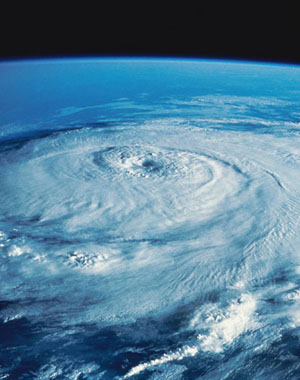
Here’s one cool photo to check out.

Here’s a video of Hurricane Dean from space (it’s enormous) and here are some people feeling the force of hurricane winds.

Also, read about the deadly Key West hurricane here.

Addition:  Here’s a good link to the 10 most deadly hurricanes.  Click here for some NASA fun.

hurricane.jpg

Add to Technorati Favorites

Goya’s Fight With Cudgels

Here is the painting.

As part of Goya’s black period, he seems to have been exasperated with his own lot as well as what he’d observed of the human condition.   The same fluid brushstroke style is there, the same dark tones (though the sky still seems a transcendent, slightly mystic blue and white) but the theme is dark….

Is this a painted over scene…the confused images of bitter old age and loss of memory that can come with it?   

Is it a faithful recording of the ignorance, fear and brutality he saw in Spain during his lifetime?

Here’s a quote from this excellent Goya page:

“Fantasy abandoned by reason produces impossible monsters: united with her, she is the mother of the arts and the origin of their marvels.”

“La fantasia abandonada de la razon, produce monstruos imposibles: unida con ella, es madre de las artes y origen de sus marabillas.”

But what was reason for Goya? 

See also: A previous Goya’s Colossus post.

Add to Technorati Favorites

Wimshurst Machines: Fun Times

There isn’t a shortage of good pages to find out about this machine.  Here is a page detailing restoration.

Here is a recent bloggingheads episode featuring a Wimshurst and a good explanation of how it works.

It’s a pretty low rent venture here, so you’ll have to click here for a simple diagram and here for photos. Apologies.

Does anyone know where I can get one at a good price?

See also:  Electrostatic induction, Leyden Jars, Van De Graaff, Tesla Coil, Singing Tesla Coil

Addition:  Here’s a good page for direct current electrostatic devices.

Addition:  New bloggingheads this week has a Ruhmkorff coil and a De La Rive tube demonstration.  Er…yes, Ruhmkorff and De La Rive.

Best explanation I’ve of how a Wimshurst works here.

Add to Technorati Favorites

Roger Scruton on Kant: A Response To Hume?

It is a common empiricist assumption that I can know my experience simply by observing it.  But this is not so.  I do not observe my experience, but only its object.  Any knowledge of experience must therefore involve knowledge of its object.  But I can have knowledge of the object only if I can identify it as continous.  Nothing can have temporal continuity without also having the capacity to exist when unobserved.  Its existence is therefore independent of my perception.”

-Roger Scruton here.

This is part of a brief summary of Kant’s transcendental deduction, of which Scruton later says:

It is fair to say that the transcendental deduction has never been considered to provide a satisfactory argument (boldface mine).  In all its versions it involves a transition from the unity of consciousness to the identity of the subject through time.  Hume pointed out that the slide from unity to identity is involved in all our claims to objective knowledge; he also thought that it could never be justified.  Kant did not find the terms with which to answer Hume.”

Add to Technorati Favorites

Having Trouble With Electricity and Magnetism? MIT Can Help

You’re probably not the only one; as I’ve recently picked up this book.

MIT is offering OpenCourseWare lectures free online.  The link is just one example.

You can gain access to some of MIT’s collective knowledge; a place which draws some of the best and most curious minds from around the world.

Pretty remarkable.

Addition:  The NY Times has a piece about Professor Lewin.  Forget the knowledge, focus on the spectacle! 

Add to Technorati Favorites

Goya’s Colossus

A dark vision.

Later in his life, Goya’s black paintings come from a man in a dark time, having lived through the peninsular wars, Spain’s continued decline, and illness and deafness.  He was still a man, though, who used his talent to the end.

There’s something transcendant about that figure, at first I thought it was just a man, standing honorably against our condition, ready to confront the unknown….. with fists clenched…

But then I saw the blank eyes, more like a man abstracted into a godlike force, into which human fear and ignorance can be projected.

Here is a link to a good Goya page.

Addition:  More here on the painting…and here on the dispute as to whether or not it’s his.

Add to Technorati Favorites

Joan Miro: Woman


          I was lucky enough to see this sculpture a few times at the Fundacio Miro in Barcelona.  At the time, I remember thinking “oh, it’s a comment on women in Spain”:  All legs and sensuality and yet these malformed, pitiful, faces rising (or barely perched) on top.  

“I know women like that…I remember thinking.  It’s better to be an object of male lust than nothing, kind of like prostitutes.   Spanish machismo and insularity, the triumph of cultural values no matter how arbitrary or foolish, and the native ignorance and poverty of the human lot can clearly produce women like this. Despite my idealism, this is what shall remain long after I’m dead.”  And then,  rather self-satisfied, I strolled away.

Now, as I look again, I realize I have no idea what this sculpture means.   Are those two faces?  Strange little breasts?  Is that a spigot on top?  A man’s head and woman’s head?  Aren’t they kind of gender neutral?  What was I thinking, anyways?

Something about Miro makes me think he has thought long, judged deeply, and yet the colors are joyful, and there’s just this playfulness and achieved simplicity in his work that invites you right in and never really puts you out.

Addition:  Now that I”m a little older, and prostitution hovers between a comedy and a tragedy, I’m pretty sure the men who solicit prostitutes are just as responsible.  As for Miro, I still enjoy his work very much.

Add to Technorati Favorites

A Trip Through The Universe

Here is a neat video (with some incorrect English).  If we travelled at the speed of light (so far theoretically impossible) what could we find, and how far could we go?

Some thoughts on Immanuel Kant’s thoughts, as the video gets a little mystic at the end:

1.  There may be a God, there may not be.  The arguments for God, however, are no longer valid.  God falls into the category of a transcendant object (that which transcends the senses and all known experience).  Kant offered good arguments for why these arguments for the existence of God are not good, nor deep, enough.

2.  As scientists know, they can tell you precise things about how energy behaves, how it can be measured, what will happen according to known laws, but they can’t tell you what energy is.  That is a different question. 

3.  Science itself (while yielding genuine knowledge) also makes errors that he attempted to clarify with his antinomies.  Kant sincerely wished to encompass all knowledge.  While he may not have achieved that lofty goal, he did think some of the deepest thoughts there have been, and may still be pointing us in the right direction.

Addition:  Kant sincerely wished to ecompass the limits of reason, and while there are obvious problems with the antinomies, his concept of freedom, and the ethics derived from such ideas, he is one of the most important philosophers…..likely ever.

I’m not sure anyone has drawn new limits yet, at least not of this kind.

Addition:  According to friesian.com, “Kant’s antinomies are intended to show that contradictory metaphysical absolutes can be argued and justified with equal force, meaning that neither can actually be proven. It can be argued however, that Einstein answered Kant by proposing a non-Euclidean (Riemannian) universe that is finite but unbounded (i.e. without an edge).”

Add to Technorati Favorites

Hurricane Dean

A Category 4 now south of Jamaica and heading toward the Yucatan.  Saffir-Simpson scale here. 

I spent a season in Florida with four hurricanes, and maybe what I most remember as I while driving northeast to Orlando to escape Charley, was how anxious I was.

I sat among tens of thousands of cars jammed on I4, nosing east.   I was flipping through even the am stations for updates.  Will it be really bad?  Will I find shelter?  This land is so flat, I remember thinking, just a large spit of sand. 

The weakened eye passed right near the Super 8 near Orlando where I luckily found a room.  I stood near the breezeway for a few minutes with some teenagers, watching plywood and bits of plastic, a construction cone, and driving walls of wind and rain pass through.

I watched and listened in awe as a steady roar filled the night, then gradually died down.  

Fortunately, I didn’t have a house or loved ones to lose. 

Add to Technorati Favorites

Richard Feynman at NASA

After the terrible Challenger explosion in 1986, Richard Feynman was included on an independent panel to find out what went wrong.  He discovered a profound difference between engineers’ and managements’ probability estimates for number of flights without failure.  One potential (and very important) reason that a system-ending failure can go unnoticed is the tendency of managers to believe top-down explanations. 

It’s vintage Feynman, inconoclastic, penetrating and brilliant:  

“for whatever purpose, be it for internal or
external consumption, the management of NASA exaggerates the
reliability of its product, to the point of fantasy.”

For a successful technology, reality must take precedence over
public relations, for nature cannot be fooled
.”

Just a suggestion with NASA in the news lately…though it’s clear the space shuttles are getting older.

Add to Technorati Favorites